


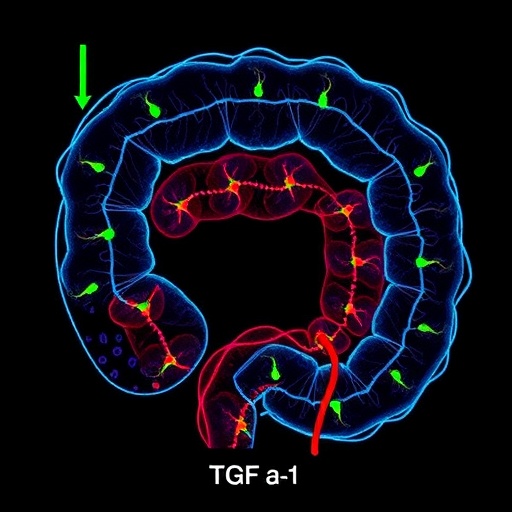
In a groundbreaking study published in the Journal of Translational Medicine, researchers have unveiled a promising advancement in our understanding of intestinal health, highlighting the potential benefits of a compound derived from the gut bacterium Roseburia intestinalis. This groundbreaking research, led by Dong et al., investigates the mechanistic pathways through which inosine, a purine nucleoside, can enhance intestinal motility in experimental models. As the global population faces increasing gastrointestinal disorders, especially disorders characterized by reduced motility, these findings offer hope for novel therapeutic strategies targeting gut health.
Inosine is a naturally occurring nucleoside that plays a crucial role in various physiological processes. It acts not only as a building block for RNA but also influences cellular signaling pathways. The research led by Dong et al. illustrates how inosine, particularly that derived from Roseburia intestinalis, interacts with critical signaling axes involved in gut motility. This novel insight raises intriguing questions about the evolution of the human microbiome and its impact on digestive health.
The study details how the administration of Roseburia intestinalis-derived inosine resulted in enhanced intestinal motility in animal models. This effect was primarily attributed to the activation of the Transforming Growth Factor Beta 1 (TGF-β1) signaling pathway, which has been previously implicated in various cellular processes including tissue remodeling, immune responses, and cell proliferation. By elucidating the connection between this bacterial-derived compound and TGF-β1 activation, the researchers open discussions about the potential of microbiome-derived metabolites as therapeutic agents.
Furthermore, a key component of the research focuses on the downstream signaling cascades triggered by TGF-β1 activation. Specifically, the activation of phosphorylated Smad3 and Transgelin was highlighted as integral to promoting smooth muscle contractility and intestinal motility. This clarity in signaling pathways not only solidifies the understanding of how traditional concepts in gastrointestinal physiology apply to microbiome research but also underscores the growing importance of microbial metabolites in influencing host biology.
The team conducted a series of rigorous experiments to validate their claims. Using controlled cohorts of laboratory animals, they provided controlled doses of inosine to investigate its effects on bowel movement frequency, stool consistency, and overall gastrointestinal function. The findings demonstrated a statistically significant improvement in all measured parameters, ultimately suggesting that inosine might play a critical role in restoring gut motility, especially in conditions characterized by sluggish gastrointestinal transit.
Another fascinating dimension of this research lies in the implications for treating gastrointestinal diseases characterized by motility disorders, such as irritable bowel syndrome (IBS). Current treatment options are often limited and may not effectively address the underlying mechanisms driving reduced motility. The results from Dong et al. suggest a shift toward personalization of treatment, where therapies could be tailored based on individual microbiome profiles, potentially leading to more effective management strategies.
In addition, the research emphasizes the broader implications of understanding host-microbe interactions in the digestive system. The insights gained from this study could pave the way for identifying other microbial metabolites that may similarly influence gastrointestinal health. This could usher in an era of microbiome-based interventions that harness the natural compounds produced by gut bacteria to promote better health outcomes.
The implications extend beyond just gastrointestinal diseases; they touch on the ever-growing fields of metabolic health and obesity. There is increasing evidence that gut motility chains play a pivotal role in nutrient absorption and energy homeostasis. Thus, compounds that enhance motility like inosine could also influence weight management and metabolic processes, which are crucial in the battle against obesity and related comorbidities.
Despite the promising outcomes of this research, several questions remain regarding the long-term implications of inosine supplementation. While the acute effects on motility are clear, the research team is focused on future investigations to assess the chronic impact of such interventions. Understanding potential side effects, optimal dosing, and the long-term maintenance of health benefits will be critical in translating these findings into clinical applications.
Ethical considerations are also at the forefront of discussions surrounding microbiome research and intervention. As the scientific community explores ways to manipulate gut flora for health benefits, maintaining a balance between potential benefits and ethical guidelines is paramount. The research team has stressed the importance of transparent methodologies and rigorous peer review to ensure the credibility of findings and protect public trust in microbiome research.
In conclusion, Dong et al.’s work highlights how a novel microbial-derived compound, inosine, influences gut motility through the TGF-β1/p-Smad3/Transgelin signaling axis, showcasing the intricate relationship between gut bacteria and host physiology. As researchers work towards unlocking more mysteries of the microbiome, the integration of such microbiome-derived compounds in therapeutic applications could revolutionize how gastrointestinal disorders are approached and managed.
The research not only contributes to the growing body of literature on gut health but also heralds the dawn of personalized nutrition strategies tailored to individual microbiome profiles. With continuous advancements in this field, it is possible that individuals struggling with gut motility and other related disorders may soon benefit from innovative, microbiome-based therapies designed to restore health and well-being.
As this research gains traction, health practitioners and clinicians alike will be keen to monitor its progress, with the hope that one day, treatments derived from our microbial companions could become staples in gastrointestinal medicine, guiding us towards a future where gut health and microbiome diversity are both prioritized and optimized.
Dong, X., Zhang, H., Chen, M. et al. Roseburia intestinalis-derived inosine improves intestinal motility by activating TGF-β1/p-Smad3/Transgelin signaling axis.
J Transl Med (2025). https://doi.org/10.1186/s12967-025-07366-6
Cite Scienmag News
Morgan Morrow. (December 20, 2025). Inosine Boosts Gut Motility via TGF-β1 Pathway. Scienmag. https://scienmag.com/inosine-boosts-gut-motility-via-tgf-%ce%b21-pathway/
Morgan Morrow. "Inosine Boosts Gut Motility via TGF-β1 Pathway." Scienmag, 20 December 2025, https://scienmag.com/inosine-boosts-gut-motility-via-tgf-%ce%b21-pathway/. Accessed 4 September 2026.
Morgan Morrow. "Inosine Boosts Gut Motility via TGF-β1 Pathway." Scienmag. December 20, 2025. https://scienmag.com/inosine-boosts-gut-motility-via-tgf-%ce%b21-pathway/


