


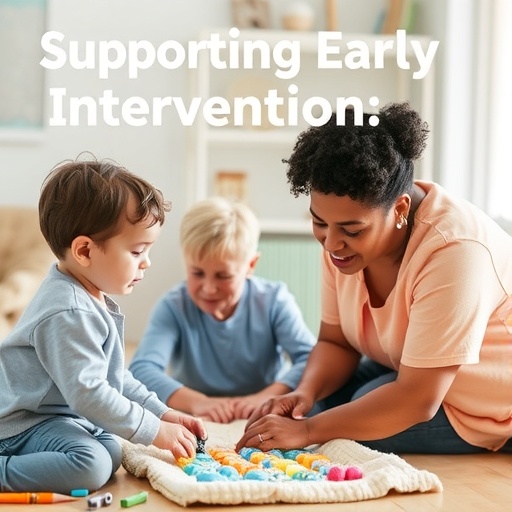
In today’s rapidly evolving society, the importance of providing wider support frameworks for early intervention providers has never been more crucial. The emerging trends in brain development research underline a significant connection between family dynamics, caregiver regulation, and the overall effectiveness of early intervention strategies. A recent investigation by Sisitsky and colleagues reveals a pivotal approach to enhancing the capacities of early intervention providers, effectively placing family relationships at the core of the service model.
This groundbreaking study casts a new light on how the intimate dynamics within families can be leveraged as a resource rather than viewed merely as challenges that hinder the effectiveness of early interventions. By emphasizing the need for providers to engage with families meaningfully, Sisitsky et al. argue that a deep understanding of family relationships can lead to better outcomes for children who require early intervention services. Recognizing families as active participants in their child’s developmental journey is a paradigm shift that could reshape approaches within various healthcare and educational settings.
Central to this discussion is the concept of ‘caregiver regulation.’ The term signifies the emotional and psychological processes that caregivers undergo as they navigate their roles. The study posits that effectively supporting caregivers—not just in managing their children’s developmental issues but also in fostering their own mental well-being—will create a stronger foundation for intervention. When caregivers feel understood and regulated, their ability to provide nurturing environments for their children proportionately increases, resulting in a more conducive atmosphere for developmental growth.
Sisitsky et al. illuminate the ways in which early intervention providers can be trained to foster these family-centered approaches. Traditional models often prioritize direct child interactions, sometimes neglecting the critical aspect of caregiver engagement. By including training modules focused on building relationships with families, providers are better prepared to tailor their interventions to the nuanced, individual needs of families. This kind of training works towards equipping practitioners to create interventions that resonate not only on a professional level but more profoundly on a personal one.
Moreover, the study underscores the necessity of continual support for these providers. The demanding nature of working with at-risk families can lead to burnout, impacting their ability to be effective caregivers themselves. By implementing systems of ongoing support, which could include peer networks, counseling, and access to relief programs, the workforce can remain resilient. This holistic approach to workforce well-being is essential for sustaining a robust early intervention framework.
The implications of Sisitsky’s research extend beyond just the realm of early childhood education. By framing family relationships as a cornerstone of intervention strategies, the study opens up a multitude of possibilities for different sectors, including mental health, social services, and policy-making. It provides a compelling case for interdisciplinary collaborations aimed at creating policies that integrate mental health support for caregivers and robust family services in public health initiatives.
Increasing awareness of the critical role of family systems is also pivotal in enhancing public opinion and legislative support for early intervention programs. As more research substantiates the significant effects of family dynamics on child development outcomes, the push for comprehensive intervention services could gain momentum. Advocacy efforts that highlight these insights could lead to increased funding and greater resources dedicated to family-based interventions.
Furthermore, the exploration of caregiver regulation brings an important clinical perspective into the fold. The balance between the emotional resilience of a caregiver and their ability to facilitate a nurturing environment forms a delicate equation that dictates the outcomes of intervention programs. When a caregiver is not merely a facilitator of their child’s needs but is also adequately supported and regulated, the entire system benefits. This focus on emotional health as a requisite for effective caregiving provides a new lens through which professionals can assess program efficacy.
In this context, the study does not shy away from discussing the real-world implications of neglecting family relationships in intervention strategies. Many established models have leaned heavily towards quantifiable child metrics, inadvertently sidelining the supportive roles family members play. This oversight can lead to misalignment between intervention objectives and actual family experiences, creating discrepancies that can severely hinder children’s developmental trajectories.
Ultimately, the research conducted by Sisitsky and colleagues creates an essential call to action for professionals in the field. It emphasizes that the success of early intervention strategies is inherently tied to how well providers can engage with families. As awareness grows, so should the commitment to crafting intervention frameworks that honor family relationships as central elements.
To summarize, Sisitsky et al.’s research presents a transformative view on the synergy between family dynamics and early intervention. By centering family relationships and caregiver regulation, the study not only redefines what effective early intervention looks like but also lays the groundwork for future research, training, and policy. As the field moves forward, there lies an immense potential to harness these findings for practical applications that genuinely support children and families in their developmental journeys.
Cite Scienmag News
Courtney Benton. (December 20, 2025). Supporting Early Intervention: Emphasizing Family and Caregiver Regulation. Scienmag. https://scienmag.com/supporting-early-intervention-emphasizing-family-and-caregiver-regulation/
Courtney Benton. "Supporting Early Intervention: Emphasizing Family and Caregiver Regulation." Scienmag, 20 December 2025, https://scienmag.com/supporting-early-intervention-emphasizing-family-and-caregiver-regulation/. Accessed 4 September 2026.
Courtney Benton. "Supporting Early Intervention: Emphasizing Family and Caregiver Regulation." Scienmag. December 20, 2025. https://scienmag.com/supporting-early-intervention-emphasizing-family-and-caregiver-regulation/


