


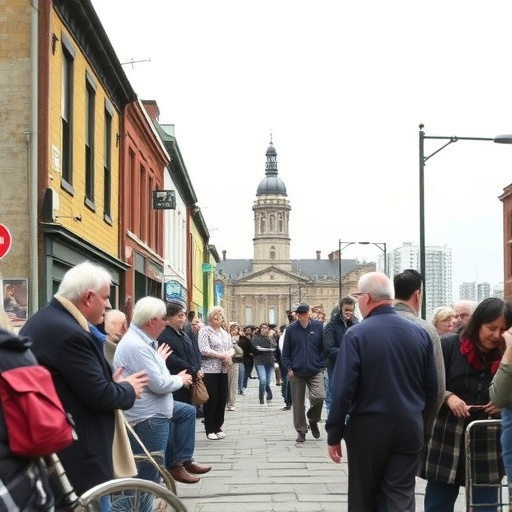
In recent years, the intersection between ageing populations and cultural heritage conservation has garnered increasing scholarly interest. A novel study conducted in the Guancheng District of Zhengzhou, China, pioneers this interdisciplinary exploration by illuminating the untapped social and cultural contributions of older adults. Through the strategic application of participatory art practices combined with active ageing frameworks, this research reveals how older adults can play an instrumental role in urban heritage sustainability, challenging prevailing societal assumptions about ageing and social value.
This investigation begins with the recognition of a profound discrepancy: societal perceptions frequently underestimate the embodied capabilities of older adults, casting them as passive recipients of care rather than active contributors to communal and cultural life. As global demographics shift, with population ageing becoming a definitive characteristic of modern societies, these misconceptions risk marginalizing a wealth of experience and potential. The study advocates for a paradigmatic shift in how older adults are viewed—emphasizing empowerment, inclusion, and ongoing social participation as essential dimensions of vibrant community life.
Central to the study’s methodology is the integration of participatory art—a collaborative, community-centered creative process—with active ageing principles. This framework posits that older adults possess intrinsic motivation and capacity to engage meaningfully in social and cultural endeavors. Through direct involvement in artistic initiatives focused on local heritage conservation, participants not only develop a deeper appreciation of their urban environment but also forge a stronger sense of identity and community belonging. These findings underscore art’s role not merely as a creative outlet, but as a powerful medium for social integration and heritage stewardship.
The participatory art projects functioned as catalysts for intergenerational dialogue and community engagement. By inviting older residents to co-create interpretative narratives surrounding urban heritage sites, the study facilitated cross-sector collaboration among artists, civic bodies, and participants themselves. This inclusive approach not only enriched the creative process but embedded heritage conservation into the fabric of daily community life. Consequently, the older adults’ contributions transcended anecdotal participation, becoming a cornerstone for sustainable cultural development.
At a more technical level, the research utilized qualitative methods to capture the multi-layered impacts of these participatory approaches. Interviews, participant observations, and art-based reflective practices generated rich, nuanced data, providing insight into how older adults’ engagement influenced their cognitive, emotional, and social wellbeing. Notably, participants reported enhanced awareness and stewardship of local heritage, alongside increased feelings of self-worth and social connectivity—dimensions critical for fostering holistic active ageing.
Moreover, this study situates its findings within broader global frameworks championed by organizations such as the World Health Organization, which advocate for age-friendly societies. By demonstrating older adults’ substantive role in sustaining urban heritage, the research bolsters calls for inclusive policy-making that integrates ageing populations into urban planning and cultural programming. It challenges policymakers to move beyond tokenistic inclusion and devise long-term strategies that recognize older adults as invaluable community stakeholders.
However, the authors caution against universalizing these outcomes without contextual adaptation. The success of participatory art initiatives depends heavily on grounding programs within specific socio-political landscapes. Co-design processes involving local artists, older residents, and institutional stakeholders are pivotal in tailoring activities to community needs, ensuring operational feasibility, and securing sustainable engagement. This bespoke approach mitigates the risk of disengagement and reinforces local ownership of heritage conservation efforts.
Significantly, the research reframes older adults from passive beneficiaries to proactive agents in urban heritage sustenance. Their lived experiences, accumulated knowledge, and social networks position them uniquely to contribute nuanced perspectives that enrich cultural narratives. Recognizing and harnessing this potential can counteract social isolation and foster intergenerational cohesion, while promoting adaptive reuse and conservation of heritage assets within rapidly changing urban contexts.
From a theoretical standpoint, the study advances active ageing discourse by showcasing a culturally meaningful operationalisation through participatory arts. It challenges dominant paradigms that often prioritize health and economic participation exclusively, advocating instead for a broader socio-cultural lens that values creativity, identity, and civic involvement as integral to ageing well. This enriched conceptual framework foregrounds cultural citizenship for older adults, empowering them as co-creators of community life and heritage legacies.
Technological and infrastructural implications also emerge from this research. The integration of digital platforms and multimedia in participatory art could expand accessibility and engagement, bridging potential mobility or health-related constraints among older participants. Furthermore, institutional support from heritage organizations and municipal authorities is crucial to provide resources, training, and recognition that sustain older adults’ artistic and conservation endeavors.
The study’s implications reach beyond Zhengzhou or China alone, offering valuable insights for urban heritage initiatives globally in facing the dual challenges of cultural preservation and demographic shifts. As cities worldwide grapple with ageing populations and urban transformations, harnessing the dynamism of older adults through participatory cultural practices offers a replicable model that embeds heritage within living communities rather than static monuments.
In conclusion, this pioneering research advocates a transformative vision wherein older adults are fully integrated as key contributors to urban heritage conservation. Participatory art emerges as a practical and potent mechanism fostering inclusion, identity, and sustainability. Equipped with agency and opportunity, older adults not only enrich cultural landscapes but also strengthen social fabrics, ultimately shaping resilient, inclusive, and culturally vibrant cities for future generations.
Cite Scienmag News
Courtney Benton. (December 18, 2025). Elders Drive Urban Heritage via Participatory Art. Scienmag. https://scienmag.com/elders-drive-urban-heritage-via-participatory-art/
Courtney Benton. "Elders Drive Urban Heritage via Participatory Art." Scienmag, 18 December 2025, https://scienmag.com/elders-drive-urban-heritage-via-participatory-art/. Accessed 3 September 2026.
Courtney Benton. "Elders Drive Urban Heritage via Participatory Art." Scienmag. December 18, 2025. https://scienmag.com/elders-drive-urban-heritage-via-participatory-art/


