


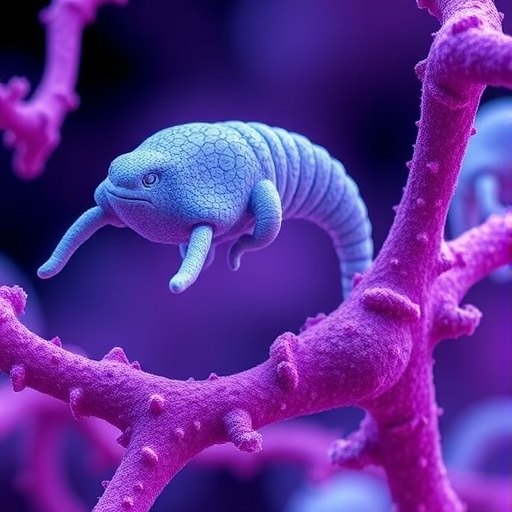
In a groundbreaking study published in Genes & Immunity this December, researchers have unveiled an intricate structural and functional characterization of TGM-2, a transformative growth factor-beta (TGF-β) mimic secreted by parasitic helminths. This discovery marks a significant milestone in the interface of parasitology, immunology, and protein biochemistry, shedding new light on how certain helminths cleverly manipulate host immune responses to facilitate their long-term survival within human hosts. The study, led by Ntang, Cunningham, Singh, and colleagues, elucidates the molecular underpinnings of TGM-2’s immunomodulatory properties, opening promising avenues toward therapeutic innovation.
TGF-β is a pivotal cytokine in regulating immune homeostasis, tissue repair, and cellular differentiation. Its multifaceted role in immune modulation makes it an attractive target for pathogens aiming to evade immune detection. Helminth parasites, which often endure protracted infections, have evolved sophisticated mechanisms to mimic host cytokines, thereby blunting the host’s defensive immune arsenal. TGM-2 exemplifies such a molecular mimicry, functioning analogously to host TGF-β but encoded by a parasite-derived gene, a remarkable case of evolutionary convergence with potent biological consequences.
The current research undertook a comprehensive structural analysis of TGM-2 using high-resolution crystallography complemented by state-of-the-art biophysical techniques. The resulting three-dimensional protein model reveals a TGM-2 architecture strikingly reminiscent of mammalian TGF-β, despite considerable sequence divergence. This structural mimicry underpins the protein’s ability to engage host TGF-β receptors effectively. Notably, TGM-2 consists of multiple domain repeats, adopting a modular conformation distinct yet functionally convergent with host cytokines.
Functionally, TGM-2 was demonstrated to activate canonical TGF-β signaling pathways in vitro, including the phosphorylation of SMAD family transcription factors, a hallmark of TGF-β receptor engagement. Cellular assays revealed that TGM-2 suppresses pro-inflammatory cytokine production and promotes regulatory T cell differentiation, mirroring the immunosuppressive signature of endogenous TGF-β. These findings provide compelling evidence that TGM-2 is not merely a structural mimic but a biologically active effector capable of reprogramming host immunity.
The immunomodulatory capacity of TGM-2 has profound implications for helminth biology and host-parasite interactions. By dampening host immune surveillance, TGM-2 facilitates parasite persistence, reducing inflammation-associated tissue damage and helping the worm evade eradication. This immunosuppressive mechanism contributes to the chronicity of helminth infections and may underlie the complex relationship between helminth exposure and modulation of autoimmune or allergic diseases observed epidemiologically.
From a therapeutic standpoint, deciphering TGM-2’s structure-function relationship unlocks potential clinical applications beyond parasitology. Given TGF-β’s pivotal involvement in fibrosis, cancer, and chronic inflammation, engineered derivatives of TGM-2 or its domains could serve as novel biologics to modulate immune responses with enhanced specificity and reduced side effects. The parasite’s evolved strategies offer templates for designing next-generation immunotherapies.
In this study, the team employed surface plasmon resonance and mutagenesis approaches to dissect the receptor binding interfaces of TGM-2. The data indicate that specific domain arrangements and inter-domain flexibility are critical for stable receptor engagement, insights that are essential for rational drug design. Remarkably, single point mutations within TGM-2 dramatically altered its affinity and signaling capacity, highlighting the exquisite evolutionary tuning of this molecular mimic.
Moreover, the study identifies distinct glycosylation patterns on TGM-2, which appear to modulate its stability and receptor interactions. Post-translational modifications are central to TGF-β family cytokines, and the helminth-derived protein mimics this complexity, further emphasizing the sophistication of the parasitic immune evasion toolkit. Glycoengineering could, therefore, be a crucial strategy in harnessing TGM-2-like molecules for therapeutic use.
The findings also prompt reconsideration of the host immune landscape during helminth infections, where TGM-2 expression may serve as a biomarker for parasite burden or disease prognosis. Monitoring TGM-2 levels in serum or tissue could aid in stratifying infection severity or guiding anti-helminthic treatment regimens. Such translational applications demand further clinical validation but represent promising diagnostic innovation.
Beyond human health, the molecular insights into TGM-2 contribute to a broader understanding of host-pathogen coevolution. The elegant mimicry displayed by helminths exemplifies the evolutionary pressures shaping complex molecular dialogues between organisms. Studies like this underscore the importance of integrating structural biology with immunology to unravel these interactions profoundly.
The research was also notable for leveraging cutting-edge computational tools, including machine learning algorithms for protein folding predictions and molecular dynamics simulations. These methodologies accelerated structural elucidation and provided dynamic perspectives on TGM-2’s conformational plasticity, reinforcing the value of computational biophysics in contemporary molecular immunology.
Future research directions envisioned by the authors include the development of TGM-2 inhibitors capable of disrupting helminth immune evasion or exploring TGM-2 analogs as therapeutics for immune-mediated diseases. Connecting molecular insights with in vivo functional studies holds the key to translating basic science into clinical impact.
The comprehensive nature of this study, spanning detailed biochemistry, high-resolution structural work, and immunological function, underscores an interdisciplinary approach vital for tackling complex biological phenomena. It heralds a new era in the molecular understanding of parasitism and immune regulation.
In summary, the unraveling of TGM-2’s structure and function not only deepens our grasp of helminth biology but paves the way for innovative immunomodulatory therapeutics. This work highlights the ingenuity of parasitic strategies and transforms them into opportunities for human benefit, exemplifying the translational potential of molecular parasitology.
Cite Scienmag News
Kristina Jarvis. (December 18, 2025). Unveiling TGM-2: Helminth’s Immunomodulatory TGF-β Mimic. Scienmag. https://scienmag.com/unveiling-tgm-2-helminths-immunomodulatory-tgf-%ce%b2-mimic/
Kristina Jarvis. "Unveiling TGM-2: Helminth’s Immunomodulatory TGF-β Mimic." Scienmag, 18 December 2025, https://scienmag.com/unveiling-tgm-2-helminths-immunomodulatory-tgf-%ce%b2-mimic/. Accessed 3 September 2026.
Kristina Jarvis. "Unveiling TGM-2: Helminth’s Immunomodulatory TGF-β Mimic." Scienmag. December 18, 2025. https://scienmag.com/unveiling-tgm-2-helminths-immunomodulatory-tgf-%ce%b2-mimic/


