


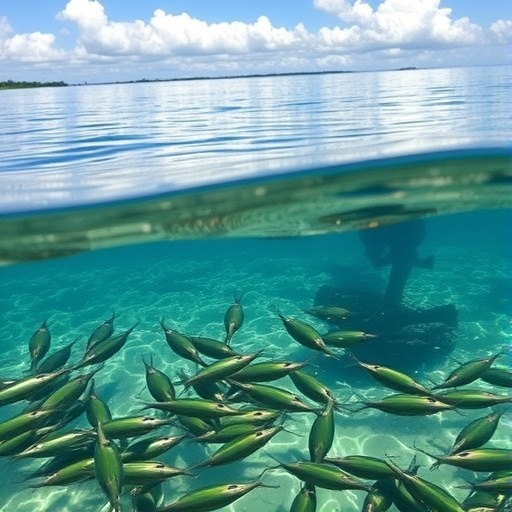
In an era where the world grapples with the dual challenges of food security and environmental sustainability, aquaculture emerges as a beacon of hope, particularly within the realm of small-scale fisheries. The recent study conducted by Castillo et al. shines a light on the pivotal role that community-centered approaches can play in enhancing aquaculture practices. By focusing on the unique needs and strengths of local communities, this research offers groundbreaking insights into how collaborative efforts can lead to sustainable aquaculture solutions that benefit both people and the planet.
The significance of this research cannot be overstated, as it underscores the importance of integrating local knowledge and practices into aquaculture development. Traditional aquaculture practices often overlook the nuanced understanding that local communities have regarding their natural resources. By drawing from these valuable insights, the study advocates for a paradigm shift towards community-centered methodologies, which not only aim to improve the efficacy of aquaculture but also empower the very communities involved.
One of the core findings of Castillo et al.’s research indicates that successful aquaculture ventures are those that prioritize community engagement. This engagement manifests not merely as a series of consultations but as a genuine partnership where local voices are amplified, their concerns addressed, and their cultural practices respected. The authors emphasize that when communities are actively involved in decision-making processes, the outcomes are better tailored to meet local demands and ecological conditions, reducing the risk of ecological degradation and resource depletion.
Moreover, the study dives deep into the socio-economic benefits that emerge from community-centered aquaculture approaches. By fostering a sense of ownership among community members, these practices can lead to more equitable distribution of benefits and a stronger local economy. As fishing communities often face economic challenges, implementing aquaculture systems that are aligned with local needs could significantly enhance livelihoods and provide a reliable source of income. This self-sufficiency is not only vital for individual families but is also a crucial component for the resilience of entire communities.
The authors highlight the importance of education and knowledge transfer in their findings. Community-centered aquaculture requires a solid foundation of knowledge among local fishers and farmers. Educational initiatives that focus on sustainable practices can transform how aquaculture is perceived and carried out. By providing training on best management practices, environmental stewardship, and innovative aquaculture techniques, communities can become empowered stewards of their aquatic resources, safeguarding them for future generations.
Environmental sustainability is another focal point in Castillo et al.’s analysis. The study discusses how conventional aquaculture practices can contribute to environmental degradation, particularly through habitat destruction and overfishing. However, when communities are engaged, there is a stark potential for innovation in sustainable practices that minimize ecological impact. The authors detail case studies from various regions where community-driven initiatives have successfully rehabilitated degraded ecosystems while simultaneously enhancing aquaculture output.
Furthermore, the research investigates the potential for technology integration in community-centered aquaculture. With the advent of new technologies, there is an opportunity to enhance productivity while acknowledging and preserving local knowledge systems. The inclusion of modern aquaculture technologies, combined with traditional practices, could lead to an optimal balance between productivity and sustainability. For instance, utilizing mobile applications for monitoring water quality or fish health can complement the age-old wisdom of local fishers, thereby reinforcing a comprehensive approach.
Despite the numerous advantages of community-centered approaches to aquaculture, the study also recognizes existing challenges. Issues such as access to resources, educational barriers, and socio-political factors can hinder successful implementation. Castillo et al. advocate for policy frameworks that support community engagement and equitable resource allocation. By addressing these barriers through targeted policies and investments, stakeholders can create an enabling environment for communities to thrive in aquaculture.
As the world eyes aquaculture as a solution to feed an ever-growing population, the insights from this research are remarkably timely. The call for a shift towards community-centered approaches resonates deeply within discussions on food systems transformation and sustainable development goals. It underscores that solutions to global challenges must be rooted in social equity and ecological responsibility. The research serves as a compelling reminder that local communities have invaluable roles to play in the global fight against food insecurity and environmental degradation.
In conclusion, Castillo et al.’s study on community-centered approaches to aquaculture within small-scale fisheries represents a significant leap forward in our understanding of sustainable food systems. By championing local engagement and innovation, this research not only presents actionable pathways for sustainable aquaculture but also affirms the necessity of valuing communal knowledge and practices. As we look to the future, the integration of community voices will be crucial in shaping the aquaculture industry into one that is resilient, equitable, and sustainable for generations to come.
This is not just an academic inquiry; it is a clarion call for greater inclusivity in the development of aquaculture systems worldwide. The challenges are many, but the potential rewards—both socially and environmentally—are immense.
The study and its findings suggest a rich avenue for further research into community-specific solutions that can be adapted globally. It is a testament to the power of collaboration and the wisdom inherent in communities that have lived in harmony with their environments for generations. As stakeholders from various sectors begin to embrace these principles, the future of aquaculture looks increasingly bright and sustainable.
We can only hope that the insights gleaned from this research will inspire action at local, national, and international levels, ensuring that aquaculture evolves in ways that truly benefit the communities it touches.
Castillo, L.S., Knott, C., Quintana, A.C.E. et al. Community-centered approaches to aquaculture in small-scale fisheries.
Ambio (2025). https://doi.org/10.1007/s13280-025-02302-w
Cite Scienmag News
Violet Maxwell. (December 18, 2025). Empowering Communities: Innovative Aquaculture in Small-Scale Fisheries. Scienmag. https://scienmag.com/empowering-communities-innovative-aquaculture-in-small-scale-fisheries/
Violet Maxwell. "Empowering Communities: Innovative Aquaculture in Small-Scale Fisheries." Scienmag, 18 December 2025, https://scienmag.com/empowering-communities-innovative-aquaculture-in-small-scale-fisheries/. Accessed 4 September 2026.
Violet Maxwell. "Empowering Communities: Innovative Aquaculture in Small-Scale Fisheries." Scienmag. December 18, 2025. https://scienmag.com/empowering-communities-innovative-aquaculture-in-small-scale-fisheries/


