


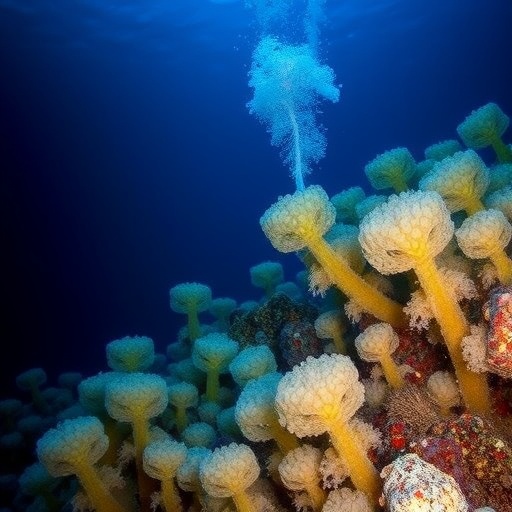
A groundbreaking expedition deep into the Arctic’s unexplored Molloy Ridge has unveiled a remarkable geological and biological phenomenon, reshaping our understanding of the deep-ocean ecosystems and the complex interplay between geology, chemistry, and biology beneath the Greenland Sea. At an astonishing depth of 3,640 meters, scientists have discovered massive gas hydrate mounds accompanied by thriving communities of chemosynthetic fauna, an environment previously undocumented in this region. This remarkable finding not only sheds light on the limits of life on Earth but also provides critical insights into methane cycling and seafloor stability in one of the most remote and extreme marine settings.
The Molloy Ridge, part of the Arctic Mid-Ocean Ridge system, is a tectonically active zone where the oceanic crust is spreading, creating unique geological formations. This study presents the first observations of gas hydrate accumulations forming huge mounds on this ridge, a process driven by the slow seepage of methane-rich fluids from deep subseafloor reservoirs. Gas hydrates, often described as “flammable ice,” are crystalline solids where methane molecules are trapped within cages of water, stable under high pressure and low temperature conditions. The presence of these hydrate mounds points to potent methane fluxes in the subarctic deep sea, a factor previously underestimated in polar methane budgets and global climate models.
The expedition utilized state-of-the-art remotely operated vehicles and submersible platforms equipped with advanced geochemical sensors and high-definition imaging systems. These tools enabled the first high-resolution mapping and sampling of the hydrate structures, which tower several meters above the surrounding seabed. The structure and composition of the mounds suggest episodic methane fluid venting that sustains and shapes their growth, providing continuous methane sources that sustain unique biological communities. This natural laboratory is crucial for understanding how methane emissions from hydrate reservoirs can influence ocean chemistry and microbial ecosystems.
One of the most exciting aspects of this discovery is the biological community associated with the gas hydrate mounds. Unlike typical deep-sea benthic fauna that rely on particulate organic matter from surface waters, these communities are driven by chemosynthesis, a process where microorganisms convert methane and other inorganic compounds directly into organic matter. This symbiosis forms the basis of complex ecosystems that thrive in complete darkness and under extreme pressure, expanding our knowledge of life’s adaptability and resilience. The researchers documented diverse fauna, including specialized bacteria and archaea, as well as larger organisms like tubeworms and clams, all relying on methane oxidation.
Chemosynthetic ecosystems have previously been identified in hydrothermal vents and cold seeps around the world, but the Molloy Ridge discovery represents one of the few Arctic occurrences of such habitats tied specifically to gas hydrate mounds. This highlights how the deep Arctic Ocean, often thought to be barren due to its harsh conditions, harbors rich and active biological hotspots. These ecosystems could act as significant methane sinks, mitigating greenhouse gas release into the ocean and atmosphere, an aspect with profound implications for climate change feedbacks.
The geochemical analyses conducted on collected samples indicate that the methane fueling these ecosystems is predominantly biogenic in origin, produced by microbial degradation of organic matter deep within the sediment layers. However, signs of thermogenic methane, derived from deeper geological processes involving the breakdown of fossil carbon, were also detected. This dual methane source suggests a complex paleoenvironmental history and dynamic fluid migration pathways that influence the formation and stability of gas hydrates in this region.
Importantly, the researchers observed that gas hydrate stability is finely balanced on the Molloy Ridge, influenced by local temperature and pressure fluctuations, sediment permeability, and fluid flow rates. This delicate equilibrium means that changes in ocean currents or warming temperatures could destabilize hydrates, potentially releasing large amounts of methane. Understanding this risk is vital, as methane is a potent greenhouse gas that can accelerate climate warming if released suddenly, linking deep-ocean processes to global climate dynamics.
The morphology of the gas hydrate mounds themselves provides new clues about episodic methane release events. The researchers identified fault-controlled pathways guiding methane-rich fluids from deep reservoirs to the seafloor. These fluid escape conduits appear to be periodically sealed and reopened, leading to fluctuating methane seepage rates and episodic biological responses. Such dynamic systems challenge previous conceptions of gas hydrate accumulations as static and highlight the need to monitor these environments continuously to anticipate changes.
Additionally, the study contributes significantly to the understanding of Arctic marine geology by evidencing active tectonics as a formative control on gas hydrate distribution. Unlike more stable continental margin areas, the Molloy Ridge’s faulting and spreading tectonics are implicated in driving fluid migration and seafloor methane seepage. These findings emphasize the role of tectonic activity in shaping seafloor habitats and influence methane cycling in oceanic rift systems.
The implications of these findings extend beyond pure scientific curiosity. Methane hydrates represent a vast potential energy resource, but their development must be balanced against environmental risks. The Molloy Ridge gas hydrate mounds serve as a natural analogue for assessing the stability and risks of methane extraction or accidental release scenarios. In this context, the documented chemosynthetic communities also illustrate the ecological stakes of exploiting gas hydrate deposits, underscoring the need for careful environmental impact assessments.
Moreover, the newly documented ecosystems raise intriguing questions about the evolutionary pathways that enabled life to thrive in such harsh and isolated habitats. The chemolithoautotrophic organisms found here reflect adaptations to extremely low temperatures, high pressures, and limited nutrient availability. Future research on these organisms’ genomes and metabolic capabilities could unlock new biological insights and biotechnological applications, including novel enzymes functioning under extreme conditions and contributions to biogeochemical cycles.
The discovery of gas hydrate mounds and their associated faunal assemblages at these extreme depths and high latitudes reaffirms the importance of continued exploration of the deep Arctic Ocean. Technological advances in deep-sea robotics, chemical sensing, and genomic analysis are crucial for unveiling the hidden biosphere and geosphere processes shaping Earth’s most remote environments. Such knowledge is indispensable for predicting how these ecosystems might respond to accelerating climate change and human activities, ensuring they remain resilient components of the ocean system.
In conclusion, the Molloy Ridge findings represent a milestone in marine science, revealing a dynamic world of methane-driven geology and biology that was previously inaccessible. By combining geological, chemical, and biological investigations, this research provides a holistic picture of deep-sea methane seepage systems and their global significance. These insights redefine our understanding of deep ocean habitats and emphasize the interconnectedness of Earth’s systems, from the seafloor geology to the global climate and life’s extraordinary adaptability in extreme environments.
As the Arctic continues to warm and human activities encroach on previously inaccessible oceanic domains, this discovery also acts as a clarion call for responsible stewardship and the need to integrate multi-disciplinary research. Further studies building upon this work will be essential to develop predictive models of methane hydrate behavior and to understand the long-term fate of these vulnerable yet vital ecosystems. The Molloy Ridge gas hydrate mounds are a testament to Earth’s hidden wonders and a new frontier for deep-sea science with far-reaching implications.
Cite Scienmag News
Violet Maxwell. (December 18, 2025). Deep-Sea Gas Hydrates and Fauna Found, Molloy Ridge. Scienmag. https://scienmag.com/deep-sea-gas-hydrates-and-fauna-found-molloy-ridge/
Violet Maxwell. "Deep-Sea Gas Hydrates and Fauna Found, Molloy Ridge." Scienmag, 18 December 2025, https://scienmag.com/deep-sea-gas-hydrates-and-fauna-found-molloy-ridge/. Accessed 4 September 2026.
Violet Maxwell. "Deep-Sea Gas Hydrates and Fauna Found, Molloy Ridge." Scienmag. December 18, 2025. https://scienmag.com/deep-sea-gas-hydrates-and-fauna-found-molloy-ridge/


