


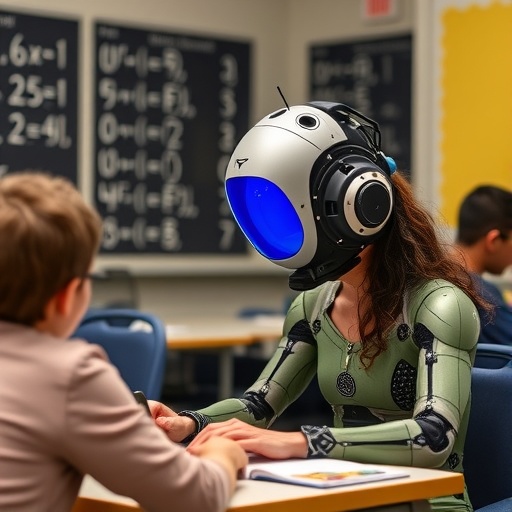
In the rapidly evolving sphere of education technology, artificial intelligence (AI) continues to make significant inroads, reshaping how knowledge is delivered and absorbed. One of the most critical frontiers impacted by this transformation is mathematics education, where AI promises not only to augment instructional methodologies but also to alter fundamentally the role of the teacher. A recent comprehensive study conducted by İnci Kuzu sheds light on an essential yet under-explored dimension of this transformation: the AI literacy of mathematics teachers, the anxiety they may experience regarding AI integration, and their perceptions of its use in their pedagogical practices.
Mathematics education stands at a confluence where cognitive rigor meets high levels of abstraction, often posing challenges both to learners and educators. The integration of AI tools has been posited as a means to alleviate these challenges through personalized learning, adaptive problem-solving algorithms, and real-time feedback. However, the success of these interventions rests heavily on the educators’ own proficiency and comfort with AI technologies. The study by Kuzu employs a mixed-methods approach, combining quantitative surveys with qualitative interviews, to delve deeply into these intertwined factors influencing teachers’ readiness and openness to AI.
A key highlight of this research is the concept of AI literacy, which transcends basic familiarity with technology and encompasses understanding AI’s capabilities, limitations, ethical considerations, and practical applications in the classroom. The study reveals a heterogeneous landscape wherein some mathematics teachers exhibit high levels of AI literacy, demonstrating adeptness at integrating AI-driven tools into their lesson plans, whereas others possess only rudimentary knowledge, accompanied by apprehensions about the potential disruptions AI might bring to established teaching paradigms. This disparity illuminates the urgent need for targeted professional development programs that address these gaps systematically.
An intriguing aspect uncovered by Kuzu’s research is the prevalence of AI-related anxiety among mathematics educators. This anxiety is multifaceted: it encompasses fears related to job displacement, concerns about the reliability of AI tools, and uncertainties regarding the changing dynamics of teacher-student interactions in technology-mediated environments. Such emotional responses mirror broader societal apprehensions about AI but are uniquely colored by the pedagogical responsibilities and pressures inherent in the educational profession. Importantly, the study suggests that this anxiety can negatively impact teachers’ willingness to experiment with or adopt AI interventions, ultimately slowing the integration process.
Diving further into teachers’ perceptions of AI in mathematics education, the study identifies a range of attitudes influenced by factors such as age, teaching experience, prior exposure to technology, and institutional support. More experienced teachers, although sometimes less technically adept, often exhibit skepticism mixed with cautious optimism, recognizing AI’s potential but wary of its practical implications. Younger educators, conversely, tend to display greater enthusiasm, fueled by their generally higher digital fluency. Nonetheless, regardless of demographic variations, most participants agree on AI’s transformative potential when appropriately harnessed.
The technical implications of integrating AI into mathematics curricula are substantial. AI systems can, for instance, employ machine learning algorithms to analyze students’ problem-solving strategies, identifying unique misconceptions and tailoring instructional feedback accordingly. Furthermore, AI can facilitate dynamic assessments that adapt to learners’ proficiency levels in real-time, fostering a more student-centered approach. However, the effectiveness of these technologies depends not only on their technical sophistication but also on teachers’ expertise in interpreting AI-generated data and adjusting their instructional strategies appropriately.
One of the challenges highlighted by the study is the limited availability of well-designed AI tools that align seamlessly with existing curricula and instructional goals. Many teachers expressed frustration over AI applications that are either too generic or not sufficiently customizable to meet diverse classroom needs. Moreover, concerns about data privacy and ethical use of AI in educational settings surfaced prominently, underscoring the necessity for transparent policies and robust safeguards to protect students’ information and dignity.
The research also points to the critical role of teacher training programs and educational policy frameworks in shaping AI integration outcomes. Professional development initiatives that combine theoretical knowledge with hands-on experience, mentorship, and peer collaboration emerge as pivotal in building confidence and competence among mathematics teachers. Equally important is the involvement of educators in the design and evaluation phases of AI tools to ensure that these technologies align with pedagogical realities and teacher needs.
Kuzu’s mixed-methods study further sheds light on the social dimension of AI integration, noting how teachers’ perceptions are influenced by the broader school culture and administrative support. Institutions fostering an open, innovative climate tend to encourage experimentation with AI, reducing apprehension and promoting collaborative problem-solving. Conversely, environments marked by uncertainty or resistance to change exacerbate anxiety and hinder adoption rates. These findings emphasize the systemic nature of AI integration challenges, entailing not only individual skills but also organizational readiness.
Another fascinating dimension discussed is the interplay between AI literacy and pedagogical innovation. Teachers who possessed higher AI literacy were more likely to reinterpret their roles, shifting from traditional instructors to facilitators of inquiry and critical thinking, leveraging AI to create richer, more engaging learning experiences. This paradigm shift marks a significant evolution in mathematics education, where AI is not merely a tool but a partner in the teaching process.
While the study presents an optimistic outlook regarding AI’s potential benefits, it also issues a cautionary note on the risk of over-reliance on technology. The researchers argue for a balanced approach that values human judgment and creativity alongside AI capabilities. The irreplaceable human elements of empathy, ethical reasoning, and adaptive responsiveness remain core to effective teaching, and any technological integration must complement, not supplant, these qualities.
The implications of İnci Kuzu’s research extend beyond teachers to policymakers, developers, and educational psychologists. For policymakers, the findings highlight the necessity of allocating resources toward comprehensive teacher training and infrastructure development. For technology developers, the insights call for co-creation frameworks involving educators to produce AI tools that are pedagogically sound and user-friendly. Educational psychologists are encouraged to further explore the emotional and cognitive variables influencing AI adoption to design interventions that address anxiety and support professional growth.
Given the accelerating pace of AI advancements, this study serves as a timely reminder of the importance of human-centered approaches in educational technology integration. It suggests that fostering AI literacy and addressing emotional barriers among mathematics teachers are pivotal steps toward realizing AI’s full potential in enhancing learning outcomes. Importantly, the research advocates for continuous dialogue among all stakeholders to cultivate an ecosystem where AI enriches educational practices without compromising ethical standards or teacher agency.
The methodological rigor of the study offers a robust template for future investigations into AI adoption in other academic disciplines. By employing a mixed-methods design, combining numerical data with rich qualitative insights, Kuzu captures the complexity of teachers’ experiences and perceptions holistically. This approach allows for nuanced understandings that go beyond surface-level statistics, providing actionable knowledge for diverse educational contexts.
Finally, the broader societal implications of this research resonate with ongoing debates about the future of work, technology ethics, and digital equity. As AI reshapes not only mathematics classrooms but the labor market and social fabric at large, equipping educators with the necessary literacy and addressing their concerns is vital to ensuring equitable access to technology’s benefits. The study underscores that without such preparatory measures, the promise of AI in education risks becoming uneven and fragmented.
In conclusion, İnci Kuzu’s examination of mathematics teachers’ AI literacy, anxiety, and perceptions offers a profound and multidimensional perspective on an issue at the heart of educational innovation. Her findings encourage a proactive, collaborative, and ethically grounded approach to integrating AI into mathematics education—one that empowers teachers, supports learners, and embraces the transformative possibilities of artificial intelligence with care and intention.
Cite Scienmag News
Glenn Wilkins. (December 18, 2025). Math Teachers’ AI Skills, Fears, and Classroom Views. Scienmag. https://scienmag.com/math-teachers-ai-skills-fears-and-classroom-views/
Glenn Wilkins. "Math Teachers’ AI Skills, Fears, and Classroom Views." Scienmag, 18 December 2025, https://scienmag.com/math-teachers-ai-skills-fears-and-classroom-views/. Accessed 4 September 2026.
Glenn Wilkins. "Math Teachers’ AI Skills, Fears, and Classroom Views." Scienmag. December 18, 2025. https://scienmag.com/math-teachers-ai-skills-fears-and-classroom-views/


