


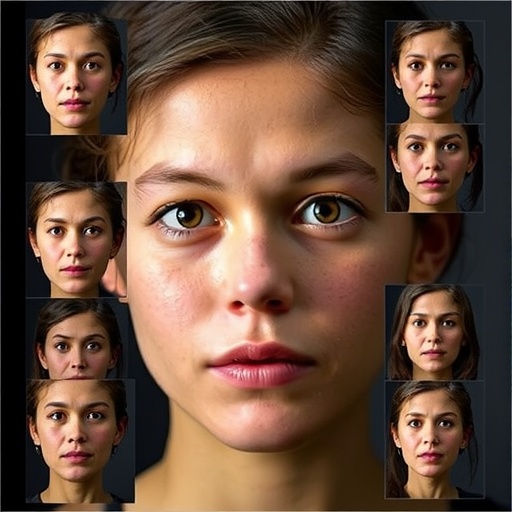
In a groundbreaking study that pushes the boundaries of current technology, researchers K. Sarvakar and K. Rana have meticulously analyzed the evolving landscape of facial emotion recognition. With the rapid advancements in artificial intelligence, the quest for machines that can truly understand human emotions has intensified. This research delves deep into the intricacies of various methodologies, models, and datasets that endeavor to equip computers with the ability to discern nuanced emotional cues from facial expressions.
Facial emotion recognition stands at the forefront of human-computer interaction and has potential applications in diverse fields such as mental health, marketing, and security. By examining the amalgamation of deep learning and computer vision principles, Sarvakar and Rana elucidate how cutting-edge models are trained to interpret a spectrum of emotions, ranging from joy and sadness to anger and surprise. Their analysis underscores the transformative potential of these technologies, which can revolutionize communication between humans and machines.
At the core of their research lies an exploration of the leading algorithms shaping the field. Convolutional Neural Networks (CNNs) have emerged as the dominant architecture for facial emotion recognition, demonstrating an exceptional capacity to learn from visual data. Sarvakar and Rana detail how finely-tuned CNNs can extract features from images that are imperceptible to the human eye, allowing for high accuracy in emotion classification tasks. This advancement is indicative of a significant leap in our ability to automate and streamline processes requiring emotional intelligence.
Moreover, the researchers discuss the role of transfer learning, a technique that has gained traction within the domain of facial emotion recognition. By leveraging pre-trained models on vast datasets, developers can fine-tune systems for specific applications more effectively. This efficiency not only accelerates the development cycle but also enhances the adaptability of systems to varying emotional contexts and cultural expressions. This is a crucial aspect, given the diversity in human emotions expressed across different cultures and backgrounds.
The datasets employed in training these models are integral to the success and reliability of emotion recognition systems. The study by Sarvakar and Rana reviews several prominent datasets, highlighting their characteristics and the challenges they present. For instance, while datasets like FER-2013 and AffectNet provide an extensive array of labeled images, they still grapple with issues of bias and underrepresentation of certain emotions. The authors propose that addressing these discrepancies is vital for creating more robust and universally applicable emotion recognition systems.
As they delve deeper into the realm of methodologies, the researchers shed light on the significance of data augmentation techniques. These techniques allow for the generation of synthetic images that enrich training datasets, thus mitigating the impact of overfitting and enhancing model performance. By artificially expanding the diversity of images that the models are trained on, data augmentation facilitates a more comprehensive understanding of the emotional spectrum.
A pivotal topic explored in the research is the challenges posed by real-time emotion recognition. The ability to accurately assess emotions through digital mediums, such as during video calls or through online interactions, demands not only state-of-the-art technology but also nuanced understanding. Sarvakar and Rana articulate the technical hurdles that exist in processing visual data in real-time, emphasizing the need for optimized algorithms that can perform emotion recognition with minimal latency while maintaining high accuracy.
Additionally, the ethical implications of facial emotion recognition are thoroughly discussed. As machines become increasingly adept at interpreting human emotions, significant concerns arise regarding privacy and consent. The researchers advocate for a framework that ensures ethical standards are met, particularly in applications that involve sensitive data, such as healthcare. They emphasize that with great power comes great responsibility and that developers must remain vigilant to the moral ramifications of their technological advancements.
Through an examination of the intersection of AI and psychology, this study opens up discussions on the implications of accurately interpreting human emotions. Sarvakar and Rana paint a picture of future technologies potentially offering widespread accessibility to mental health support. By understanding emotional cues, AI systems could assist therapists and users alike, offering insights into emotional well-being that were previously unattainable through traditional means.
To further their analysis, the researchers provide a glimpse into future directions for facial emotion recognition technology. They propose that interdisciplinary approaches combining psychology, neuroscience, and computer science could vastly improve model efficacy. By integrating findings from psychological studies on human emotions with AI system design, developers can create tools that resonate with genuine human experiences.
In conclusion, Sarvakar and Rana’s exhaustive examination of the current state and future of facial emotion recognition technology heralds a new era of innovation. Their insights not only highlight the potential benefits that such advancements can afford various sectors but also serve as a clarion call to the scientific community regarding the need for rigorous testing and ethical oversight. The evolution of facial emotion recognition is not just a technological triumph; it represents a profound shift in how we interact with machines—ushering in an era where emotional understanding becomes a cornerstone of technology.
As the boundary between human emotion and artificial intelligence continues to blur, the potential to shape a compassionate digital future is within reach. As this field progresses, one thing remains clear: understanding human emotion through a digital lens could redefine the essence of meaningful interactions in the years to come.
Sarvakar, K., Rana, K. Revolutionizing facial emotion recognition: in-depth analysis of cutting-edge models, methodologies, and datasets.
Discov Artif Intell 5, 388 (2025). https://doi.org/10.1007/s44163-025-00553-w
Cite Scienmag News
Blake Davidson. (December 17, 2025). Transforming Facial Emotion Recognition: Models, Methods, and Data. Scienmag. https://scienmag.com/transforming-facial-emotion-recognition-models-methods-and-data/
Blake Davidson. "Transforming Facial Emotion Recognition: Models, Methods, and Data." Scienmag, 17 December 2025, https://scienmag.com/transforming-facial-emotion-recognition-models-methods-and-data/. Accessed 5 September 2026.
Blake Davidson. "Transforming Facial Emotion Recognition: Models, Methods, and Data." Scienmag. December 17, 2025. https://scienmag.com/transforming-facial-emotion-recognition-models-methods-and-data/


