


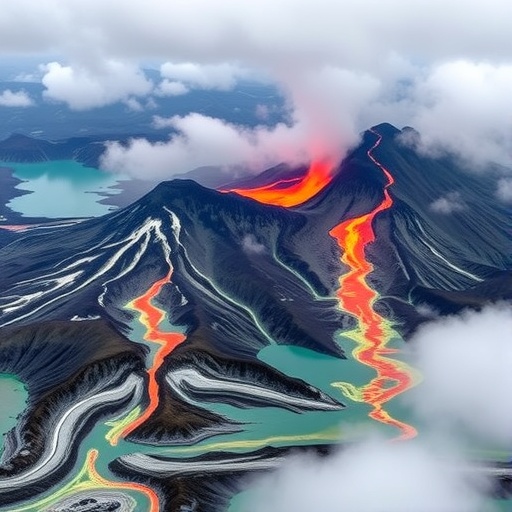
Whakaari Volcano, also known as White Island, is one of New Zealand’s most active volcanoes and is renowned for its unique geological characteristics and potential for explosive eruptions. Recent studies conducted by a team comprised of researchers S.C. Pearson-Grant, M.J. Heap, and A.E. Croucher have shed light on the mechanisms behind phreatic eruptions at this remarkable site. Their work emphasizes the interplay between hydrothermal mineralization and the influx of magmatic gases as critical factors driving the dynamics of these eruptions. Understanding these processes is vital for both scientific inquiry and public safety, particularly given the tourist activity present on the island.
Phreatic eruptions, defined as steam-driven explosions resulting from the interaction of water with hot magma, pose significant threats due to their sudden and unpredictable nature. Unlike more typical volcanic eruptions, phreatic eruptions often occur without warning and can propel ash, gas, and volcanic rock into the atmosphere. This poses risks not only to those near the volcano but also can affect air travel and the environment miles away. The research team meticulously gathered data and samples from the Whakaari Volcano to understand how local hydrothermal systems interact with the underlying magmatic processes to trigger such explosive events.
A key aspect of their research was investigating the mineralogical changes in the volcanic material. They discovered that hydrothermal alteration of rock and mineral formations can significantly influence the pressure build-up beneath the volcano. This pressure builds up as a result of superheated water vapor being generated from the underlying magma, which can lead to explosive decompression. The study highlights that the degree of alteration can vary significantly over time and spatially within the volcanic system, thus influencing the frequency and intensity of phreatic eruptions.
The researchers utilized both field observations and laboratory analyses to assess the mineral composition of the rocks on Whakaari. Their findings revealed a complex network of veins filled with hydrothermal minerals such as quartz, pyrite, and other sulfides. This mineralization not only provides insights into the thermal history of the volcano but also serves as a record of the geothermal activity over millennia. The structural properties of these minerals play a crucial role in the volcanic system’s response to magmatic gas influx, suggesting a robust interrelationship that needs ongoing monitoring and further investigation.
Gas measurements conducted during the research provided further evidence of the volcano’s dynamic activity. The presence of high concentrations of sulfur dioxide (SO2) and other volatiles indicated that magmatic gases are consistently permeating through the volcanic edifice. This influx of gas contributes to the destabilization of hydrothermal systems, leading to increased steam production. The authors argue that continuous monitoring of gas emissions is essential for assessing the volcano’s behavior and enhancing eruption forecasts, which are crucial for minimizing hazards to local communities and tourism operations.
The implications of this research are significant, particularly given the 2019 eruption that tragically resulted in loss of life and injuries among visitors and tour guides on the island. Insights gained from Pearson-Grant, Heap, and Croucher’s study could enable better preparedness for future eruptions and may also foster improved protocols for evacuating personnel and tourists in times of increased volcanic activity. An effective and timely warning system is critical for any location bordering an active geological system such as Whakaari, where geological beauty is accompanied by inherent danger.
The research team has emphasized the necessity for a multidimensional approach to monitoring active volcanic systems. This includes integrating geological, geophysical, and geochemical indicators to enhance the predictive capabilities regarding potential phreatic activity. By employing advanced modeling techniques, the team aims to better grasp how various influencing factors, including rainwater infiltration and volcanic gas release, contribute to the overall system dynamics.
In terms of public engagement, the researchers stress the importance of disseminating their findings not only within scientific circles but also to local stakeholders and the broader community. Awareness campaigns highlighting the dangers associated with phreatic eruptions can help mitigate risks associated with tourism activities in and around Whakaari Volcano. Enhancing the understanding of hydrological and geothermal processes can empower both locals and visitors, fostering a culture of preparedness.
Furthermore, global implications of this research extend beyond Whakaari as volcanic activity can affect climate patterns, air quality, and human health on a larger scale. Understanding the intricacies of phreatic systems can provide significant insights for regions that are home to active volcanoes, enabling better risk assessments and disaster response strategies worldwide.
The continuation of this interdisciplinary research at Whakaari Volcano promises valuable insights into evolving volcanic behaviors, which is central to enhancing disaster risk management in volcanically active regions globally. Collaborations with international volcanic observatories may also facilitate comprehensive studies that can advance public safety protocols for tourists and residents alike.
As the scientific community remains vigilant in monitoring Whakaari’s activity, the recent findings by the research team serve as a reminder of the dynamic forces shaping our planet. It highlights the necessity for rigorous scientific inquiry to unravel the complexities of our natural world while simultaneously respecting the beauty and potential hazards presented by active geothermal systems.
In conclusion, the research conducted on hydrothermal mineralization and magmatic gas input at Whakaari Volcano illustrates the profound relationships between geological processes and eruptive phenomena. Such findings not only contribute to the academic understanding of volcanology but also play a critical role in ensuring safety and security for those who may find themselves in the shadow of one of nature’s most formidable creations.
Pearson-Grant, S.C., Heap, M.J. & Croucher, A.E. Phreatic eruptions at Whakaari Volcano driven by hydrothermal mineralisation and magmatic gas input. Commun Earth Environ 6, 1007 (2025). https://doi.org/10.1038/s43247-025-03057-8
Cite Scienmag News
Violet Maxwell. (December 17, 2025). Hydrothermal and Magmatic Forces Fuel Whakaari Eruptions. Scienmag. https://scienmag.com/hydrothermal-and-magmatic-forces-fuel-whakaari-eruptions/
Violet Maxwell. "Hydrothermal and Magmatic Forces Fuel Whakaari Eruptions." Scienmag, 17 December 2025, https://scienmag.com/hydrothermal-and-magmatic-forces-fuel-whakaari-eruptions/. Accessed 5 September 2026.
Violet Maxwell. "Hydrothermal and Magmatic Forces Fuel Whakaari Eruptions." Scienmag. December 17, 2025. https://scienmag.com/hydrothermal-and-magmatic-forces-fuel-whakaari-eruptions/


