


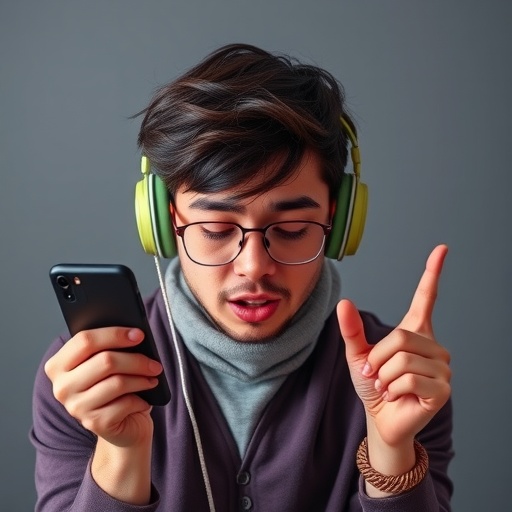
In an era dominated by digital connectivity, social media platforms, particularly TikTok, have emerged as major influences on the daily lives of university students worldwide. Recent research published in the International Journal of Mental Health and Addiction sheds light on a compelling psychological dynamic: the mediating role of TikTok addiction between psychological distress and academic self-efficacy. This groundbreaking multinational study delves into how the compulsive use of TikTok can impact the mental health and academic performance of students, revealing intricate mechanisms that contribute to their educational outcomes.
Psychological distress among university students has become a growing concern over the past decade, with mental health issues such as anxiety, depression, and stress manifesting at alarmingly high rates. Research confirms that these emotional challenges notably impair cognitive functions, motivation, and resilience—key components of academic success. The study at hand extends our understanding by exploring how behavioral addictions, specifically TikTok addiction, might serve as a pathway through which psychological distress influences students’ beliefs in their academic capabilities, known as academic self-efficacy.
TikTok, a platform characterized by short, engaging videos and vast user interaction, offers an endless stream of content tailored through advanced algorithms. While this design promotes user engagement, it also risks fostering addictive usage patterns. The study operationalizes TikTok addiction to include symptoms akin to behavioral addiction: compulsive use, tolerance, withdrawal, and disruption of daily functioning. This addiction is hypothesized to mediate the relationship between psychological distress and students’ confidence in their academic abilities, suggesting a ripple effect where distress leads to increased TikTok use, which in turn weakens academic self-efficacy.
The methodology of the research is robust, employing data from university students recruited across multiple countries to ensure cultural and contextual diversity. Employing validated psychological scales and addiction measurement tools, the investigators constructed a mediation model. This model statistically tested whether TikTok addiction served as an intermediate variable explaining how psychological distress impacts academic self-efficacy. Careful control for confounding factors like socioeconomic status and prior academic performance strengthened the study’s inferential power.
Results demonstrated a significant indirect effect through TikTok addiction. Students experiencing higher levels of psychological distress were more likely to develop addictive behaviors toward TikTok, and such behaviors correlated with diminished academic self-efficacy. Notably, this mediation effect was consistent across diverse cultural samples, indicating a potentially universal phenomenon within the modern academic milieu. The findings illuminate the complex interplay between mental health challenges and digital media consumption constraining students’ beliefs about their academic capabilities.
From a neurological perspective, behavioral addiction engages the brain’s reward circuitry, particularly the nucleus accumbens and ventral tegmental area, releasing dopamine in response to social validation and entertainment. This neurochemical reinforcement creates a feedback loop, making disengagement difficult. When students facing psychological distress turn to TikTok for solace or distraction, the habit-forming patterns undermine sustained attention and cognitive control needed for academic tasks. Over time, reduced focus and motivation erode their academic self-efficacy, lowering performance and widening the detrimental cycle of distress and dependence.
Moreover, the study highlights the dual role of TikTok as both a coping mechanism and a risk factor. While social media can provide a temporary reprieve from stress and an avenue for social connection, excessive use may exacerbate feelings of inadequacy and academic pressure. For students vulnerable to psychological distress, the quick dopamine hits from TikTok videos offer immediate, though superficial, rewards in place of meaningful achievements, dampening their internal belief systems about academic success.
The implications of this research extend beyond individual users to educational institutions. Universities need to recognize the indirect harms posed by addictive digital behaviors and incorporate mental health awareness and digital literacy into student support services. Programs designed to improve self-efficacy might consider integrating strategies to mitigate compulsive social media use, equipping students with healthier coping strategies and fostering resilience.
Furthermore, the study calls for policy considerations regarding social media design. The algorithms driving TikTok’s addictive potential operate largely unseen but have real-world consequences on young adults’ mental health and educational outcomes. Regulators and platform developers must collaborate to create features that promote mindful consumption, such as usage reminders or content curation tools that encourage breaks, reducing the risk of addiction.
Researchers also point out directions for future studies. Longitudinal designs could better capture causality and temporal sequences, while experimental interventions might test the effectiveness of digital detoxification in restoring academic self-efficacy. Exploring the role of personality traits and social support systems could deepen understanding of why some students are more susceptible to TikTok addiction while others resist it despite psychological distress.
The study’s multinational approach adds a layer of significant insight into how digital health phenomena transcend borders, adapting to different educational systems and cultural expectations. It underscores the necessity for global collaboration in addressing the intersection of mental health and technology use among youth. As TikTok and similar platforms continue to evolve, so too must our scientific frameworks to ensure young people can harness digital innovation without compromising their psychological well-being and academic ambitions.
In conclusion, this pioneering research elucidates a complex psychological and behavioral nexus: psychological distress propels students toward TikTok addiction, which then undermines their academic self-efficacy. By uncovering this mediating mechanism, the study initializes a critical conversation on addressing technology’s hidden costs in educational contexts. It urges stakeholders—from students and educators to developers and policymakers—to acknowledge and address the subtle yet profound impacts of social media addiction on learners navigating the demands of higher education in a digitally saturated world.
Cite Scienmag News
Glenn Wilkins. (December 16, 2025). TikTok Addiction Links Stress and Academic Confidence Globally. Scienmag. https://scienmag.com/tiktok-addiction-links-stress-and-academic-confidence-globally/
Glenn Wilkins. "TikTok Addiction Links Stress and Academic Confidence Globally." Scienmag, 16 December 2025, https://scienmag.com/tiktok-addiction-links-stress-and-academic-confidence-globally/. Accessed 4 September 2026.
Glenn Wilkins. "TikTok Addiction Links Stress and Academic Confidence Globally." Scienmag. December 16, 2025. https://scienmag.com/tiktok-addiction-links-stress-and-academic-confidence-globally/


