


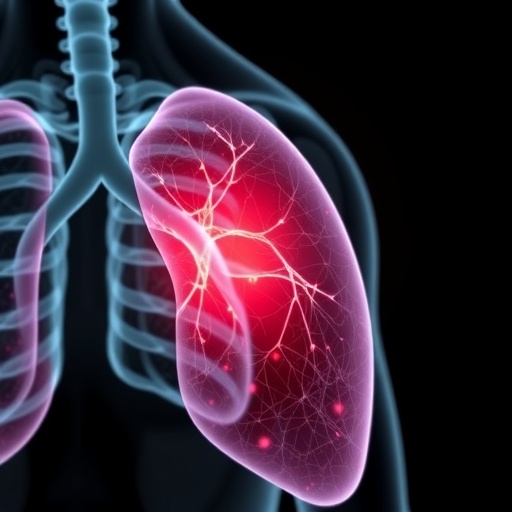
In a groundbreaking development in the realm of cancer immunotherapy, a recent Phase II clinical trial has unveiled promising results for patients grappling with advanced non-small cell lung cancer (NSCLC) who have developed resistance to conventional immune checkpoint inhibitors (ICIs). The cutting-edge therapeutic regimen combines a bispecific antibody, IBI318, targeting both PD-1 and PD-L1, with the multi-kinase inhibitor lenvatinib. This innovative combinatorial approach could herald a new era in overcoming immune resistance and improving survival outcomes in a notoriously difficult-to-treat patient population.
NSCLC remains one of the most lethal malignancies worldwide, and despite the transformative impact of immune checkpoint blockade therapies targeting PD-1 or PD-L1, many patients eventually develop acquired resistance. This resistance dramatically limits the effectiveness of existing immunotherapies, underscoring an urgent need for novel interventions. The bispecific antibody IBI318 was engineered to simultaneously engage PD-1 and PD-L1, enhancing the blockade of this critical immunosuppressive axis within the tumor microenvironment. This dual targeting strategy intends to intensify T-cell activation and restore robust anti-tumor immunity where monotherapies have failed.
The synergy between IBI318 and lenvatinib is particularly compelling because lenvatinib inhibits several receptor tyrosine kinases involved in angiogenesis and oncogenic signaling pathways. By disrupting tumor vasculature and modulating the tumor microenvironment, lenvatinib may potentiate immune cell infiltration and reduce immunosuppressive elements, effectively priming tumors for a more potent response to immunotherapy. This multimodal attack aims to convert immunologically “cold” tumors into “hot” tumors, thereby overcoming immune escape mechanisms that have previously debilitated therapeutic efficacy.
The Phase II trial enrolled patients with advanced NSCLC whose cancers had become refractory to immune checkpoint inhibitors. These patients, representing a demographic with historically poor prognosis and limited therapeutic options, were administered the IBI318 and lenvatinib combination after rigorous screening. The trial assessed several key endpoints including objective response rate, progression-free survival, overall survival, and a comprehensive evaluation of immune-related adverse events, thereby providing a robust dataset to critically evaluate both efficacy and safety.
Preliminary data from the trial have been striking. A substantial proportion of patients exhibited pronounced tumor regression, with a response rate surpassing expectations for this resistant population. Notably, several patients experienced durable responses lasting beyond six months, a significant milestone considering the aggressive nature of refractory NSCLC. Moreover, the combination therapy demonstrated an acceptable safety profile, with manageable adverse events consistent with those previously reported for each agent individually, suggesting that the treatment is both potent and tolerable.
Mechanistically, the dual blockade of PD-1 and PD-L1 by IBI318 is hypothesized to effectively circumvent compensatory immune escape pathways frequently upregulated in resistant tumors. Unlike monoclonal antibodies targeting only PD-1 or PD-L1, the bispecific format allows concurrent disruption of ligand-receptor interactions on both tumor cells and immune cells, enhancing immune synapse formation and T-cell activation. This heightened immunological engagement may rejuvenate exhausted T cells, restore cytokine production, and facilitate the recruitment of additional effector cells into the tumor milieu.
Additionally, lenvatinib’s role extends beyond antiangiogenesis; it impacts tumor-associated macrophages and regulatory T cells, key players in immunosuppression. By reprogramming the tumor microenvironment, lenvatinib may abrogate immunosuppressive barriers, increase antigen presentation, and foster a pro-inflammatory environment conducive to effective tumor eradication. This intricate modulation complementing immune checkpoint blockade renders the combined approach highly rationalized and biologically synergistic.
The integration of translational analyses within the trial also provided valuable insights into biomarkers predictive of response. Preliminary correlative studies indicated that patients exhibiting higher baseline PD-L1 expression and increased infiltration of CD8+ T cells were more likely to benefit, reinforcing the importance of tumor immune contexture in shaping therapeutic outcomes. Additionally, circulating immune markers and gene expression profiles suggested potential avenues for patient stratification in future larger-scale studies, enhancing personalized medicine approaches.
Despite these promising findings, challenges remain in understanding and mitigating resistance mechanisms that could eventually emerge against this combination therapy. Tumor heterogeneity and dynamic immune landscape alterations necessitate ongoing monitoring and adaptive therapeutic strategies. Future trials incorporating comprehensive longitudinal immune profiling will be paramount to delineate the underpinnings of response and resistance, thereby guiding combination regimens and sequencing strategies.
Equally critical is the exploration of how the toxicity profile evolves over prolonged treatment duration. While short-term tolerability appears manageable, immune-related adverse events linked to dual checkpoint blockade and tyrosine kinase inhibition could manifest cumulatively. Vigilant pharmacovigilance and the development of standardized management protocols will be essential to maximize clinical benefit while minimizing harm.
The success of the IBI318 and lenvatinib combination extends beyond NSCLC, hinting at broader applications for patients with other solid tumors exhibiting resistance to immunotherapy. The concept of bispecific antibodies, coupled with agents targeting the tumor microenvironment, could transform treatment paradigms across various malignancies, emphasizing the importance of rationally designed combination therapies to overcome complex immune evasion tactics employed by cancer.
This trial also underscores the accelerating pace of innovation in cancer immunotherapy, where next-generation antibody formats and strategic partner agents are rapidly translating into clinical breakthroughs. The multidisciplinary collaboration among immunologists, oncologists, and molecular biologists has been crucial in enabling this progress, reflecting the imperative of integrative approaches in tackling cancer’s multifaceted challenges.
As regulatory pathways adapt to accommodate these novel therapeutics, the therapeutic landscape for refractory NSCLC is poised for significant evolution. The clinical community eagerly anticipates further validation of these findings in larger, randomized trials, which will define the precise positioning of IBI318 plus lenvatinib within the treatment algorithm. If confirmed, this combination could establish a new standard of care, offering renewed hope for patients who previously had exhausted effective options.
The study also raises intriguing scientific questions regarding the biology of immune checkpoint resistance and the potential to use bispecific antibodies to fine-tune immune responses. These insights could spur the development of an array of bispecific molecules targeting other immune modulatory pathways, amplifying the arsenal against cancer’s adaptive mechanisms.
In conclusion, the innovative combination of the PD-1/PD-L1 bispecific antibody IBI318 with lenvatinib represents a watershed moment in the management of advanced NSCLC resistant to immune checkpoint inhibitors. This Phase II trial offers compelling evidence that dual targeting of the PD-1/PD-L1 axis, complemented by modulation of the tumor microenvironment, can reinstate effective antitumor immunity in previously intractable cases. As further research unfolds, this therapeutic strategy may pave the way toward durable remission and improved survival for a critically ill population in desperate need of new hope.
Cite Scienmag News
Nathaniel Bowman. (December 16, 2025). IBI318 Plus Lenvatinib Tackles Resistant Lung Cancer. Scienmag. https://scienmag.com/ibi318-plus-lenvatinib-tackles-resistant-lung-cancer/
Nathaniel Bowman. "IBI318 Plus Lenvatinib Tackles Resistant Lung Cancer." Scienmag, 16 December 2025, https://scienmag.com/ibi318-plus-lenvatinib-tackles-resistant-lung-cancer/. Accessed 4 September 2026.
Nathaniel Bowman. "IBI318 Plus Lenvatinib Tackles Resistant Lung Cancer." Scienmag. December 16, 2025. https://scienmag.com/ibi318-plus-lenvatinib-tackles-resistant-lung-cancer/


