


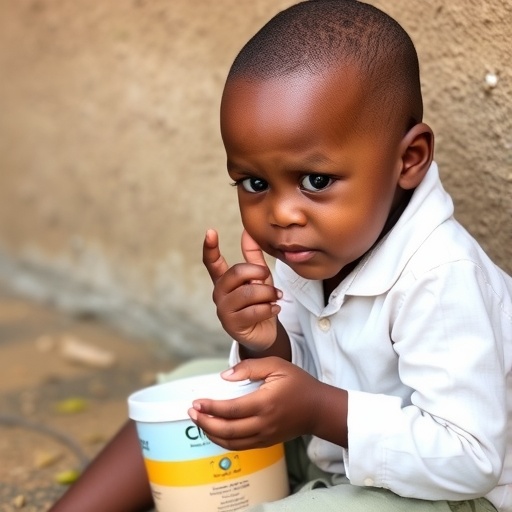
Childhood diarrhea remains one of the most formidable challenges to public health in many African countries, contributing significantly to under-five mortality rates despite decades of global health interventions. Recent research spearheaded by George, Phiri, Shomuyiwa, and colleagues, published in Global Health Research and Policy, offers a compelling and urgent call to action: strengthening access to zinc supplementation and oral rehydration solution (ORS) is an indispensable strategy in combatting this pervasive issue. Their 2025 study meticulously evaluates the barriers, innovations, and practical pathways toward improving availability and uptake of these low-cost, high-impact treatments for diarrheal diseases affecting millions of children across Africa.
The crux of their research underscores the synergy between zinc and ORS as a robust frontline therapeutic approach. While ORS rehydrates children suffering from potentially fatal dehydration, zinc supplementation plays a crucial role in reducing the duration and severity of diarrheal episodes while bolstering immune function. This dual approach, endorsed by the World Health Organization, has been extensively documented to reduce mortality rates and the long-term adverse impacts of diarrhea-related malnutrition. Yet, the paradox lies in the persistent scarcity and inaccessibility of these treatments, especially in remote and underserved communities.
Supply chain disruptions, financial constraints, and deeply ingrained misconceptions have hamstrung efforts to deliver adequate quantities of zinc and ORS. The researchers meticulously mapped out these obstacles through a mixed-methods approach, incorporating health facility surveys, stakeholder interviews, and market assessments across several African nations. Their findings reveal that while national policies endorse the use of zinc and ORS, operational hurdles at sub-national and community levels critically undermine effective dissemination. Stock-outs and inconsistencies in pharmaceutical quality emerged as significant bottlenecks, jeopardizing the effectiveness of diarrhea management programs.
Moreover, the study delves into the socio-cultural dimensions influencing caregiver behaviors. Despite awareness campaigns, myths relating to diarrhea treatment persist, contributing to reluctance or improper use of zinc and ORS. The lack of trust in pharmaceutical products, compounded by insufficient health education, further widens the gap between policy and practice. This insight points toward the paramount importance of integrating behavioural change communication into intervention frameworks to ensure that caregivers not only receive but correctly administer these lifesaving therapies.
Innovation shines as a beacon of hope in this narrative. The authors spotlight several promising initiatives leveraging technology and decentralized health delivery systems. For instance, mobile health platforms that remind caregivers about dosage schedules and symptoms have shown preliminary success in pilot programs. Likewise, community health workers, when adequately trained and equipped, have dramatically improved the reach of diarrhea treatment services in hard-to-access regions. Such localized models, combining innovation with grassroots mobilization, appear critical for overcoming systemic delivery challenges.
The economics of diarrhea treatment also demand rigorous scrutiny. The research highlights that out-of-pocket expenses, although nominal per unit, accumulate substantially for low-income families, restricting routine access. Public-private partnerships aimed at subsidizing prices, coupled with enhancing domestic production capacities, emerge as feasible strategies to reduce cost barriers. The sustainable provision of zinc and ORS hinges on multifaceted financing mechanisms aligned with national health priorities and international development agendas.
Integration within broader child health initiatives is another pivotal theme. Zinc and ORS should not be isolated commodities but rather core components seamlessly embedded into child wellness programs, immunization campaigns, and nutrition interventions. This holistic approach can synergistically amplify the benefits, ensuring children remain resilient not only to diarrhea but also other co-morbid conditions exacerbated by malnutrition and poverty.
The research also elucidates the critical role of policy coherence and governance. Fragmented responsibilities among ministries of health, finance, and education often lead to diluted accountability and misaligned strategies. Strengthening governance frameworks that promote coordination and data-driven decision-making is imperative to channel resources efficiently and monitor progress adequately. The authors advocate for enhanced regional collaboration across African countries to share best practices and harmonize regulatory standards governing zinc and ORS availability.
Importantly, the study’s granular data illuminate disparities in access between urban and rural populations, as well as across socioeconomic strata and gender dynamics within households. Addressing these inequities requires targeted interventions sensitive to contextual realities—recognizing that equitable healthcare must transcend mere distribution and cultivate an enabling environment where all children can benefit irrespective of background.
In sum, the 2025 study by George et al. charts a comprehensive roadmap to revitalize zinc and ORS distribution in Africa, blending technical rigor with implementation pragmatism. By dissecting the epidemiological, operational, financial, sociocultural, and policy dimensions intertwined with diarrhea treatment, it furnishes stakeholders with actionable insights geared toward accelerating progress. The stakes are enormous: reducing childhood diarrhea’s burden holds transformational potential for child survival, development outcomes, and overall community well-being.
As the African continent grapples with rapid urbanization, climate change impacts, and shifting disease profiles, strengthening foundational interventions like zinc and ORS becomes more critical than ever. The study makes an unequivocal case that coordinated, sustained effort backed by innovative solutions can break long-standing barriers and save countless young lives. Its compelling evidence serves both as a scientific beacon and a clarion call for governments, donors, healthcare providers, and communities to marshal resources collectively toward this achievable yet often overlooked health priority.
Scaling these interventions requires a paradigm shift—from episodic campaigns to continuous health system reinforcement, from fragmented supply chains to integrated logistics management, and from knowledge dissemination to genuine behavior transformation. Empowering community health workers and caregivers with tools, training, and trust forms the frontline defense against diarrhea-related morbidity. Investing in research and data systems to track progress and inform policy adjustments is essential to sustain momentum.
In closing, this pivotal research underscores that the fight against childhood diarrhea is not solely a matter of medicine; it is a multidimensional endeavor demanding political will, social engagement, economic investment, and cross-sectoral partnerships. Achieving universal access to zinc and ORS is both a measure of health systems’ strength and a testament to our collective commitment to children’s right to health. As countries across Africa mobilize resources and innovate solutions in alignment with this study’s recommendations, there is hopeful optimism that the persistent shadow of diarrheal diseases can be dramatically diminished in the near future.
Cite Scienmag News
Courtney Benton. (December 15, 2025). Boosting Zinc and ORS Access for Childhood Diarrhea. Scienmag. https://scienmag.com/boosting-zinc-and-ors-access-for-childhood-diarrhea/
Courtney Benton. "Boosting Zinc and ORS Access for Childhood Diarrhea." Scienmag, 15 December 2025, https://scienmag.com/boosting-zinc-and-ors-access-for-childhood-diarrhea/. Accessed 3 September 2026.
Courtney Benton. "Boosting Zinc and ORS Access for Childhood Diarrhea." Scienmag. December 15, 2025. https://scienmag.com/boosting-zinc-and-ors-access-for-childhood-diarrhea/


