


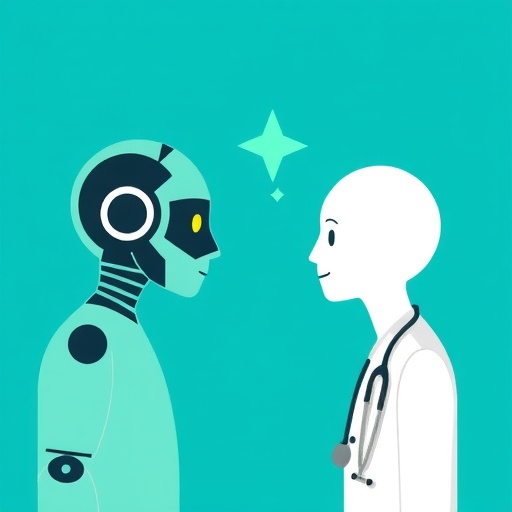
Artificial Intelligence (AI) has evolved dramatically over the past few years, influencing various sectors, including healthcare, finance, and education. One of the most intriguing discussions around AI is its ability to replicate and exhibit empathy. In a groundbreaking study, researchers Ruben, Blanch-Hartigan, and Hall delve into the concept of “AI Empathy,” comparing the responses of the AI language model ChatGPT to those of human physicians on an online forum dedicated to medical queries. This exploration not only highlights the advancements in AI technology but also raises ethical questions regarding the role of machines in sensitive human interactions.
The central theme of the research revolves around understanding how AI systems interpret emotional cues and respond with empathy. Empathy is a fundamental human trait that fosters connections, enables understanding, and promotes healing, particularly in medical environments. The study aims to dissect whether AI-generated responses can mirror the emotional intelligence typically displayed by healthcare professionals when addressing patient concerns. The findings suggest that while AI can simulate empathetic responses through natural language processing, the underlying understanding of emotional nuance remains limited compared to human practitioners.
The researchers employed a comprehensive methodology to facilitate a fair comparison between AI and human responses. Online forums serve as rich data sources for analyzing real-world queries and responses. By selecting a diverse set of medical inquiries, the study assesses how well AI can engage with patients’ emotional states. The results indicate that while ChatGPT can generate context-sensitive responses, the subtler nuances of empathy – such as the recognition of distress, comfort, or ire – are challenging for AI to fully grasp. This juxtaposition highlights the limits of machine learning in deeply human interactions.
One noteworthy aspect of the study is the potential implications for the future of patient care. As AI continues to be integrated into healthcare solutions, there are new opportunities for AI systems to support healthcare professionals in their roles. By providing prompt answers to patient queries and offering initial assessments, AI can free doctors from routine tasks, thereby allowing them to dedicate more time to empathetic engagement. However, the researchers caution against relying solely on AI for emotional support, emphasizing that the therapeutic alliance in medical practice is built on trust, which cannot simply be replicated by algorithms.
Additionally, the study tackles the ethical dilemmas posed by AI’s evolving role in healthcare. Questions such as privacy, consent, and quality of care are particularly salient when considering AI as a virtual caregiver. The researchers encourage ongoing dialogue regarding AI’s position in the delicate ecosystem of healthcare to avoid exacerbating issues such as depersonalization and commodification of care. The equilibrium between leveraging AI’s efficiency and retaining human touch in medicine is critical for the future landscape of healthcare.
Furthermore, the paper also explores the variations in responses between the AI model and human physicians. Analyzing the linguistic structures and emotional content within the responses unveils patterns that reflect the distinctive ways humans understand and process patient emotions as opposed to the algorithmic approach of AI. This finding sheds light on the unique abilities that human practitioners possess, ones that are inherent to our biological and experiential makeup, thus emphasizing the importance of maintaining a human cornerstone in healthcare.
As the conversation around AI empathy broadens, the authors invite future researchers to build upon their findings. There is a pressing need to refine AI’s capabilities in emotional recognition and understanding. By harnessing interdisciplinary approaches – combining insights from psychology, linguistics, and computer science – improvements may be made in creating more nuanced AI systems that better mimic the complexities of human empathy. This could enable AI systems to participate more effectively in conversational roles, especially in fields like mental health, where empathy is paramount.
In sum, the research conducted by Ruben and colleagues marks a significant step toward understanding the role of AI in human-centric fields. While the capabilities of models like ChatGPT are impressive, they are not without limitations, especially in tasks demanding high emotional intelligence. The pursuit of creating empathetic AI is essential but should be approached with caution and thoughtful ethical considerations. The end goal should be the enhancement of human welfare, joint effort between technology and healthcare professionals, ensuring that empathy remains at the forefront of patient care.
This study is timely as the pace of technological advancement continues to accelerate. The integration of AI in medical settings is not just an emerging trend but a shift that can redefine doctor-patient interactions. By examining the comparative responses of AI and physicians, valuable insights can be gleaned for the future implementation of AI in medical practice. As we navigate this uncharted territory, a careful balance must be struck to harness the potential of AI while safeguarding the human essence of caregiving.
This ongoing exploration of AI empathy will no doubt inspire further research and innovation, shaping the contours of future medical technologies. Whether AI can ever replicate the depth of human empathy remains an open question, one that warrants rigorous investigation and critical reflection. Ultimately, as AI systems evolve, fostering a collaborative environment where technology complements human expertise may prove to be the key to achieving a healthcare model that is both efficient and empathetic.
Cite Scienmag News
Arden W. (December 15, 2025). AI Empathy: ChatGPT vs. Physicians in Study. Scienmag. https://scienmag.com/ai-empathy-chatgpt-vs-physicians-in-study/
Arden W. "AI Empathy: ChatGPT vs. Physicians in Study." Scienmag, 15 December 2025, https://scienmag.com/ai-empathy-chatgpt-vs-physicians-in-study/. Accessed 29 August 2026.
Arden W. "AI Empathy: ChatGPT vs. Physicians in Study." Scienmag. December 15, 2025. https://scienmag.com/ai-empathy-chatgpt-vs-physicians-in-study/


