


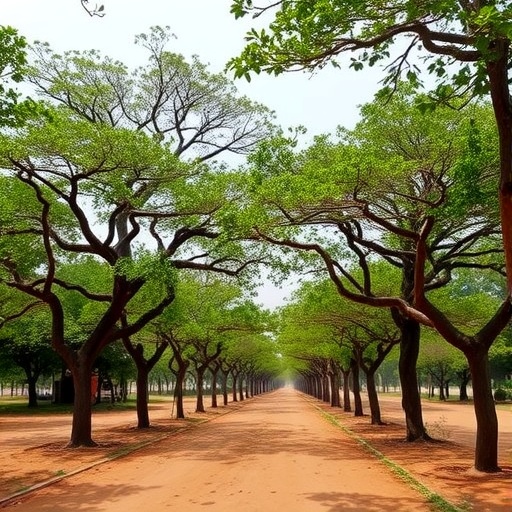
In urban environments, trees serve critical functions that go beyond aesthetic appeal, especially in regions that are vulnerable to environmental stressors like cyclones and pollution. A recent study conducted in Bhubaneswar, Odisha, by researchers M.C. Behera, S.S. Behera, and U.K. Sahoo, dives deep into the potential of several tree species in urban settings to withstand adverse conditions. This research holds significant implications not just for urban planning in cyclone-prone areas but also for enhancing air quality in polluted urban landscapes.
Bhubaneswar, branded as a Smart City, presents a unique case study with its growing urban landscape. With rapid urbanization, residents face challenges related to environmental degradation, primarily driven by pollution and the increasing frequency of severe weather events. In this context, the choice of urban trees could influence not only the ecological balance but also the overall quality of life for the city’s inhabitants. By analyzing various species, the study aims to inform policymakers and urban planners about suitable tree species that thrive in such challenging environments.
The researchers adopted a comprehensive methodology to evaluate the resilience of various urban tree species against cyclone conditions and pollution in Bhubaneswar. They assessed a range of factors, including the species’ growth characteristics, pollution tolerance, and structural integrity. These parameters are crucial for trees that need to withstand high winds while also providing essential ecosystem services, such as oxygen production, carbon sequestration, and habitat provision for wildlife.
Moreover, the study took a multidisciplinary approach, integrating ecological, botanical, and urban planning perspectives. By doing so, it provides a holistic understanding of how urban trees can be a significant part of climate adaptability strategies. The findings underscore that while selecting tree species for urban landscapes, it is imperative to evaluate their compatibility with existing environmental conditions, ensuring not just survival but also growth and sustainability.
Numerous species were put to the test during this research, ranging from the traditional to the more exotic varieties known for their adaptability. The researchers particularly focused on trees that could provide shade and enhance the urban forest canopy, which is crucial for mitigating the urban heat island effect—a growing concern in many metropolitan areas. The study highlights that species such as the Ficus and Tamarind trees have shown remarkable resilience, making them ideal candidates for city landscaping under the threat of cyclones.
Pollution poses another significant threat to urban tree health. The researchers explored how certain species could effectively filter air pollutants, contributing to improved urban air quality. In a city like Bhubaneswar, where pollution levels often exceed safety standards, the role of trees as natural air purifiers is indispensable. It was found that certain species not only survive but thrive in polluted environments, offering a natural solution to air quality issues.
Interestingly, the relationship between urban trees and community well-being was also examined in this study. The presence of greenery in urban landscapes is linked to numerous mental and physical health benefits. Urban trees contribute to reduced stress levels, enhance concentration, and promote physical activity among residents. Thus, the researchers argue that investing in the right species for urban areas could lead to a healthier, happier population, while also equipping the city with the resilience needed to face environmental challenges.
A noteworthy aspect of this study is its implications for future urban planning and management strategies. By advocating for specific tree species based on thorough research, the authors provide actionable insights for city planners, encouraging them to take a proactive approach to urban forestry. The authors assert that understanding the local ecological dynamics and integrating this knowledge into planning processes is essential for sustainable urban growth.
The potential economic benefits of urban trees were also discussed extensively. Healthy urban forests can increase property values, attract tourism, and reduce infrastructure costs by lowering temperatures and controlling stormwater runoff. In this light, the study not only underscores the ecological importance of selecting appropriate tree species but also frames these trees as valuable assets from an economic standpoint.
As cities continue to evolve, they must also adapt to the changing climate landscape. This study offers a pathway towards developing resilient urban ecosystems that not only survive but thrive amid adversity. It shines a spotlight on the need for ongoing research into urban forestry, highlighting that with careful planning and species selection, cities can bolster their defenses against natural disasters while simultaneously enhancing residents’ quality of life.
Residents of Bhubaneswar, and similarly vulnerable urban areas, can take solace in the findings of this research, which serve as a beacon of hope in an era where climate change poses significant risks. The valuable insights provided by Behera and colleagues will stimulate discussions among policymakers, community leaders, and residents on how urban landscapes can be transformed into havens of ecological resilience.
Ultimately, this research extends beyond its immediate geographical context. The implications of emphasizing adaptive tree species in urban forestry resonate in cities around the globe, particularly in regions prone to extreme weather events and pollution. As the world grapples with the twin challenges of climate change and urbanization, studies like this underscore that nature-based solutions can offer a sustainable path forward, merging ecological integrity with human health and well-being.
In conclusion, evaluating urban tree species like those showcased in Bhubaneswar could be foundational in creating resilient and sustainable urban environments. By choosing the right species, cities can enrich their urban landscapes, bolster ecological health, and create more livable spaces for future generations. This study exemplifies the critical intersection between ecological research and urban planning, emphasizing the need for a collaborative approach in addressing the pressing challenges faced by modern cities.
Cite Scienmag News
Violet Maxwell. (December 15, 2025). Tree Species for Cyclones and Pollution: Bhubaneswar Study. Scienmag. https://scienmag.com/tree-species-for-cyclones-and-pollution-bhubaneswar-study/
Violet Maxwell. "Tree Species for Cyclones and Pollution: Bhubaneswar Study." Scienmag, 15 December 2025, https://scienmag.com/tree-species-for-cyclones-and-pollution-bhubaneswar-study/. Accessed 3 September 2026.
Violet Maxwell. "Tree Species for Cyclones and Pollution: Bhubaneswar Study." Scienmag. December 15, 2025. https://scienmag.com/tree-species-for-cyclones-and-pollution-bhubaneswar-study/


