


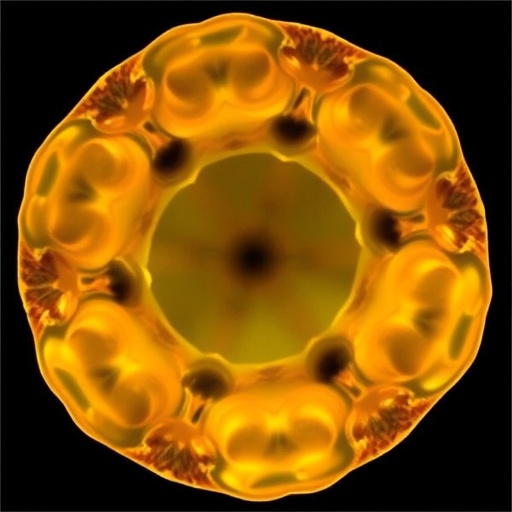
In a groundbreaking study published in Military Medicine Research, researchers have unveiled a pioneering approach to cartilage regeneration that combines advanced biomaterials and innovative tissue engineering techniques. This study, spearheaded by Shen et al., explores the use of a DNA-silk fibroin (DNA-SF) hydrogel sustained release system designed to enhance the regenerative potential of cartilage organoids. The implications of this research could be far-reaching, potentially transforming the treatment landscape for cartilage-related injuries and degenerative diseases.
Cartilage, a vital connective tissue, plays a crucial role in joint functionality and overall mobility. Unfortunately, due to its limited self-repair capacity, injuries often lead to degenerative conditions that significantly impact patients’ quality of life. Current treatment modalities, such as surgical interventions or pharmacological approaches, frequently fall short. The advent of tissue engineering presents a promising alternative, aiming to restore cartilage integrity and coax the body into healing itself through innovative strategies.
DNA-based materials have garnered significant attention in the biomaterials field due to their versatility and biocompatibility. Specifically, the DNA-SF hydrogel is notable for its unique physicochemical properties, which enable it to serve as an effective scaffold for cellular attachment and proliferation. By combining DNA with silk fibroin, researchers have created an environment that supports not only cell survival but also encourages the differentiation of stem cells into cartilage-forming cells, thereby accelerating the healing process.
In their study, the researchers generated cartilage organoids using this novel hydrogel system. These organoids mimic the natural architecture of cartilage and provide a sophisticated model for studying regeneration processes. The embodiment of such complex biological structures in vitro allows for more precise assessments of therapeutic interventions, providing insights that were previously unattainable in traditional two-dimensional cultures. This research not only explores the potential of these organoids in restoring cartilage but also highlights the relevance of DNA-SF hydrogels as multifunctional platforms in regenerative medicine.
The sustained release system developed by the team was a pivotal aspect of their research. It enables a controlled release of bioactive agents, such as growth factors and signaling molecules, which are integral to the healing cascade. By ensuring that these factors are released over an extended duration, the researchers effectively optimized the conditions necessary for cartilage regeneration. This continuous supply of bioactive signals is particularly crucial in the context of cartilage, where localized delivery can significantly influence cellular behavior.
A notable outcome of the study was the significant improvement in the mechanical properties of the regenerated cartilage tissue, which was evaluated through rigorous biomechanical testing. The enhanced functionality of engineered cartilage not only matched natural tissues but also exhibited resilience and durability under load-bearing conditions. Such advancements are critical, especially when focusing on long-term clinical applicability, as the engineered cartilage must withstand the rigors of everyday activities and physical strain.
The team conducted a series of in vivo experiments, further validating the efficacy of their DNA-SF hydrogel system. These experiments provided compelling evidence that the hydrogel not only facilitated cartilage formation but also integrated seamlessly with host tissues. This biocompatibility is vital for the successful outcome of any regenerative treatment, as it minimizes the risk of adverse immune responses that could compromise healing.
Another significant aspect of the study revolves around the scalable potential of this technology. The fabrication technique employed for the DNA-SF hydrogel can be adapted and optimized for large-scale production, which is essential for clinical applications. The researchers provided detailed protocols for creating these hydrogels, emphasizing the reproducibility of the manufacturing process. This scalability ensures that the innovation can be translated from the laboratory to clinical settings effectively.
Furthermore, the implications of this research extend beyond cartilage injuries. The principles of tissue engineering and biomaterial development lay the groundwork for addressing various musculoskeletal disorders. By understanding the dynamics of cellular interactions within the DNA-SF matrix, researchers could leverage this knowledge to develop therapies for other types of connective tissues, ultimately broadening the impact of their findings.
The integration of interdisciplinary approaches was highlighted prominently in this research. The collaboration between biomaterials scientists, molecular biologists, and clinicians was paramount in advancing the study. This synergy not only enriched the research outcomes but also fostered a holistic understanding of the challenges associated with tissue regeneration. Collaborative efforts like these are essential for addressing complex biological problems and driving innovation in the field of regenerative medicine.
As the healthcare landscape evolves, the significance of patient-centric solutions becomes increasingly evident. The DNA-SF hydrogel system exemplifies such a patient-focused approach by providing an engineered solution that addresses specific pathologies while enhancing patient outcomes. With this innovative method, healthcare providers can implement targeted strategies that align with the unique needs of individuals suffering from cartilage issues.
The study culminates in a hopeful proposition for the future of cartilage regeneration. If successfully translated into clinical settings, this technology could radically change the treatment paradigms for conditions such as osteoarthritis and traumatic cartilage injuries. The promise of restoring normal joint function through engineered cartilage presents a compelling case for continued research and development in this arena.
In conclusion, Shen et al.’s study on DNA-silk fibroin hydrogel sustained release systems presents a remarkable advancement in the field of regenerative medicine. With their innovative approach to cartilage organoid development and the integration of sustained release mechanisms, they have opened new avenues for enhancing cartilage regeneration. The intersection of technology and biology showcased in this research provides a glimmer of hope for countless individuals affected by cartilage-related disorders, ushering in an era of personalized, effective therapies that could redefine standard care.
This research sets the stage for future exploration and highlights the importance of continued investment in biomaterial science, tissue engineering, and clinical translation. As the field progresses, it is crucial to maintain a synergistic approach that encompasses basic science, applied research, and clinical applications to fulfill the promise of regenerative medicine.
Shen, CY., Zhou, QR., Wu, X. et al. Accelerating cartilage regeneration with DNA-SF hydrogel sustained release system-based cartilage organoids.
Military Med Res 12, 39 (2025). https://doi.org/10.1186/s40779-025-00625-z
Cite Scienmag News
Ophelia Keating. (December 14, 2025). Boosting Cartilage Repair with DNA-SF Hydrogel Organoids. Scienmag. https://scienmag.com/boosting-cartilage-repair-with-dna-sf-hydrogel-organoids/
Ophelia Keating. "Boosting Cartilage Repair with DNA-SF Hydrogel Organoids." Scienmag, 14 December 2025, https://scienmag.com/boosting-cartilage-repair-with-dna-sf-hydrogel-organoids/. Accessed 6 September 2026.
Ophelia Keating. "Boosting Cartilage Repair with DNA-SF Hydrogel Organoids." Scienmag. December 14, 2025. https://scienmag.com/boosting-cartilage-repair-with-dna-sf-hydrogel-organoids/


