


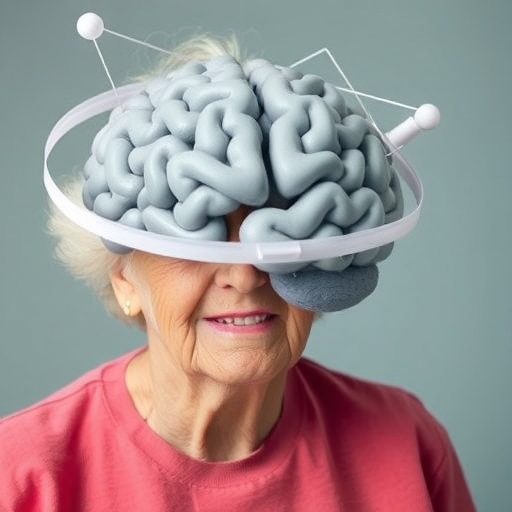
In a groundbreaking study published in “BMC Geriatrics,” researchers Niharika M.K., Ockelmann, and Meyer et al. delve into a critical aspect of auditory processing in older adults with hearing impairments. The research centers on the key predictors of speech-in-noise perception, shedding light on the intricate relationship between cognitive functions, particularly working memory, and auditory perception. As the global population ages, the prevalence of hearing impairment becomes a significant public health concern, underscoring the importance of understanding the cognitive factors that influence speech recognition in complex auditory environments.
Hearing impairments are known to affect millions of elderly individuals, often leading to social isolation, reduced quality of life, and increased risk of cognitive decline. The ability to perceive speech amidst background noise is particularly challenging for older adults, complicating communication and social interaction. This study seeks to identify the cognitive predictors that may enhance or hinder speech-in-noise perception, focusing on the pivotal role of working memory—a cognitive system responsible for the temporary holding and manipulation of information.
The researchers conducted a comprehensive assessment involving a cohort of older adults with diagnosed hearing impairments. Participants underwent rigorous tests designed to evaluate not only their speech recognition capabilities in noisy environments but also their working memory performance. Key tasks included auditory discrimination tests and memory recall tasks that aimed to measure the participants’ ability to retain and process auditory information over short periods.
One of the major findings of this study is the significant correlation between working memory capacity and the ability to perceive speech in noise. The researchers discovered that older adults with higher working memory capacity demonstrated markedly better performance in speech-in-noise tasks compared to their counterparts with lower memory capacity. This finding highlights the importance of cognitive resources in aiding auditory perception, suggesting that those who can more effectively manage and manipulate auditory information are better equipped to understand speech amid background distractions.
Furthermore, the study emphasizes that the cognitive load imposed by noisy environments can exacerbate existing hearing difficulties in older adults. As background noise increases, individuals with limited working memory may struggle to filter out irrelevant auditory stimuli, leading to increased misunderstandings and communication breakdowns. This cognitive strain does not merely hinder speech perception but can also contribute to overall cognitive fatigue, exacerbating the challenges faced by older adults with hearing impairment.
In light of these findings, the researchers advocate for the integration of cognitive training programs into rehabilitation practices for individuals with hearing impairments. By enhancing working memory through targeted cognitive exercises, it may be possible to improve auditory processing skills, ultimately benefiting communication and social engagement for older adults. Such interventions could provide a holistic approach to hearing rehabilitation, addressing both the sensory and cognitive dimensions of auditory processing.
Moreover, the implications of this research extend beyond individual interventions. As healthcare practitioners and policymakers grapple with the complexities of aging populations, understanding the links between cognitive functioning and hearing ability can inform the development of more effective communication strategies within clinical settings. For instance, training healthcare providers to recognize the interplay between coexisting cognitive deficits and hearing loss could lead to more tailored interventions that improve overall patient outcomes.
The findings also raise important questions regarding the role of environments in supporting auditory perception for older adults. Creating acoustically friendly spaces—particularly in public settings—could mitigate the challenges posed by background noise, enabling seniors to engage more fully in conversations. Awareness campaigns advocating for sound-adjusted environments can help foster inclusive communities where older adults feel empowered to communicate without fear of misunderstanding.
As we continue to advance our understanding of auditory processing and cognitive interactions, the insights gleaned from this study encourage further exploration into innovative approaches aimed at enhancing the auditory experiences of older adults. Future research could expand on these findings by examining other cognitive factors that may impact speech perception, such as attention or processing speed, thereby offering a more nuanced understanding of the intricacies involved in auditory perception.
The advent of advanced auditory technologies also presents an opportunity to leverage the findings of this research. Hearables and sophisticated hearing aids equipped with innovative signal processing algorithms could be designed to align with cognitive factors, providing personalized settings that adapt to a user’s auditory and cognitive strengths. Such advancements could significantly enhance the ability of older adults to navigate hearable environments, allowing for greater enjoyment and engagement in everyday interactions.
In conclusion, the research conducted by Niharika and colleagues marks a significant step forward in understanding the relationship between cognitive function and speech perception in noisy environments, providing essential insights for academics, practitioners, and individuals alike. As the world witnesses an unprecedented demographic shift towards an older population, studies like this underscore the need for integrative approaches that consider the cognitive aspects of hearing loss while also highlighting the resilience and adaptability of older adults in the face of auditory challenges.
By recognizing the pivotal role of working memory in speech-in-noise perception, the study not only contributes to the growing body of literature on auditory cognition but also paves the way for future interventions aimed at ameliorating the communication challenges faced by older adults with hearing impairments. As research progresses, the hope is to foster a deeper understanding of how to support aging populations in maintaining their social connections and enhancing their quality of life through improved auditory experiences.
The researchers are optimistic that continued investigations into cognitive predictors of speech perception will lead to tangible improvements in rehabilitation practices, ultimately fostering a more inclusive society where older adults can thrive without the barriers imposed by hearing impairments. With innovative solutions on the horizon, we may be on the cusp of transforming how we support auditory health and cognitive resilience in our aging populations.
Niharika, M.K., Ockelmann, J., Meyer, M. et al. Identifying predictors of speech-in-noise perception in older adults with hearing impairment: the key role of working memory. BMC Geriatr (2025). https://doi.org/10.1186/s12877-025-06841-5
Cite Scienmag News
Ophelia Keating. (December 14, 2025). Working Memory Crucial for Older Adults’ Speech Clarity. Scienmag. https://scienmag.com/working-memory-crucial-for-older-adults-speech-clarity/
Ophelia Keating. "Working Memory Crucial for Older Adults’ Speech Clarity." Scienmag, 14 December 2025, https://scienmag.com/working-memory-crucial-for-older-adults-speech-clarity/. Accessed 5 September 2026.
Ophelia Keating. "Working Memory Crucial for Older Adults’ Speech Clarity." Scienmag. December 14, 2025. https://scienmag.com/working-memory-crucial-for-older-adults-speech-clarity/


