


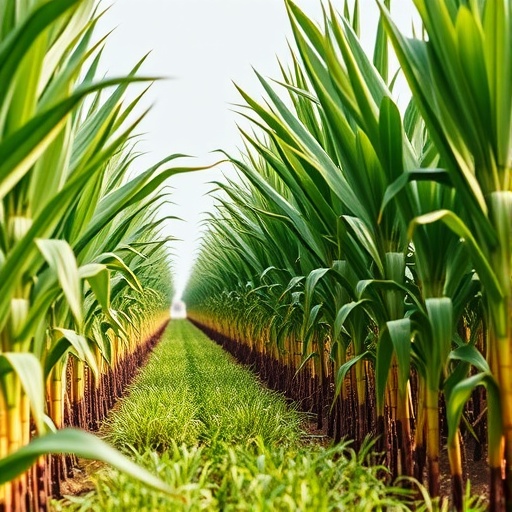
The advent of 5G technology is redefining the boundaries of agricultural innovation, especially in developing countries like Indonesia. In a groundbreaking study, researchers have demonstrated how deploying 5G networks can drastically enhance the productivity of sugarcane plantations. Sugarcane, a critical crop in Indonesia’s economy, has long faced challenges ranging from environmental conditions to inefficient farming practices. The incorporation of 5G technology sets the stage for a significant evolution in farming methodologies and strategies.
The study explores various applications of 5G technology in smart farming. Smart farming refers to the integration of modern technology, such as IoT (Internet of Things), data analytics, and artificial intelligence, into traditional agricultural practices to optimize productivity. 5G’s high-speed connectivity, low latency, and ability to connect a vast array of devices make it a transformative force in this arena. With vast expanses of sugarcane fields across Indonesia, the need for real-time monitoring and data collection has never been more pressing.
One of the foremost benefits of 5G implementation in agriculture is the ability to collect and analyze data in real time. Sensors placed throughout sugarcane fields can monitor soil moisture levels, temperature, humidity, and other critical variables. These sensors relay their findings instantaneously to farmers and agronomists, allowing for data-driven decisions. For example, the information gathered can guide irrigation practices, ensuring sugarcane receives optimal water amounts, thereby enhancing growth without wasting precious resources.
Moreover, the use of drones equipped with 5G connectivity is emerging as a groundbreaking innovation in crop management. These drones can fly over extensive sugarcane plantations, capturing high-resolution images and videos. This visual data can be processed using advanced analytics to identify crop health, pest infestations, and nutrient deficiencies. By leveraging the high speeds of 5G networks, real-time data from these drones can significantly reduce the time between assessing a problem and implementing corrective measures.
The study indicates that 5G technology’s impact extends beyond immediate crop management; it plays a vital role in supply chain logistics as well. With enhanced communication capabilities, stakeholders in the supply chain—from farmers to distributors—can coordinate more effectively. For instance, understanding real-time market demand for sugarcane can prompt farmers to adjust their harvest schedules accordingly, minimizing waste and maximizing profitability. Such optimizations in the supply chain can ensure that sugarcane producers in Indonesia remain competitive on a global scale.
Sustainability is another critical aspect of this research. Traditional farming methods often exacerbate environmental challenges, including soil degradation and water scarcity. However, through precision farming enabled by 5G connectivity, sugarcane plantations can adopt more sustainable practices. By utilizing data to apply fertilizers and pesticides only where needed, farmers can significantly reduce chemical runoff, safeguarding local ecosystems. Additionally, efficient irrigation practices informed by real-time data will conserve water, an increasingly precious resource in many regions.
As the study progresses, the researchers aim to understand the broader implications of 5G on rural economies in Indonesia. By enhancing agricultural productivity, there is potential for creating new jobs and revitalizing rural communities. The successful rollout of 5G networks could also encourage young people to pursue careers in agriculture, particularly in high-tech farming roles fusing technology with tradition. This demographic shift could ultimately alter the agricultural landscape in Indonesia, turning it into a beacon of modernized farming practices.
A major challenge identified in the study pertains to the infrastructure needed to support 5G networks in remote regions. While urban areas may be well-equipped to adopt this technology, rural areas, which are often home to sugarcane plantations, may lag behind. Investment in robust telecommunications infrastructure will be essential for realizing the full potential of 5G in agricultural applications. Stakeholders from the government and private sector must collaborate to bridge this digital divide, ensuring equitable access to these innovative technologies.
Furthermore, education and training will be pivotal in facilitating the transition from traditional farming practices to data-driven methodologies. The study emphasizes the necessity for farmers to be equipped with the skills to interpret data from various technologies. Workshops, online courses, and field training will therefore play crucial roles in enabling this technological shift. The empowerment of local farmers through education will be essential in ensuring that the benefits of 5G are fully realized and that they are not left behind amidst technological advancements.
In conclusion, as Indonesia stands on the threshold of a new agricultural revolution, the integration of 5G technology has the potential to reshape not only the productivity of sugarcane plantations but also the very fabric of rural life. The promise of real-time data, efficient practices, and sustainable methods indicates a future where farming is no longer dependent solely on traditional skills, but rather informed by cutting-edge technology. This paradigm shift has the capacity to build a more resilient and prosperous agricultural sector, catering to the demands of both domestic and international markets.
The implications of this research extend to global agricultural communities as well. Countries facing similar agricultural challenges may look to Indonesia’s pioneering efforts as a model for the effective integration of 5G technology in farming. The prospect of global collaboration and knowledge sharing in agricultural technology could pave the way for significant advancements in food production worldwide. As the world faces unprecedented challenges in food security and climate change, leveraging ideas such as these may be critical for sustainable development.
As we await the full results and implementations from this study, the excitement surrounding 5G’s potential in revolutionizing sugarcane cultivation and beyond is rapidly growing. Industry experts, farmers, and policymakers alike are keenly observing the developments, anticipating the profound changes that await in the realm of smart agriculture.
In summary, the fusion of 5G technology with smart farming practices presents a promising avenue for enhancing the productivity of sugarcane plantations in Indonesia. Besides increasing crop yields, this technological evolution signifies a broader shift towards sustainable agriculture and rural empowerment. The journey has just begun, but the prospects for a brighter agricultural future fueled by innovation are indeed on the horizon.
Dahmir, F., Krisnowo, A., Soehadi, G. et al. 5G utilization for smart farming to enhance productivity of sugarcane plantations in Indonesia.
Discov Sustain (2025). https://doi.org/10.1007/s43621-025-02073-0
Cite Scienmag News
Alan Morgan. (December 13, 2025). Boosting Sugarcane Yields: 5G Innovations in Farming. Scienmag. https://scienmag.com/boosting-sugarcane-yields-5g-innovations-in-farming/
Alan Morgan. "Boosting Sugarcane Yields: 5G Innovations in Farming." Scienmag, 13 December 2025, https://scienmag.com/boosting-sugarcane-yields-5g-innovations-in-farming/. Accessed 4 September 2026.
Alan Morgan. "Boosting Sugarcane Yields: 5G Innovations in Farming." Scienmag. December 13, 2025. https://scienmag.com/boosting-sugarcane-yields-5g-innovations-in-farming/


