


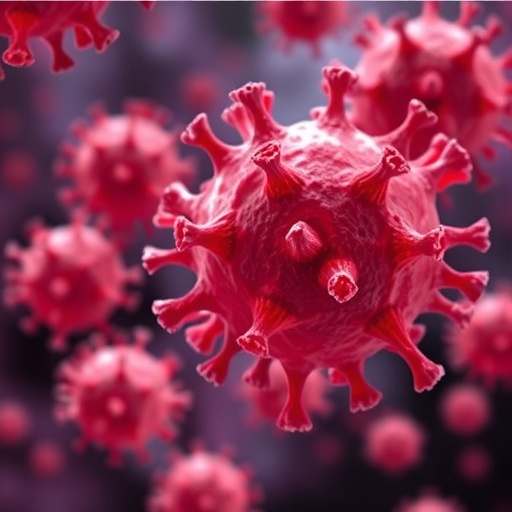
In a groundbreaking study published in Nature Communications in 2025, researchers have revealed a sophisticated mechanism by which HIV-infected CD4+ T cells evade destruction by myeloid immune cells. The study, led by Singh, Islam, Liu, and their team, uncovers the critical role of sialoglycans—complex sugar molecules—expressed on the surface of infected T cells, illustrating how these viral modifications intricately manipulate immune evasion pathways. This discovery not only advances our understanding of HIV pathogenesis but also opens new avenues for therapeutic strategies aimed at bolstering immune responses against the virus.
HIV, the virus responsible for acquired immunodeficiency syndrome (AIDS), primarily targets CD4+ T cells, essential drivers of the adaptive immune response. Once infected, these cells undergo myriad changes, many of which enable the virus to persist despite the host’s immune defenses. A central puzzle in HIV biology has been how infected cells avoid clearance by innate immune cells, especially myeloid populations such as macrophages and dendritic cells, known for their crucial roles in phagocytosis and antigen presentation.
The new research focuses on sialoglycans, which are oligosaccharides featuring sialic acid residues attached to glycoproteins and glycolipids on cell surfaces. These structures frequently participate in immune regulatory signals, often serving as “self” markers to prevent inappropriate immune attacks. Singh and colleagues demonstrate that HIV infection induces the upregulation of specific sialoglycan motifs on CD4+ T cells, effectively cloaking these cells in a disguise that impairs their recognition and killing by myeloid cells.
Using an array of advanced biochemical and molecular techniques, the researchers characterized the sialoglycan profiles of infected versus uninfected CD4+ T cells. They found a pronounced increase in α2,3- and α2,6-linked sialic acids in infected cells, modifications that are known ligands for Siglec receptors expressed on myeloid immune cells. Siglecs, or sialic acid-binding immunoglobulin-type lectins, function as inhibitory receptors that dampen immune responses upon engagement, thus averting excessive inflammation that could damage host tissues.
The authors established that HIV-induced sialoglycans engage Siglec-9 on macrophages and other myeloid cells, transmitting inhibitory signals that prevent the phagocytic killing of infected T cells. This interaction effectively converts what should be an activating immune encounter into one of tolerance or immune suppression. This finding is particularly significant because it clarifies a molecular basis for the survival of HIV-infected cells despite the presence of immune effectors that are typically capable of clearance.
To validate the functional relevance of sialoglycan-Siglec interactions, the team employed enzymatic and genetic approaches to remove or inhibit sialic acid residues on infected CD4+ T cells. These interventions restored myeloid cell-mediated cytotoxicity, confirming that sialoglycan expression is a critical determinant of immune evasion. Furthermore, blocking Siglec-9 on macrophages similarly enhanced the clearance of infected cells, offering a tantalizing target for therapeutic blockade.
The study’s implications extend beyond HIV biology, highlighting a broader paradigm in viral immune evasion strategies whereby pathogens exploit host glycosylation pathways to escape immune surveillance. Sialoglycans are utilized by several microbes and tumors to manipulate host immunity, and this research firmly places HIV among the pathogens adept at leveraging such molecular mimicry for its survival.
From a clinical perspective, these findings suggest that therapies designed to disrupt the sialoglycan-Siglec axis could enhance the immune system’s ability to eradicate HIV reservoirs, a major obstacle in curing chronic infection. Current antiretroviral treatments can suppress viral replication but fail to eliminate latent or actively infected cells that evade immune detection. Modulating sialoglycan interactions thus offers a complementary strategy to purge hidden or persistent infected cells.
Moreover, understanding the biochemical pathways by which HIV induces sialoglycan expression may enable the development of inhibitors targeting the enzymes responsible for these modifications. Sialyltransferases, the enzymes that attach sialic acid residues to glycoconjugates, represent potential drug targets. Interrupting their activity could strip infected cells of their protective sugar coats, rendering them vulnerable to immune clearance.
In addition to therapeutic applications, the study has diagnostic ramifications. Monitoring sialoglycan profiles on circulating CD4+ T cells may serve as a biomarker for identifying infected cells or assessing treatment efficacy. Such glycan-based biomarkers could enhance the precision of HIV diagnostics and help stratify patients based on their immune evasion status.
Importantly, the work underscores the complex interplay between virus and host at the molecular level, where HIV manipulates host cell machinery to subvert immune defense without triggering excessive immune activation that could lead to cell death or immune exhaustion. This fine-tuned balance contributes to the virus’s persistence and pathogenesis, explaining in part why HIV remains a formidable global health challenge despite decades of research.
The study employed cutting-edge methodologies including mass spectrometry-based glycomics, flow cytometry with lectin probes, gene-editing to modulate glycosylation enzymes, and functional immune assays with primary human macrophages. These interdisciplinary approaches provided a comprehensive picture of how HIV reshapes the glycan landscape of infected cells and how this reshaping dictates immune outcomes.
Future research will need to unravel how HIV regulates the expression of sialoglycans—whether through direct viral protein actions, alterations in host gene transcription, or metabolic changes driving glycan biosynthesis. Understanding these upstream events may reveal new checkpoints for intervention beyond the direct blockade of sialoglycan interactions.
In summary, the discovery that HIV co-opts sialoglycans on infected CD4+ T cells to evade myeloid cell-mediated killing represents a paradigm shift in our grasp of viral immune evasion. It not only clarifies fundamental aspects of HIV biology but also carves new paths toward therapeutic strategies aimed at neutralizing the virus’s stealth tactics. As the global scientific community strives toward an HIV cure, these insights provide critical molecular targets to help unlock the virus’s defenses and harness the full power of the immune system.
This novel insight into the glyco-immune interface illustrates the increasingly appreciated role of glycobiology in infectious disease research. As we deepen our understanding of the sugar-based language that underpins immune regulation, innovative treatments exploiting glycan pathways might soon transform the management of chronic viral infections like HIV.
The publication by Singh, Islam, Liu et al. marks a milestone in translational immunology, offering hope for more effective vaccines and immunotherapies that prevent HIV persistence. By elucidating the molecular cloak that shields infected cells, this work galvanizes the scientific quest to outmaneuver HIV’s elaborate survival strategies once and for all.
The study investigates the molecular mechanisms by which HIV-infected CD4+ T cells evade immune clearance, specifically focusing on the role of virus-induced sialoglycans and their interaction with Siglec receptors on myeloid immune cells.
HIV-induced sialoglycans on infected CD4+ T cells promote immune evasion from myeloid cell-mediated killing.
Singh, S., Islam, S.M.S., Liu, R. et al. HIV-induced sialoglycans on infected CD4+ T cells promote immune evasion from myeloid cell-mediated killing. Nat Commun (2025). https://doi.org/10.1038/s41467-025-66540-y
Cite Scienmag News
Kristina Jarvis. (December 13, 2025). HIV Alters CD4+ T Cells to Evade Immunity. Scienmag. https://scienmag.com/hiv-alters-cd4-t-cells-to-evade-immunity/
Kristina Jarvis. "HIV Alters CD4+ T Cells to Evade Immunity." Scienmag, 13 December 2025, https://scienmag.com/hiv-alters-cd4-t-cells-to-evade-immunity/. Accessed 6 September 2026.
Kristina Jarvis. "HIV Alters CD4+ T Cells to Evade Immunity." Scienmag. December 13, 2025. https://scienmag.com/hiv-alters-cd4-t-cells-to-evade-immunity/


