


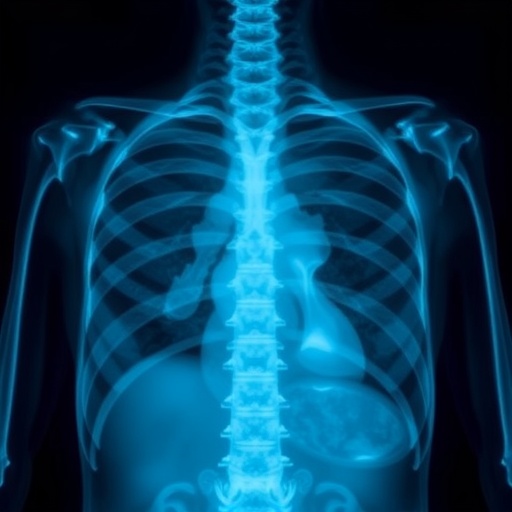
In the rapidly evolving field of medical imaging, advancements in artificial intelligence (AI) are paving the way for more accurate and efficient diagnostics. A recent study conducted by Tran-Anh et al. sets a new precedent with its innovative approach to detecting malpositioned catheters and lines in chest X-rays. This research brings the concept of knowledge distillation to the forefront, allowing for improved performance in a complex clinical environment. Traditional methods of identifying misaligned medical devices can be time-consuming and prone to errors. However, this study introduces a multiple teacher-student model that enhances the reliability of detecting such critical errors.
The key innovation of this study lies in its unique methodology that harnesses the power of knowledge distillation. In essence, knowledge distillation refers to a process where a smaller model (the student) learns from a larger, more complex model (the teacher). In the case of detecting malpositioned catheters or lines, the authors employed a multiple teacher-student architecture, where various teacher models contribute their insights to a single student model. This results in a more robust learning experience, enabling the student model to generalize better and reduce the risk of misinterpretation in complex imaging scenarios.
Utilizing chest X-rays presents a challenging task for AI models. These images often contain a plethora of anatomical variations, making it difficult for diagnostic systems to distinguish between normal placements and deviations of catheters and lines. The research team overcame these challenges by fine-tuning their model with various datasets that encapsulate a wide range of cases. This comprehensive dataset served as a bedrock for the knowledge distillation process, allowing the student model to learn from the nuanced differences in image presentations.
The implications of this research are profound, especially given the potential for human error in medical diagnostics. Misplaced catheters or lines can have significant clinical repercussions, leading to prolonged patient suffering and increased healthcare costs. By automating the detection process through advanced AI models, healthcare providers can not only enhance patient safety but also streamline workflow efficiency in radiology departments. The study illustrates a promising step toward integrating AI seamlessly into clinical practices.
In implementing the multiple teacher-student model, the researchers faced several hurdles, particularly in ensuring that the student model accurately captured the essential features extracted from the teacher models. This challenge prompted the team to adopt various teaching strategies, including different training techniques and loss functions to optimize the learning process. Such meticulous adjustments were crucial in refining the model’s performance, ultimately yielding an architecture capable of accurately identifying misaligned devices in chest X-rays.
Furthermore, the potential scalability of this approach cannot be overstated. The multiple teacher-student model can be extended beyond chest X-rays to other imaging modalities, such as CT scans or MRIs. This versatility opens up new avenues for research and clinical applications, where similar techniques could be applied to improve diagnostic accuracy in various medical scenarios. The research encourages further exploration into how knowledge distillation can be leveraged to address a multitude of challenges present in medical imaging.
Despite the promising results, the authors acknowledge that the study has its limitations. It is essential for future research to address these limitations thoroughly, such as bias in the datasets used for training or the potential need for real-time diagnostic capabilities. Ethical considerations, such as patient privacy and the implications of relying on AI for clinical decision-making, are also critical factors that need continuous oversight. It is imperative that as this technology progresses, it does so within an ethical framework that prioritizes patient care and trust in technology.
The study invites collaboration among researchers, medical professionals, and AI developers to further refine these methodologies. Challenging the existing paradigms in radiology requires collective efforts to enhance the accuracy of AI-driven diagnostics. Multidisciplinary teamwork can help bridge the knowledge gap between technology development and clinical implementation, ensuring that innovations effectively meet the needs of healthcare providers and patients alike.
Additionally, community engagement and transparency regarding the use of AI in healthcare are crucial in rectifying apprehensions among medical personnel. Initiatives to educate healthcare providers about the functioning of these AI systems can significantly improve the acceptance and integration of AI into everyday practices. Such dialogue can foster a symbiotic relationship between healthcare professionals and AI technologies, ultimately enriching patient outcomes and medical practices.
In conclusion, the research by Tran-Anh et al. represents a transformative leap in the integration of AI into medical diagnostics. By employing a multiple teacher-student model guided knowledge distillation framework, this study sets a high standard for future initiatives aimed at enhancing the reliability and efficiency of detecting malpositioned catheters and lines in chest X-rays. The trailblazing techniques established here reflect a broader trend in healthcare towards leveraging cutting-edge technology to enhance clinical practices, improve patient safety, and facilitate faster diagnostic processes. The implications of this work extend far beyond its immediate findings, potentially reshaping the landscape of medical imaging and diagnostics in the years to come.
Tran-Anh, D., Nguyen, T.N.A., Yang, HJ. et al. Multiple teacher-student model guided knowledge distillation for malpositioned catheters and lines detection on chest x-rays.
Discov Artif Intell (2025). https://doi.org/10.1007/s44163-025-00710-1
Cite Scienmag News
Denise Maddox. (December 13, 2025). Revolutionizing Chest X-Ray Analysis with Knowledge Distillation. Scienmag. https://scienmag.com/revolutionizing-chest-x-ray-analysis-with-knowledge-distillation/
Denise Maddox. "Revolutionizing Chest X-Ray Analysis with Knowledge Distillation." Scienmag, 13 December 2025, https://scienmag.com/revolutionizing-chest-x-ray-analysis-with-knowledge-distillation/. Accessed 3 September 2026.
Denise Maddox. "Revolutionizing Chest X-Ray Analysis with Knowledge Distillation." Scienmag. December 13, 2025. https://scienmag.com/revolutionizing-chest-x-ray-analysis-with-knowledge-distillation/


