


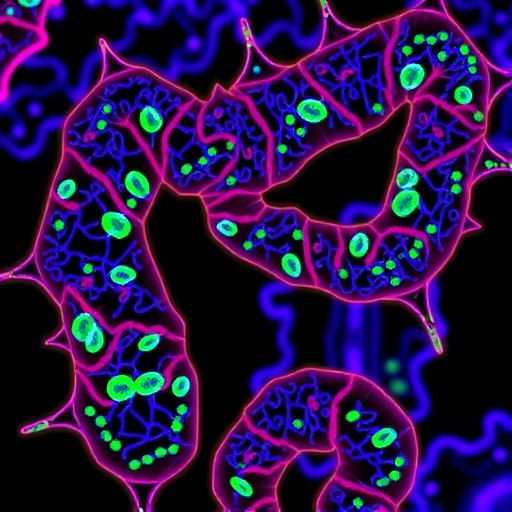
In a groundbreaking discovery poised to transform our understanding of colorectal cancer biology, researchers have identified the transcription factor LBX2 as a pivotal driver of tumor progression through a novel biochemical feedback loop involving glycosylation and lactylation modifications. This study, recently published in Cell Death Discovery, brings to light a complex regulatory mechanism by which LBX2 not only promotes colorectal cancer cell proliferation but also harnesses post-translational modifications to amplify oncogenic signaling in a self-reinforcing circuit.
Colorectal cancer remains one of the leading causes of cancer-related morbidity and mortality worldwide, with treatment resistance and metastasis posing substantial clinical challenges. The current findings elucidate how LBX2, a transcriptional regulator previously implicated in developmental processes, is aberrantly expressed in colorectal tumors and significantly correlates with poor patient prognosis. The mechanistic insights presented reveal that LBX2 orchestrates a positive feedback loop by modulating key enzymes responsible for glycosylation and lactylation, two critical post-translational modifications that have emerged as regulators of cancer cell metabolism and gene expression.
The researchers employed a suite of molecular biology techniques, including chromatin immunoprecipitation sequencing and mass spectrometry-based proteomics, to map the direct LBX2 targets and profile the landscape of glycosylation and lactylation in colorectal cancer cells. Their results demonstrated elevated LBX2 expression enhances the transcription of glycosyltransferases and lactylation-related enzymes, which in turn modifies LBX2 and associated transcription complexes. These modifications strengthen LBX2’s DNA binding affinity and transcriptional activity, creating a potent feed-forward loop that drives oncogenic gene expression programs.
Functional assays revealed that disrupting either glycosylation or lactylation pathways markedly reduces LBX2-driven cellular proliferation and invasiveness, underscoring the therapeutic potential of targeting these modifications. Notably, the study provides compelling evidence that lactylation, a relatively newly discovered post-translational modification derived from lactate metabolism, plays a central role in colorectal tumor progression by stabilizing key proteins and enhancing gene expression under hypoxic and glycolytic tumor microenvironments.
This biochemically intricate feedback system underscores the multifaceted role of metabolic reprogramming in colorectal cancer pathogenesis. By linking LBX2 activity to dynamic modifications like glycosylation and lactylation, the study opens new avenues for understanding how cancer cells exploit epigenetic and metabolic plasticity to sustain malignant growth and evade conventional therapies.
Beyond the immediate implications for colorectal cancer, these findings contribute to a broader conceptual framework that positions post-translational modifications as critical nodes in oncogenic signaling networks. The convergence of glycosylation and lactylation on LBX2 suggests a coordinated regulatory axis that balances nutrient availability, cellular metabolism, and transcriptional control—a paradigm that may be relevant to other aggressive cancers.
From a translational perspective, targeting enzymes involved in glycosylation and lactylation, or directly interfering with LBX2 expression and function, could represent a novel therapeutic strategy. Given the positive feedback nature of this circuit, pharmacological disruption has the potential to induce a collapse of the oncogenic network, thereby enhancing treatment efficacy and possibly overcoming resistance to current chemotherapeutic agents.
The methodological rigor and interdisciplinary approach of this investigation also underscore the importance of integrating genomic, proteomic, and metabolic data to unravel cancer complexity. Leveraging advanced imaging and biochemical assays, the researchers could systematically dissect the interaction between LBX2 modifications and chromatin dynamics, thus providing an unprecedented level of detail on the spatial and temporal regulation of oncogenic transcription factors.
Moreover, the study highlights the significance of tumor microenvironmental factors, such as hypoxia-induced lactate accumulation, in modulating cancer progression through post-translational modifications. This insight might prompt further exploration into metabolic interventions aimed at altering the tumor milieu to disrupt pathological feedback loops like the one driving LBX2 activity.
In conclusion, the identification of LBX2 as a master regulator of colorectal cancer progression via a glycosylation and lactylation-mediated positive feedback loop represents a milestone in cancer research. This discovery not only deepens our mechanistic understanding of tumor biology but also sets the stage for innovative therapeutic interventions targeting the intricate molecular crosstalk between metabolism and transcriptional control. As research advances, exploiting this vulnerability could significantly improve outcomes for patients suffering from colorectal cancer, reinforcing the critical intersection of metabolism, epigenetics, and oncogenesis.
Cite Scienmag News
Nathaniel Bowman. (December 12, 2025). LBX2 Drives Colorectal Cancer Through Glycosylation Feedback. Scienmag. https://scienmag.com/lbx2-drives-colorectal-cancer-through-glycosylation-feedback/
Nathaniel Bowman. "LBX2 Drives Colorectal Cancer Through Glycosylation Feedback." Scienmag, 12 December 2025, https://scienmag.com/lbx2-drives-colorectal-cancer-through-glycosylation-feedback/. Accessed 5 September 2026.
Nathaniel Bowman. "LBX2 Drives Colorectal Cancer Through Glycosylation Feedback." Scienmag. December 12, 2025. https://scienmag.com/lbx2-drives-colorectal-cancer-through-glycosylation-feedback/


