

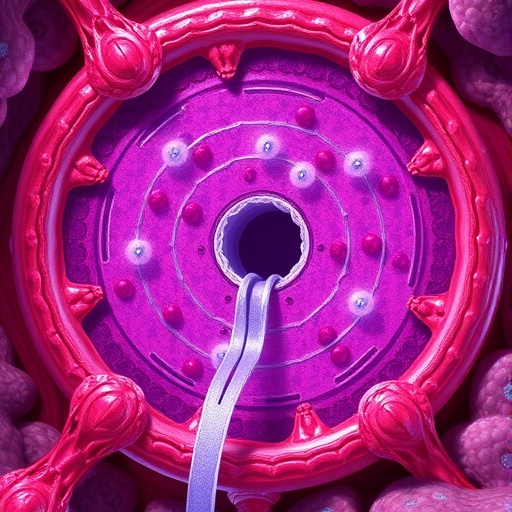
In a groundbreaking study published in Nature, researchers unveil NeuMap, a comprehensive transcriptional atlas that deciphers the complex landscape of neutrophil states across species, pathological conditions, and therapeutic responses. This unprecedented level of resolution offers a new perspective on the adaptability and heterogeneity of neutrophils, the frontline soldiers of the immune system, and sets the stage for future clinical applications in diagnostics and targeted therapies.
NeuMap harnesses the power of single-cell RNA sequencing to visualize neutrophil states with remarkable precision. By mapping neutrophil gene signatures from a mouse model of lung cancer treated with anti-CD40 immunotherapy, the researchers identified distinct shifts in neutrophil trajectories. In responsive cases, neutrophils transitioned from the IS-II hub towards an IFN-response hub, a shift indicative of robust anti-tumor immune activation. This dynamic visualization not only elucidates the cellular effects of immunotherapy but also highlights NeuMap’s potential to monitor immune responses in real time.
The translational relevance of NeuMap was further demonstrated by projecting human neutrophil signatures from patients suffering from severe COVID-19, influenza A, systemic lupus, and various cancers onto the mouse-derived NeuMap framework. The study revealed condition-specific neutrophil localization within distinct transcriptional hubs; for example, COVID-19 neutrophils predominantly localized to the PreNeu hub, aligning with recent clinical observations. In contrast, influenza and lupus signatures were enriched in the IFN-response hub, while cancer-associated neutrophils mapped predominantly to the IS-II hub. This cross-species conservation underscores the fundamental roles of these transcriptional programs in disease pathogenesis.
Diving deeper into human tissue analysis, spatial transcriptomics of lung adenocarcinoma samples unveiled five discrete neutrophil clusters that aligned closely with NeuMap’s hubs. Healthy lung tissue was enriched in neutrophils associated with IS-I and Ag-presenting hubs, whereas tumor lesions displayed a predominance of clusters mapping to IS-II and Ag-presenting states. Spatial analysis revealed unique cellular neighborhoods, with neutrophil clusters exhibiting distinct proximities to alveolar type 2 cells and tumor-associated macrophages, hinting at diverse functional interactions within the tumor microenvironment.
The study’s integration of spatial and transcriptional data illuminates the conserved architecture of neutrophil compartments between mice and humans, bridging experimental models and clinical realities. This conservation not only validates NeuMap’s utility across biological contexts but also offers new avenues to probe how neutrophils modulate immunity, inflammation, and tissue remodeling in cancer and infectious diseases at a spatially resolved level.
A particularly innovative application of NeuMap emerged from profiling blood neutrophil transcriptomes across 18 physiological and pathological contexts, encompassing infections, sterile inflammations, developmental stages, aging, and oncogenic processes. By projecting these data onto NeuMap’s multidimensional space, researchers achieved unprecedented resolution in distinguishing disease states. This reduction in transcriptional overlap, quantified via the Bhattacharyya index, enabled the identification of ten diagnostic regions, effectively generating transcriptomic “barcodes” unique to each condition.
These neutrophil barcodes demonstrated impressive discriminatory power. They differentiated age-related changes in male mice, physiological states such as pregnancy, genetic predispositions like atherosclerosis in Apoe knockout mice, and early oncogenic transformations. Moreover, diverse tumor types and infection models yielded distinct barcode patterns, while disease phases such as active liver cholestasis versus remission were also distinguishable. Such a fine-grained molecular fingerprinting of blood neutrophils represents a pioneering diagnostic frontier in immunology.
At the mechanistic level, the study validates that human neutrophils differentiated ex vivo from CD34+ progenitor cells recapitulate key transcriptomic responses observed in vivo in mice, particularly those induced by IFNβ and GM-CSF. This functional conservation across species strengthens the biological relevance of NeuMap and hints at potential applications for drug screening and personalized immunotherapies.
By providing an integrated framework that links neutrophil transcriptional states to their spatial organization and systemic circulation, NeuMap offers a holistic view of immune cell dynamics that could revolutionize the monitoring and modulation of inflammatory diseases and cancer. Its diagnostic potential is amplified by enabling non-invasive blood-based assessments that reflect tissue-level immune alterations.
In essence, this study redefines our understanding of neutrophil biology by uncovering a modular and conserved architecture of neutrophil states governed by distinct transcriptional hubs. NeuMap’s ability to capture the subtle nuances of immune cell behavior across multiple disease contexts and species paves the way for next-generation diagnostics and precision medicine strategies.
The implications of this work extend far beyond neutrophil biology. By establishing a blueprint for high-resolution immune cell mapping, NeuMap serves as a model for exploring other leukocyte compartments, potentially accelerating the discovery of novel biomarkers and therapeutic targets across a spectrum of diseases.
Future investigations inspired by NeuMap may focus on elucidating the regulatory circuits within each transcriptional hub, deciphering their interactions with diverse microenvironments, and harnessing these insights to engineer immune cells with tailored functionalities. Such endeavors could transform immunology and oncology, yielding unprecedented control over immune-mediated disease processes.
In the clinical arena, NeuMap-based approaches could facilitate early diagnosis, prognosis, and therapeutic stratification by providing a dynamic readout of neutrophil functional states with high specificity and sensitivity. This is particularly relevant for complex diseases where neutrophils play a dual role, balancing host defense and tissue damage.
Ultimately, the architecture unveiled by NeuMap underscores the plasticity and complexity of neutrophil responses, revealing how these cells orchestrate immunity and pathology through discrete but interconnected transcriptional programs. This landmark study not only enriches fundamental immunology but also charts a promising path toward translational applications that could impact millions worldwide.
Cite Scienmag News
SCIENMAG. (December 12, 2025). Inside the Neutrophil Compartment’s Complex Architecture. https://scienmag.com/inside-the-neutrophil-compartments-complex-architecture/
SCIENMAG. "Inside the Neutrophil Compartment’s Complex Architecture." Scienmag, 12 December 2025, https://scienmag.com/inside-the-neutrophil-compartments-complex-architecture/. Accessed 28 August 2026.
SCIENMAG. "Inside the Neutrophil Compartment’s Complex Architecture." Scienmag. December 12, 2025. https://scienmag.com/inside-the-neutrophil-compartments-complex-architecture/


