


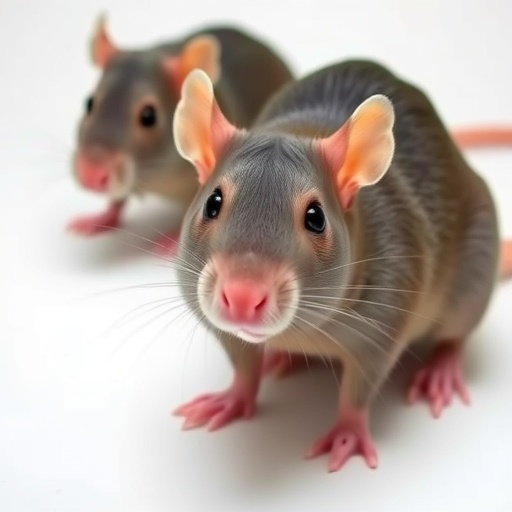
Recent advances in neuroscience have shed light on the complex interplay between social behavior and environmental factors. A groundbreaking study has demonstrated that social isolation can provoke heightened sexually aggressive behavior in male Wistar rats, illuminating the far-reaching effects of social structures on animal behavior. This pivotal research offers captivating insights for understanding aggression’s biological and social underpinnings and may ultimately have profound implications for both animal care and human psychology.
The study, conducted by a team of researchers led by Ngala M.E., highlights a critical aspect of behavior in rodents. Wistar rats, known for their genetic homogeneity and reliability in experimental settings, were chosen for this inquiry to examine how social environments impact their aggressive tendencies. The researchers meticulously crafted an experimental framework that allowed them to isolate variables, thus enabling a clear exploration of the effects of social deprivation on these animals’ behavior.
Social isolation is not merely a physical separation; it provokes deep psychological and physiological changes in test subjects. The team observed that male Wistar rats subjected to extended periods of isolation exhibited increased aggression, particularly in a sexual context. This observation suggests that social interactions play a vital role in regulating aggressive behaviors, and when these interactions are stripped away, the rats may resort to heightened aggression as a compensatory mechanism.
The underlying neurobiological mechanisms driving this aggression were also a focal point of the research. Various neurotransmitters and hormones are known to mediate aggression, and the researchers hypothesized that social isolation could alter the production and release of these biochemical agents, further intensifying aggressive behaviors. Elevated levels of hormones, particularly testosterone, were particularly noted, suggesting a link between social stressors and hormonal responses that could drive aggressive behavior.
Moreover, the study draws attention to the excitement and urgency of understanding how environmental stressors can shape behavior. The implications of these findings extend far beyond the laboratory and resonate with pressing issues in fields such as mental health and social behavior. For instance, how might isolation or a lack of social connection impact individuals in broader contexts, such as the aging population or individuals enduring mental health struggles?
Research like this also raises important questions about animal welfare. If social isolation can lead to significant behavioral changes, what are the ethical ramifications for laboratory settings where such conditions might inadvertently occur? The findings urge a reevaluation of how animals are housed and cared for in research institutions, advocating for more socially enriched environments to promote well-being and reduce stress-induced behavioral complications.
As the research unfolds, the significance of these findings only grows. The correlation between social structures and aggression emphasizes the need for multidisciplinary approaches to address aggression in both animals and humans. Integrating behavioral biology with psychological health frameworks can provide new perspectives and strategies for interventions aimed at managing aggression and promoting social harmony.
Additionally, there is potential for the findings to inform further studies exploring how social environments might be manipulated or enriched to foster healthier behaviors. By identifying specific interactions or environmental factors that mitigate aggression, researchers can pave the way for novel insights into behavioral interventions that could benefit various populations, from laboratory rats to human social groups.
Awareness of the psychological impact of isolation becomes increasingly relevant in our contemporary society. As isolation becomes a distressing reality for many due to varying social crises, understanding the mechanisms that underlie such behaviors could lead to better therapeutic measures and support systems that foster connection and community.
In summary, the study by Ngala and colleagues provides an invaluable contribution to our understanding of how social isolation influences aggression. With implications that reach into both animal welfare and human psychological health, this research underscores the importance of social environments in shaping behavior—a critical realization as society navigates an increasingly isolated world.
As scientists continue to delve into the intricacies of behavior from biological, psychological, and social perspectives, studies like this serve as a reminder of the interconnectedness of life. Understanding how isolation triggers aggression not only informs animal care practices but also sharpens our awareness of the pressing issues regarding social structures and their implications for mental health in humans.
Ultimately, the ripple effects of the research extend into various domains, emphasizing the need for a holistic approach to behavior that considers environmental, hormonal, and social factors. This study stands as a testament to the complexity of aggression and the role that social experiences play in shaping behavioral outcomes—solidifying the need for continued research in this area.
In the quest for greater understanding of aggression and social behavior, this pivotal research offers a new lens through which we can view both animal and human interactions as fundamentally intertwined within the tapestry of social existence.
Cite Scienmag News
Ophelia Keating. (December 12, 2025). Social Isolation Fuels Aggressive Behavior in Male Rats. Scienmag. https://scienmag.com/social-isolation-fuels-aggressive-behavior-in-male-rats/
Ophelia Keating. "Social Isolation Fuels Aggressive Behavior in Male Rats." Scienmag, 12 December 2025, https://scienmag.com/social-isolation-fuels-aggressive-behavior-in-male-rats/. Accessed 3 September 2026.
Ophelia Keating. "Social Isolation Fuels Aggressive Behavior in Male Rats." Scienmag. December 12, 2025. https://scienmag.com/social-isolation-fuels-aggressive-behavior-in-male-rats/


