


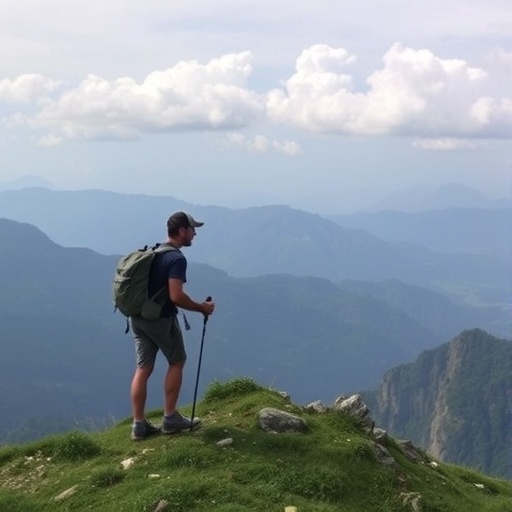
In the captivating realm of archaeology, researchers have recently embarked on a groundbreaking study that sheds light on the intricate dynamics of mobility among ancient hunter-gatherer societies. Focused on the enigmatic region of Montlleó in the Eastern Pyrenees, this research delves into the spatial patterns and movements of these groups over extended periods. By utilizing advanced geographic analysis and innovative methodologies, the study offers new perspectives on how these prehistoric communities thrived in mountainous terrains, revealing not only their adaptability but also their social structures and interactions.
At the heart of this investigation is the recognition that mobility was crucial for the survival of hunter-gatherers. Unlike sedentary societies, these ancient groups depended on their ability to traverse vast landscapes to locate resources, from freshwater sources to game and edible plants. The research team, led by esteemed scholars E. Rafart-Vidal, X. Rubio-Campillo, and X. Mangado Llach, skillfully maps out the historical paths these communities might have taken, carving out a narrative of survival woven intricately with the landscape itself.
The researchers employed a multi-faceted approach by analyzing spatial data, which encompassed advanced Geographic Information Systems (GIS) technology. This approach enabled them to visualize the relationship between the ancient groups and their surroundings, indicating how geography influenced their movement patterns over time. By mapping archaeological finds against the backdrop of the region’s challenging topography, they were able to highlight critical zones for resource exploitation and settlement.
One of the most significant findings of the study relates to the concept of seasonal mobility. The evidence suggests that these groups likely engaged in cyclical patterns of movement, returning to favored locations at different times of the year to exploit available resources. This behavior indicates a sophisticated understanding of the environment and its seasonal variations, illuminating not just survival tactics but also a social structure that required coordination and communication among group members.
In their analysis, the team also explored the implications of terrain features such as elevation, slope, and the presence of water bodies on mobility. The results revealed that hunter-gatherer groups exhibited remarkable adaptability in navigating terrain that posed both challenges and opportunities. Such adaptability underscores the importance of environmental awareness and the capacity to innovate solutions that would maximize resource access, which persists as an appealing aspect of human resilience.
Furthermore, the research taps into the significance of social networks in determining mobility patterns. It hints at the possibility that these groups established connections across vast distances, sharing knowledge about resource locations and routes. The implications of this finding stretch far beyond mere survival strategies, suggesting the existence of complex kinship and social ties that fortified community bonds in the face of adversity. This interconnectedness may have played a pivotal role in the transmission of cultural practices and technologies among different groups.
Moreover, the study emphasizes the value of archaeological context in understanding these mobility dynamics. By situating artifacts and settlement patterns within their environmental context, the researchers illuminate how particular locations facilitated social gatherings and exchanges. For example, cliffs that provided natural protection could serve as seasonal camps or meeting points, thereby acting as hubs of interaction and cultural exchange among hunter-gatherer societies.
As archaeological methods continue to evolve, the integration of sophisticated technologies marks a turning point in the field. The use of spatial analysis fosters a more nuanced understanding of mobility that transcends traditional, linear narratives. This transformative approach underscores the need to reconsider how we interpret the lifeways of ancient people, moving beyond views centered only on static settlement patterns to acknowledge the fluidity and dynamism of their existence.
Ultimately, this research not only contributes to academic discourse but also invites the public to rethink historical narratives surrounding hunter-gatherer communities. By showcasing their ingenuity and adaptability in diverse environments, it challenges preconceived notions about prehistoric life. The study serves as a powerful reminder of the deep connections between humans and their landscapes, fostering a sense of respect for the ingenuity of our ancestors.
Throughout the investigation, the interdisciplinary collaboration among archaeologists, geographers, and anthropologists has become evident. This cooperative spirit is crucial for advancing our understanding of our forebears and their interactions with the environment. By pooling diverse expertise, researchers can create a richer, more comprehensive picture of the past, illuminate hidden narratives, and foster a dialogue across various fields of study.
As we reflect on the implications of this research, it becomes clear that the mobility of hunter-gatherer communities is a testament to human adaptability. Their ability to thrive in demanding landscapes offers valuable lessons for contemporary society as we navigate our own complex relationship with the environment. Understanding the past can inform our choices moving forward, especially in an era where climate change and resource scarcity challenge modern life.
In conclusion, the spatial analysis conducted in Montlleó not only enriches our understanding of long-term human mobility but also highlights the resilience and ingenuity of hunter-gatherer societies. The findings present a compelling narrative that underscores the importance of connectivity, innovation, and cultural exchange in human history. This research opens doors to further inquiries, urging scholars to explore additional facets of mobility, settlement, and interaction in other regions, thus broadening the scope of our understanding of human prehistory.
As we anticipate future discoveries emerging from the archaeological record, the insights gleaned from this study will undoubtedly continue to resonate, inspiring generations of researchers and enthusiasts alike.
Rafart-Vidal, E., Rubio-Campillo, X., Mangado Llach, X. et al. Spatial analysis of long-term mobility dynamics among hunter-gatherer groups in mountain areas: the case of Montlleó (Eastern Pyrenees). Archaeol Anthropol Sci 17, 245 (2025). https://doi.org/10.1007/s12520-025-02351-y
Cite Scienmag News
Courtney Benton. (December 12, 2025). Exploring Hunter-Gatherer Mobility in Montlleó Mountains. Scienmag. https://scienmag.com/exploring-hunter-gatherer-mobility-in-montlleo-mountains/
Courtney Benton. "Exploring Hunter-Gatherer Mobility in Montlleó Mountains." Scienmag, 12 December 2025, https://scienmag.com/exploring-hunter-gatherer-mobility-in-montlleo-mountains/. Accessed 4 September 2026.
Courtney Benton. "Exploring Hunter-Gatherer Mobility in Montlleó Mountains." Scienmag. December 12, 2025. https://scienmag.com/exploring-hunter-gatherer-mobility-in-montlleo-mountains/


