


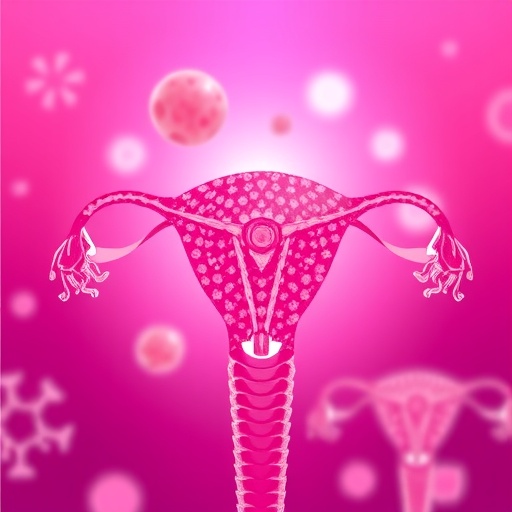
Recent advancements in cancer therapies have illuminated the complex biological pathways intertwined with treatment responses. Among them, ovarian cancer remains one of the most challenging malignancies to treat effectively. A recent study has ventured into a pivotal area of cancer therapy, focusing on the poly (ADP-ribose) polymerase (PARP) inhibitors and their efficacy in the context of ovarian cancer. This research identifies potential strategies to enhance the therapeutic effectiveness of PARP inhibitors by targeting the phosphoinositide 3-kinase (PI3K)/Akt/mammalian target of rapamycin (mTOR) signaling pathway.
Ovarian cancer stands out as a particularly aggressive disease, often diagnosed at advanced stages, resulting in a poor prognosis. The treatment landscape typically involves a combination of surgery and chemotherapy, but many patients develop resistance to these therapies over time. Consequently, researchers have turned to alternative methods to improve outcomes. By targeting specific molecular pathways implicated in cancer progression and therapy resistance, one can conceptualize a more nuanced approach to treating ovarian cancer.
PARP inhibitors have gained traction in recent years, particularly for patients harboring BRCA mutations, which impair DNA repair mechanisms. The rationale behind using PARP inhibitors lies in their ability to exploit the synthetic lethality concept, wherein the inhibition of DNA repair enzymes in cancer cells with compromised DNA repair pathways leads to cell death. However, the clinical responses to PARP inhibitors have been inconsistent in broader patient populations, prompting the need for research into combination strategies that could enhance their efficacy.
One such combination strategy involves targeting the PI3K/Akt/mTOR pathway. This pathway plays a significant role in cellular growth, proliferation, and survival. Typically, in cancer cells, aberrations in this pathway contribute to tumorigenesis and treatment resistance. By integrating PI3K/Akt/mTOR pathway inhibitors with PARP inhibitors, there is potential to synergistically enhance the therapeutic effect. The idea is that downregulating the prosurvival signals may augment the susceptibility of tumor cells to DNA damage induced by PARP inhibition.
The study conducted by Wang and colleagues highlights how concurrent inhibition of the PI3K/Akt/mTOR pathway alongside PARP inhibition can effectively reduce tumor growth and overcome resistance mechanisms in ovarian cancer models. By employing a variety of preclinical models, the researchers were able to dissect the underlying molecular correlates of this combination therapy. They observed that the combined treatment triggered increased apoptosis and had a more profound impact on tumor growth in vivo compared to either treatment alone.
Mechanistically, the researchers identified alterations in several downstream signaling pathways when combining these therapeutic agents. The collaborative effect led to upregulation in pro-apoptotic signals and downregulation of the pathways that typically promote cellular survival. This reprogramming of cellular signaling dynamics suggests a robust means to counteract the survival advantage that cancer cells often exploit during therapy.
In addition, the team pointed out that the expression levels of certain biomarkers may predict which patients could benefit most from this combination treatment. Biomarkers related to PI3K/Akt/mTOR signaling and DNA repair pathways were analyzed, yielding promising correlations that could inform patient selection in clinical settings. This personalized approach to treatment may not only enhance efficacy but also reduce unnecessary side effects from ineffective therapies, thereby improving patient quality of life.
Moreover, the study opens a dialogue about the broader implications of targeting integrated signaling pathways in oncology. It challenges the traditional paradigm of monotherapy in cancer treatment and advocates for robust, multifaceted approaches that account for the intricate biology of tumors. By understanding the interactive networks within cancer cells, researchers can potentially enhance therapeutic strategies, leading to more durable responses and improved patient outcomes.
Another critical aspect of this research lies in its translational potential. The insights gained from laboratory findings prompt significant consideration for clinical trial design. The authors emphasize that testing the combination of PARP inhibitors with PI3K/Akt/mTOR pathway inhibitors in carefully designed clinical trials may pave the way for more effective treatment regimens for ovarian cancer patients.
Moreover, ongoing monitoring for emerging resistance mechanisms will be paramount to optimizing treatment strategies. As the cancer landscape evolves, so too must the approaches employed by oncologists and guiding research efforts. The evolving understanding of tumor biology demonstrates the necessity for agility in therapeutic strategies, advocating for treatments that can adapt to the individual tumor microenvironment.
In conclusion, Wang et al.’s comprehensive study offers a promising avenue for enhancing the efficacy of PARP inhibitors in ovarian cancer by strategically targeting the PI3K/Akt/mTOR pathway. Their findings underscore the importance of understanding the complexity of cancer biology and using that knowledge to inform treatment methodologies. As research progresses, the hope is that these insights will translate into improved therapies, extending survival and enhancing quality of life for ovarian cancer patients on a larger scale. The efforts in this field signal a potential paradigm shift in how we approach the management of formidable cancer types, illustrating the synergy of targeted therapies in the oncology arsenal.
Moving forward, further investigations are essential to validate these findings in clinical settings and explore additional pathways that may interact synergistically with PARP inhibition. With continued research and innovation in cancer therapies, more effective and personalized treatment strategies are within reach, promising a brighter future for countless patients battling ovarian cancer and beyond. As science progresses, it is this shared commitment to unraveling the complexities of cancer that will ultimately lead to victories against devastating diseases.
Wang, Y., Xia, Q., Wang, X. et al. Enhancing PARP inhibitor efficacy in ovarian cancer: targeting the PI3K/AKT/mTOR pathway.
J Ovarian Res (2025). https://doi.org/10.1186/s13048-025-01868-z
Cite Scienmag News
Nathaniel Bowman. (December 12, 2025). Boosting PARP Inhibitors in Ovarian Cancer Treatment. Scienmag. https://scienmag.com/boosting-parp-inhibitors-in-ovarian-cancer-treatment/
Nathaniel Bowman. "Boosting PARP Inhibitors in Ovarian Cancer Treatment." Scienmag, 12 December 2025, https://scienmag.com/boosting-parp-inhibitors-in-ovarian-cancer-treatment/. Accessed 4 September 2026.
Nathaniel Bowman. "Boosting PARP Inhibitors in Ovarian Cancer Treatment." Scienmag. December 12, 2025. https://scienmag.com/boosting-parp-inhibitors-in-ovarian-cancer-treatment/


