


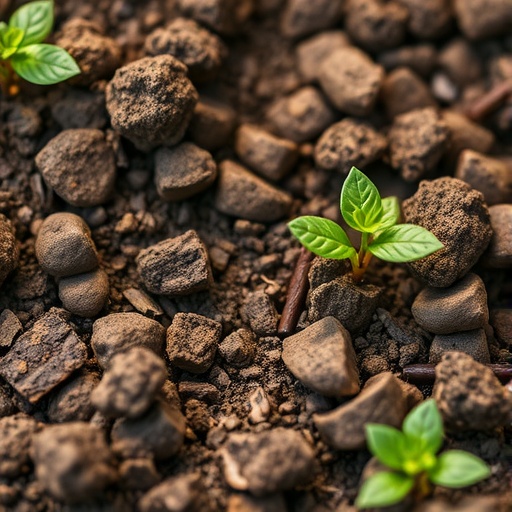
Soil is often regarded as a mere substrate supporting plant growth, but emerging research underscores its monumental role in sustaining vital ecosystem services, particularly in relation to water quality. Recent insights reveal that soil health is not only critical for agricultural productivity but fundamentally interconnected with the preservation and regulation of water resources. As the global population surges and anthropogenic activities intensify, pressures on both soil and water systems amplify, necessitating an integrated perspective to safeguard environmental and human health. This paradigm shift calls for a holistic appreciation of soil’s role as both a battleground and a buffer for contaminants that threaten water quality worldwide.
Understanding soil’s function demands an exploration of its complex interactions with water, involving processes such as filtration, adsorption, degradation, and transformation of pollutants. Soils act as natural filters, preventing the ingress of hazardous substances into groundwater and surface water bodies. However, this capability is finite and highly dependent on soil health parameters including organic matter content, microbial diversity, texture, and structure. The degradation of these soil attributes through pollution, compaction, or improper management significantly undermines its filtering capacity, thereby exposing water resources to contamination risks.
One of the paramount challenges in contemporary soil-water dynamics is the presence and mobility of micropollutants—trace organic and inorganic compounds originating from a variety of sources. Traditionally, pesticides have been the focal point of contamination concerns owing to their widespread agricultural use and documented toxicological effects. Nonetheless, the spectrum of micropollutants has expanded dramatically to include pharmaceuticals, personal care products, industrial chemicals, and microplastics. These emerging contaminants often possess complex physicochemical properties that complicate their behavior in soil matrices and subsequent transport into aquatic environments.
The application of reclaimed materials, such as biosolids, treated wastewater, and organic waste, exemplifies a resource reuse strategy that simultaneously benefits soil fertility and challenges soil-water quality frameworks. While recycling these materials contributes to circular economy goals and reduces landfill pressures, it inadvertently introduces novel micropollutants into soils that may persist, bioaccumulate, or transform into even more harmful derivatives. Consequently, the practice demands rigorous evaluation and monitoring protocols to prevent inadvertent dissemination of contaminants through soil pathways into water bodies.
Pharmaceutical residues in soils represent a particularly insidious class of pollutants. Their biological activity, designed to exert effects at very low concentrations, poses potential threats beyond target organisms. Upon entering soils via effluents or land-applied amendments, these compounds can alter microbial communities critical for nutrient cycling and organic matter decomposition, thereby impairing soil functions. Moreover, the fate of these pharmaceuticals in soil and their capacity to leach into groundwater depend on complex interactions influenced by soil pH, organic carbon content, and microbial enzymatic activity.
Microplastics, an increasingly recognized environmental hazard, infiltrate soils through diverse routes including sludge amendments, atmospheric deposition, and irrigation with contaminated water. Their persistence and physical characteristics affect soil porosity, water retention, and microbial habitat quality. Furthermore, microplastics serve as vectors for co-contaminants, enhancing the mobility of hydrophobic pollutants and potentially facilitating their transfer to aquatic systems. The cumulative impacts of microplastics and their associated chemicals on soil and water quality remain an evolving field of inquiry demanding urgent attention.
The duality of soil as both a reservoir and a conduit for contaminants underscores the critical need for integrated management approaches. Soil’s capacity to immobilize or degrade pollutants must be viewed in context with land use practices, climatic variables, and anthropogenic pressures that influence contaminant inputs and transformation. A systems-level understanding, incorporating ecological, chemical, and hydrological perspectives, is essential to develop effective strategies that preserve both soil integrity and water purity.
Future policy frameworks must embrace the “One Environment” ethos that transcends traditional silos separating soil, water, and atmospheric management. This holistic view aligns with the broader “One Health” concept recognizing interconnectedness across human, animal, and environmental health. Policies should incentivize sustainable land management practices, promote development of advanced monitoring technologies, and support research into novel remediation techniques tailored for emerging micropollutants.
The advent of advanced analytical methodologies, such as high-resolution mass spectrometry and molecular biology tools, has revolutionized the detection and characterization of micropollutants in soil-water systems. These technologies unveil the complexity of contaminant mixtures and allow tracing of their transformation products, shedding light on previously hidden exposure pathways. Combining these insights with big data analytics and predictive modeling can inform risk assessments and guide adaptive management interventions.
Agricultural landscapes, which dominate many watersheds globally, are arenas where soil-water health challenges converge dramatically. Inputs including fertilizers, pesticides, and organic amendments impact soil microbial dynamics and contaminant flux, influencing groundwater recharge and surface runoff quality. Integrating precision agriculture techniques with soil health monitoring offers prospects to optimize input use, minimize environmental footprints, and enhance resilience of agroecosystems.
Climate change further complicates soil-water interactions by altering precipitation patterns, temperature regimes, and extreme event frequencies. Such shifts influence contaminant mobilization, transform microbial community structure, and modify soil physicochemical properties. Adaptive strategies must therefore accommodate these dynamic conditions to sustainably manage soil and water quality amid growing environmental volatility.
Collaborative multidisciplinary research efforts are crucial to decipher complex soil-water-contaminant interrelations. Engaging soil scientists, hydrologists, chemists, ecologists, economists, and policymakers fosters comprehensive solutions grounded in ecological principles and socio-economic realities. This integrative approach can propel innovations in sustainable soil management technologies and pollution mitigation practices.
The imperative to sustain healthy soils as guardians of water quality resonates profoundly in the context of global sustainability agendas, including the United Nations Sustainable Development Goals (SDGs). Clean water (SDG 6) and life on land (SDG 15) are intimately entwined, with soil health underpinning resource security, biodiversity conservation, and climate resilience. Recognizing these connections catalyzes transformative paradigms in environmental governance and resource stewardship.
In conclusion, the fundamental role of healthy soil in maintaining water quality demands urgent scientific, technological, and policy attention. By harnessing soil’s natural capacity for contaminant attenuation and adopting integrated management frameworks, societies can simultaneously safeguard water resources and promote sustainable development. This transformative vision requires a concerted commitment to interdisciplinary knowledge generation, innovative solutions, and inclusive policy design aligned under a unified One Environment-One Health strategy. The future of global environmental health hinges on our ability to nurture the soils beneath our feet as vital protectors of water and life itself.
Cite Scienmag News
Alan Morgan. (December 12, 2025). Healthy Soil: Key to Maintaining Water Quality. Scienmag. https://scienmag.com/healthy-soil-key-to-maintaining-water-quality/
Alan Morgan. "Healthy Soil: Key to Maintaining Water Quality." Scienmag, 12 December 2025, https://scienmag.com/healthy-soil-key-to-maintaining-water-quality/. Accessed 4 September 2026.
Alan Morgan. "Healthy Soil: Key to Maintaining Water Quality." Scienmag. December 12, 2025. https://scienmag.com/healthy-soil-key-to-maintaining-water-quality/


