


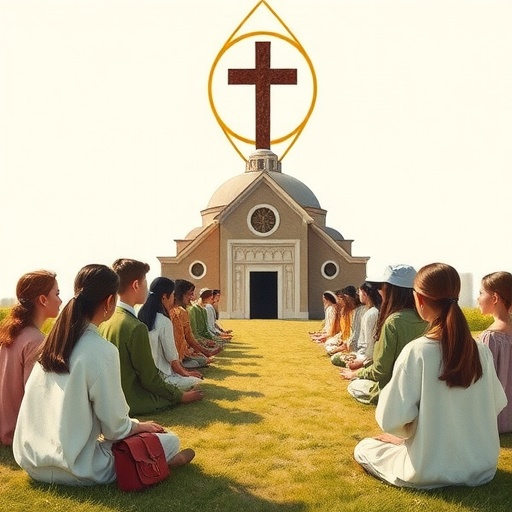
In a thought-provoking examination of the intersection between philosophy and pedagogy, the discourse surrounding religious education has evolved significantly, compelling educators and scholars to explore deeper existential questions. Central to this discourse is the inquiry posed by C.J.D. Hernandez, which contemplates whether the concept of “philosophical suicide” is a necessary consideration in religious education. This analysis not only delves into the relevance of Albert Camus’ existential philosophy but also probes the potential of religious education to transcend traditional paradigms, fostering a more nuanced understanding of faith, existence, and the human condition.
Philosophical suicide, as introduced by Camus, suggests a renunciation of questioning life’s profound aspects in favor of a comfort rooted in faith or dogmatic belief. Hernandez posits that such an act—while often viewed as a means of escape—is one that could be critically examined within the realms of religious education. This examination holds a mirror to the practices of many educational systems, which, at times, prioritize rote learning and adherence to doctrine over critical thinking and the exploration of complex existential dilemmas. In doing so, Hernandez invites educators to rethink their methodologies and consider whether their approaches encourage genuine intellectual engagement or passive acceptance.
Religion has historically occupied a dual role in education: as both a source of moral guidance and a structure for community and identity. Yet, with the rise of pluralism and an increasingly skeptical society, those involved in religious education face the challenge of reconciling traditional teachings with contemporary existential inquiries. Hernandez references existing religious pedagogies that often promote absolute truths, posing the question of whether this stance leads to a mere superficial understanding of faith. Instead, he urges the adoption of a more critical framework that embraces doubt and uncertainty as essential components of religious education.
The notion of engaging with doubts and uncertainties is not merely about fostering skepticism; it is about cultivating a space where students can grapple with life’s most profound questions. Such an approach could potentially transform educational settings into more dynamic environments, encouraging dialogue and exploration rather than merely dictating knowledge. Hernandez argues that the inclusion of critical thinking into religious education can empower students to forge their own paths and beliefs, rather than threading through pre-established orthodoxies.
One must consider the implications of such a shift on the institutional level. Educational frameworks worldwide vary in their approaches to religious instruction, with some emphasizing dogmatic adherence while others encourage a more liberal interpretation. The necessity for reform becomes evident: as global societies often oscillate between secular and religious identities, a rigid educational structure may falter in addressing the needs and realities of modern learners. Hernandez’s research resonates particularly in this context, advocating for a curriculum that respects individual inquiry and personal spiritual exploration.
In exploring the Camusian paradigm further, Hernandez reflects on the inherent human struggle against absurdity. For many people, including students in religious contexts, the confrontation with absurdity can induce feelings of alienation and despair. However, Hernandez emphasizes that understanding and navigating these feelings within a supportive educational framework can lead to significant personal growth. By framing philosophical suicide as a potential conversation starter rather than a definitive conclusion, religious educators can help students learn to confront, rather than escape, the complexities of their beliefs.
Beyond simple inquiry, there is also a call for the incorporation of interdisciplinary approaches in religious education, wherein philosophy, psychology, and theology can converge. By integrating these fields, educators have the opportunity to create comprehensive courses that address not only religious tenets but also the psychological and philosophical implications of those beliefs. For instance, discussions of existentialism could be framed alongside teachings of compassion and morality found in various religions, enriching the overall educational experience.
One of the profound challenges facing educators who wish to adopt this progressive approach is the resistance that may come from both institutional bodies and parents. Establishing programs that promote critical thinking and the questioning of inherited beliefs can often be perceived as radical or even threatening to traditional values. However, Hernandez asserts that the need for such educational reform is paramount in order to produce well-rounded individuals capable of navigating not only their spiritual journeys but the complexities of life itself.
In this evolving landscape, the role of the educator emerges as pivotal. Educators must not only be well-versed in religious teachings but also equipped to facilitate discussions that confront existential crises and doubts. This demands a unique skill set that blends knowledge with empathy, as educators become guides in a student’s personal exploration of faith. Hernandez’s viewpoints suggest that the ideal educator in this context embodies a balance between traditional knowledge and modern pedagogical approaches, fostering an environment conducive to growth.
Moreover, in positioning philosophical suicide as a lens through which to view religious education, the discussion opens up avenues for social justice and inclusion. Many marginalized voices have long been silenced in conventional religious teachings, and by incorporating critical thought, educators can redefine the curriculum in a way that embraces diversity and multiple perspectives. This could provide marginalized students the opportunity to see their own experiences and struggles reflected in the education they receive, enriching both the curriculum and the classroom dynamic.
Engagement with philosophical concepts such as those introduced by Camus challenges students on a fundamental level, prompting them to ask difficult questions about existence, morality, and belief systems. In a world where information is abundantly available, the ability to think critically is paramount, particularly in discussions that involve deeply held beliefs. By emphasizing philosophical inquiry, religious education can evolve from a mere transmission of knowledge to an interactive process that invites students to actively participate in their spiritual exploration.
The challenge of philosophical suicide in religious education is also one of timing and appropriateness. Hernandez emphasizes that educators must gauge the readiness of their students to engage with complex existential questions. This requires a thoughtful and intentional approach, as well as an understanding of differing maturity levels and backgrounds. An awareness of the individual needs of students must guide the creation of instructional methods that encourage open conversations without alienating those who may still be grappling with their fundamental beliefs.
As we reflect on Hernandez’s inquiries and the relevance of philosophical suicide within religious education, it becomes evident that the core objective remains the same: to foster an environment of understanding, growth, and intellectual engagement. The opportunity to question, explore, and ultimately understand one’s beliefs in relation to broader philosophical discourse is invaluable. By contemplating philosophical suicide not only as a rejection but as an opportunity for a more profound investigation of faith and existence, educational institutions can ensure that they equip students for a life that questions, celebrates, and seeks meaning amid the chaos of modern existence.
Through this transformative lens, religious education can not only survive but thrive, evolving into a catalyst for deep understanding and enlightenment in an era that often values certainty over inquiry. Hernandez’s insights serve as a clarion call to educators, urging them to embrace the uncertainties inherent in religious education and to guide their students toward a more reflective and personal engagement with faith.
Hernandez, C.J.D. Is philosophical suicide necessary in religious education? A lucid religious education with and beyond the Camusian paradigm. Discov Educ (2025). https://doi.org/10.1007/s44217-025-01002-7
Cite Scienmag News
Courtney Benton. (December 11, 2025). Reevaluating Religious Education Through a Camusian Lens. Scienmag. https://scienmag.com/reevaluating-religious-education-through-a-camusian-lens/
Courtney Benton. "Reevaluating Religious Education Through a Camusian Lens." Scienmag, 11 December 2025, https://scienmag.com/reevaluating-religious-education-through-a-camusian-lens/. Accessed 4 September 2026.
Courtney Benton. "Reevaluating Religious Education Through a Camusian Lens." Scienmag. December 11, 2025. https://scienmag.com/reevaluating-religious-education-through-a-camusian-lens/


