


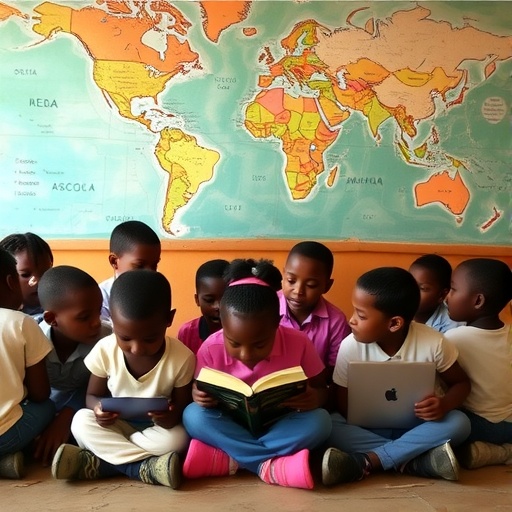
Recent research conducted across five South American countries has unveiled compelling insights into the intricate relationship between reading proficiency and the underlying school climate. In a world increasingly driven by literacy, understanding this connection is pivotal not only for educators but also for policymakers aiming to boost educational outcomes. This study, led by J.J. Rodríguez De Luque, highlights how conducive school environments can enhance reading performance, emphasizing that the matter extends beyond mere instruction—it’s about crafting an atmosphere conducive to learning.
The pressurized landscape in which students operate today often influences their academic performance. The findings suggest that those who excel in reading often do so not just because of their individual capabilities, but largely due to the ecosystem surrounding them. School climate encompasses a range of elements, including student-teacher relationships, peer interactions, and institutional support. The research illuminates that a positive school climate significantly correlates with improved reading achievements, shedding light on a previously underexplored area of educational research in the South American context.
The evidence gathered over this expansive study reveals a noteworthy trend: countries with supportive educational structures tend to showcase higher reading scores among students. For instance, in nations where schools prioritize emotional and psychological support, students display a remarkable affinity for reading. This suggests that schools should not just focus on traditional pedagogical approaches but also prioritize the emotional and social well-being of learners to foster an enriched learning experience. The research indicates that a school’s social atmosphere can significantly enhance a child’s willingness to engage with reading material, thus motivating them to reach higher academic achievements.
Moreover, the study delves into the different elements that shape the school climate, including respect, safety, and empowerment. These factors play a crucial role in cultivating a space where students feel valued and encouraged to express themselves. When students perceive their school as a safe haven where they are respected, they are more likely to participate actively in reading activities and discussions. In contrast, a negative school climate can stifle motivation and hinder reading development, emphasizing the need for schools to continuously assess and improve their cultural and social climates.
As educators and researchers analyze these findings, it is evident that fostering a positive school climate should be at the forefront of educational reform initiatives. Beyond focusing solely on curriculum advancements, education stakeholders must recognize that nurturing a supportive environment is fundamental for student success. By implementing programs that promote teamwork, collaboration, and mutual respect, schools can actively contribute to enhancing the educational experiences of their students, particularly in the realm of reading.
Additionally, Rodriguez De Luque’s analysis goes beyond the quantitative results, offering qualitative insights into students’ experiences. Interviews and surveys conducted within the schools provided rich narratives that paint a more detailed picture of how school climates affect engagement in reading activities. The qualitative data emphasizes personal stories of triumph and struggle, highlighting the real-world implications of the statistical findings. Through these narratives, it becomes evident that students’ love for reading often flourishes when they feel connected and supported within their school communities.
Furthermore, the research acknowledges the role of educators in shaping the school climate. Teacher training programs that emphasize the cultivation of a positive classroom atmosphere can yield significant improvements in students’ reading skills. Teachers who are trained to build strong relationships with their students and create inclusive classrooms can foster an environment where reading skills are nurtured. These relationships not only promote engagement with reading but also encourage students to explore literature in ways that resonate with their lives and beliefs, further enriching their academic journeys.
The implications of this research are profound, challenging educators and policymakers alike to rethink existing frameworks in education. Strategies from other regions, particularly those that have seen success in enhancing school climates, could be adapted to suit the specific cultural and societal contexts of South America. For example, integrating community stakeholders into the educational process can bridge gaps between school and home, fostering broader support systems that extend a child’s learning beyond the classroom.
In addition, the role of technology in shaping modern educational experiences cannot be overlooked. As many schools integrate digital tools into their curriculum, understanding how these tools interact with the school climate could offer new avenues for enhancing reading proficiency. Digital libraries, interactive reading applications, and customizable learning experiences can bolster students’ interest in reading, especially in climates that are nurturing and supportive. Conversely, in environments where students feel disconnected, the impact of technology might be diminished.
As research continues to unravel the complex web of factors that influence reading achievement, it remains clear that a singular focus on academic prowess is insufficient. The holistic development of students must be prioritized, incorporating emotional, social, and intellectual growth components, thereby creating a well-rounded educational experience. In South America and beyond, exploring these intersections has the potential to drive meaningful changes in how educational systems operate, ultimately leading to improved literacy outcomes.
In summary, the findings from Rodríguez De Luque’s seminal research illuminate a critical pathway towards enhancing educational success through the lens of school climate. The correlation drawn between a supportive environment and reading achievement serves as a clarion call to educators, administrators, and policymakers to prioritize the emotional and social facets of learning. By fostering nurturing environments that motivate students to engage deeply with reading, we can work toward a future where literacy becomes not just an academic goal but a lifelong passion.
Through this research, we can envision a redefined educational landscape—one where every child, regardless of socio-economic status or geographic location, has the opportunity to be immersed in a rich reading culture. The implications extend far beyond the classroom, potentially transforming educational paradigms across the globe by advocating for the immediate need to create supportive school climates that champion reading as a pillar of student success.
Ultimately, as we advance into an era characterized by a pivotal emphasis on communication and information exchange, this body of research echoes the importance of nurturing reading skills as foundational to lifelong learning. In doing so, we honor not only the academic potential of future generations but also their capacity to engage critically with the world around them.
Cite Scienmag News
Courtney Benton. (December 11, 2025). Linking Reading Success and School Climate in South America. Scienmag. https://scienmag.com/linking-reading-success-and-school-climate-in-south-america/
Courtney Benton. "Linking Reading Success and School Climate in South America." Scienmag, 11 December 2025, https://scienmag.com/linking-reading-success-and-school-climate-in-south-america/. Accessed 5 September 2026.
Courtney Benton. "Linking Reading Success and School Climate in South America." Scienmag. December 11, 2025. https://scienmag.com/linking-reading-success-and-school-climate-in-south-america/


