


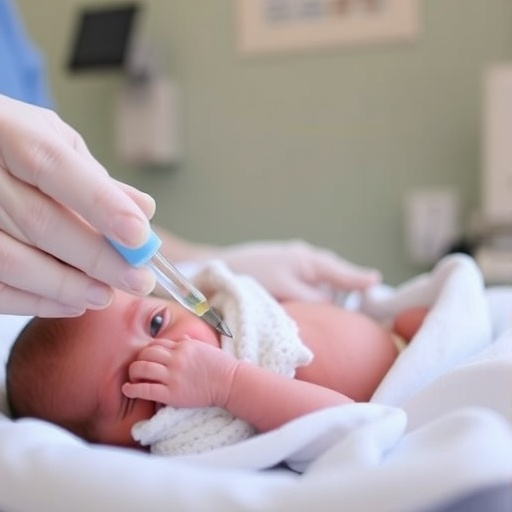
In the intricate landscape of neonatal medicine, the precision of bilirubin assays has emerged as a paramount concern that commands both clinical vigilance and laboratory excellence. Neonatal hyperbilirubinemia remains a widespread condition globally, implicating significant morbidity risks if not identified and managed with utmost accuracy. The recent study by Bhutani, Hulzebos, and Lo published in Pediatric Research (2025) sheds valuable light on the nuances that underpin accurate and actionable neonatal bilirubin test results, emphasizing a systemic need for integrated oversight that transcends conventional testing paradigms.
At its core, bilirubin measurement in neonates is more than a biochemical assay; it is a clinical linchpin that determines life-altering therapeutic interventions. Bilirubin, a product of heme catabolism, accumulates when neonatal liver conjugation pathways are immature or overwhelmed. Elevated levels pose a dire risk of kernicterus, a preventable yet potentially devastating neurological condition. Therefore, the initial step in neonatal jaundice management hinges critically on the reliability of bilirubin quantification — a task that laboratory methodologies and clinicians must perform with harmonious precision.
This dialogue between laboratory science and clinical insight is complicated by the inherent physiological variability seen in neonates. Factors such as gestational age, birth weight, ethnicity, and concurrent morbidities dynamically alter bilirubin kinetics and thresholds for intervention. Bhutani and colleagues underscore that bilirubin assays, to be truly actionable, must be contextualized within these individualized clinical parameters. Without comprehensive integration of patient-specific data, even the most technologically advanced assays risk misclassification of risk, leading to either unnecessary treatments or dangerous undertreatment.
Technically, bilirubin quantitation employs both direct and indirect spectrophotometric methods, alongside emerging high-performance liquid chromatography and mass spectrometry techniques in specialized centers. Each methodology presents a unique blend of sensitivity and specificity challenges. Direct spectrophotometric methods, while rapid and non-invasive via transcutaneous devices, face limitations in accuracy, especially in neonates with darker skin pigmentation or varying hematocrit levels. Serum bilirubin measurement remains the gold standard; however, preanalytical variables including sample handling, timing, and the presence of interfering substances can significantly alter results.
The authors advocate for meticulous laboratory protocols that address these vulnerabilities through standardized calibration, use of bilirubin reference materials traceable to international standards, and rigorous quality control. Furthermore, given the short half-life of bilirubin and the rapid physiological changes occurring in neonates within hours postpartum, timing of specimen collection is critical. Protocols must stipulate precise timing relative to birth to ensure clinical relevance of bilirubin levels reported.
From the clinical oversight perspective, interpretation of bilirubin results requires real-time integration with the clinical setting. The variable dynamics of bilirubin levels—often rising rapidly in the first days—necessitate repeated measures and trend evaluation rather than reliance on single static values. The study highlights the potential of algorithm-driven decision tools, which leverage sequential bilirubin values along with clinical risk factors to guide timely interventions such as phototherapy or exchange transfusion. This paradigm significantly reduces the incidence of severe hyperbilirubinemia by enabling preemptive care.
Crucially, the research draws attention to the socio-economic and systemic factors influencing bilirubin testing quality globally. In low-resource settings, shortages of trained personnel, lack of standardized equipment, and inconsistent follow-up diminish testing accuracy and limit actionable outcomes. Bhutani et al. call for international collaboration to enhance accessibility to validated testing methods and training, asserting that no neonate’s care should be compromised by infrastructural deficits.
The authors also explore the role of emerging digital health technologies in transforming bilirubin monitoring. Non-invasive transcutaneous bilirubinometry, when coupled with digital data management and cloud-based analytics, promises to expand the reach of accurate neonatal jaundice screening. Such technologies facilitate seamless data archiving, trend analysis, and real-time clinical alerts, empowering healthcare teams to intervene swiftly and appropriately.
Moreover, the report emphasizes the importance of multidisciplinary education programs ensuring that both laboratory scientists and clinicians speak a common language regarding bilirubin kinetics and test interpretation. Standardized communication frameworks improve interdisciplinary collaboration and patient safety, preventing misinterpretation that can arise from compartmentalized knowledge silos.
One of the standout points in the paper relates to the ethical imperative of delivering actionable test results that directly impact neonatal outcomes. Accuracy without clinical actionability is insufficient; the translation of laboratory findings into evidence-based management protocols forms the fulcrum of neonatal care quality. The authors advocate for institutional policies that integrate laboratory data streams with electronic health records and clinical pathways, thereby streamlining decision-making processes and minimizing delays.
As the medical community advances towards precision neonatology, bilirubin testing exemplifies the complexities and necessities of harmonizing technological capability with clinical acumen. The study by Bhutani and colleagues persuasively argues that only through rigorous, continuous oversight—combining meticulous laboratory standards with dynamic clinical interpretations—can neonatal bilirubin assays fulfill their critical role in safeguarding newborn health.
In conclusion, the call to action laid out by the Pediatric Research paper resonates deeply across neonatal care disciplines. Neonatal bilirubin assay accuracy transcends mere laboratory performance metrics, embodying a multidimensional challenge that demands cooperation, innovation, and continuous improvement. Ensuring actionable, reliable bilirubin test results is not simply a technical endeavor but a vital healthcare commitment with global implications for newborn survival and neurodevelopmental integrity.
Bhutani, V.K., Hulzebos, C.V. & Lo, S.F. Need for accurate and actionable neonatal bilirubin test results.
Pediatr Res (2025). https://doi.org/10.1038/s41390-025-04638-1
Cite Scienmag News
Harold Sullivan. (December 11, 2025). Demand for Precise, Practical Neonatal Bilirubin Testing. Scienmag. https://scienmag.com/demand-for-precise-practical-neonatal-bilirubin-testing/
Harold Sullivan. "Demand for Precise, Practical Neonatal Bilirubin Testing." Scienmag, 11 December 2025, https://scienmag.com/demand-for-precise-practical-neonatal-bilirubin-testing/. Accessed 3 September 2026.
Harold Sullivan. "Demand for Precise, Practical Neonatal Bilirubin Testing." Scienmag. December 11, 2025. https://scienmag.com/demand-for-precise-practical-neonatal-bilirubin-testing/


