


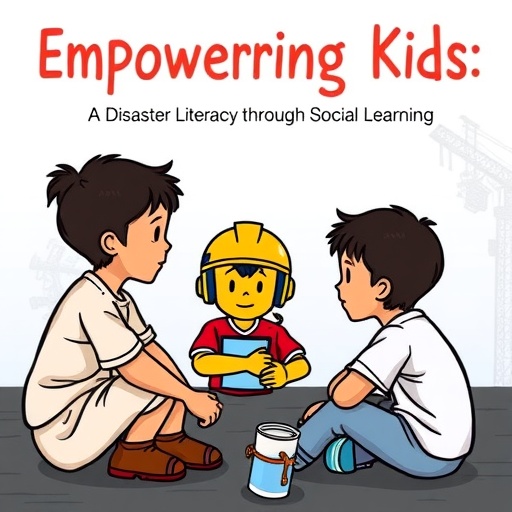
In a world increasingly faced with natural disasters, the necessity of cultivating disaster literacy among young children has never been more critical. Recent research led by Huang and Chen emphasizes the development of a comprehensive curriculum tailored specifically for early childhood education. This initiative seeks not only to inform children about the risks associated with disasters but also to equip them with the knowledge and skills needed to respond effectively in emergencies. The authors draw upon established educational frameworks, most notably Social Learning Theory and the Zone of Proximal Development, to inform their pedagogical strategies.
Disaster literacy refers to the understanding of hazards, preparedness, response, and recovery processes in the context of emergencies. As natural disasters become more frequent and severe due to climate change, instilling a robust foundation of knowledge about these phenomena in children is crucial. Huang and Chen highlight the importance of starting this education at an early age, as children’s cognitive abilities and social skills are rapidly developing during their formative years. By integrating disaster literacy into their educational experience, these children can develop the resilience necessary to cope with potential crises in their lives.
The authors propose a curriculum that is not only informative but also engaging and age-appropriate for young learners. By utilizing storytelling, role-playing, and interactive activities, the curriculum encourages children to learn through experience rather than passive observation. Such active learning experiences can lead to deeper comprehension and retention of knowledge, which is essential for dealing with the unpredictable nature of disasters. When children engage in simulations of emergency scenarios, they build confidence in their ability to react appropriately when faced with real-life situations.
Furthermore, the integration of Social Learning Theory into the curriculum highlights the significance of social interaction in the learning process. Children learn not only from direct instruction but also through observing their peers and adults. By fostering an environment where they can collaborate, share experiences, and learn from one another, the curriculum promotes a community-oriented approach to disaster preparedness. Children learn that they are not alone in facing challenges, which can alleviate anxiety and foster a sense of security in unpredictable situations.
The concept of the Zone of Proximal Development (ZPD) is also central to the proposed curriculum. This framework emphasizes the gap between what children can do independently and what they can achieve with guidance. By identifying each child’s current level of understanding regarding disasters, educators can tailor their instruction to bridge this gap. This personalized approach ensures that children not only receive the information but also the support necessary to apply that knowledge in real-life contexts.
Additionally, the curriculum places a strong emphasis on collaboration with families and communities. Recognizing that disaster preparedness extends beyond the classroom, Huang and Chen advocate for engaging parents and caregivers in the educational process. Workshops and resources designed for families can reinforce the lessons learned in school and encourage discussions about safety at home. By fostering a partnership between educators and families, children can receive consistent messaging about the importance of disaster preparedness in various environments.
Moreover, culturally relevant practices are incorporated to ensure that the curriculum resonates with diverse communities. Understanding that different cultures may have unique experiences with disasters, the curriculum allows for flexibility and adaptation based on the specific needs of the children being taught. This culturally responsive approach ensures that all children see themselves reflected in the lessons taught, thereby enhancing their engagement and understanding.
The curriculum is grounded in practical applications, ensuring that children not only learn about disasters but also practice essential safety skills. Activities might include basic first aid training, emergency response drills, and the construction of emergency kits. Such hands-on learning experiences help children internalize critical safety protocols that can save lives. Moreover, these activities can spur conversations about responsibility and the role of community in disaster situations.
Furthermore, the curriculum is designed to evolve with the children as they grow. While initial lessons may focus on understanding what disasters are and why they occur, older children can engage with more complex concepts such as impact assessment, recovery strategies, and community resilience. This progression ensures that children’s disaster literacy grows with them, instilling lifelong skills and knowledge.
By implementing this disaster literacy curriculum, educational institutions can foster a generation of children equipped to navigate the challenges of an uncertain future. As they develop a framework for understanding and responding to disasters, these young learners become advocates for safety within their families and communities. They carry forward the lessons learned in the classroom into their daily lives, influencing how their communities prepare for and respond to emergencies.
In conclusion, Huang and Chen’s research presents a vital step towards enhancing young children’s awareness and preparedness for disasters. Through the thoughtful integration of Social Learning Theory and the Zone of Proximal Development, the proposed curriculum not only informs children but also empowers them to take action. By prioritizing disaster literacy education, society can invest in a safer and more resilient future.
A curriculum that fosters disaster literacy among young children is an essential component of their education. By embracing a collaborative approach that includes families, respects cultural contexts, and evolves with children’s understanding, we can prepare future generations for the challenges posed by natural disasters. The insights provided by Huang and Chen signal an urgent call to action for educators, policymakers, and communities alike to prioritize disaster education in early childhood settings, ultimately creating a safer environment for all.
Huang, WH., Chen, HL. Developing a Disaster Literacy Curriculum for Young Children: Integrating Social Learning Theory and the Zone of Proximal Development. Early Childhood Educ J (2025). https://doi.org/10.1007/s10643-025-02049-9
Cite Scienmag News
Courtney Benton. (December 11, 2025). Empowering Kids: Disaster Literacy Through Social Learning. Scienmag. https://scienmag.com/empowering-kids-disaster-literacy-through-social-learning/
Courtney Benton. "Empowering Kids: Disaster Literacy Through Social Learning." Scienmag, 11 December 2025, https://scienmag.com/empowering-kids-disaster-literacy-through-social-learning/. Accessed 3 September 2026.
Courtney Benton. "Empowering Kids: Disaster Literacy Through Social Learning." Scienmag. December 11, 2025. https://scienmag.com/empowering-kids-disaster-literacy-through-social-learning/


