


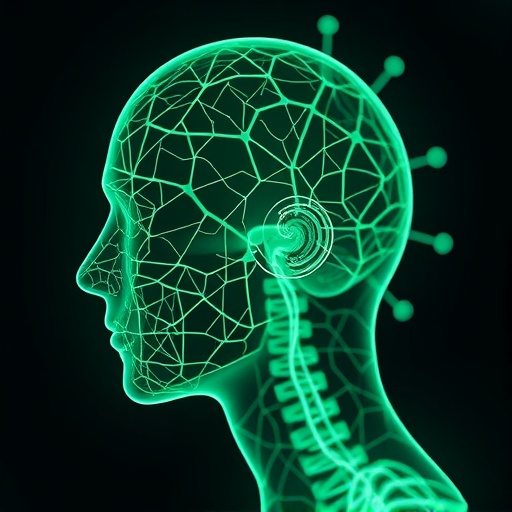
In a groundbreaking convergence of artificial intelligence and metabolomics, researchers have unveiled a novel strategy to predict mortality and cardiometabolic disease risks by analyzing the retinal nerve fibre layer (RNFL). This innovative approach hinges on leveraging AI to decode the complex biochemical signatures embedded within the RNFL, thereby opening new frontiers in preventative medicine and personalized health risk profiling. The retina has long been a portal into the body’s vascular and neurological health, but this latest work pioneers a sophisticated metabolomics analysis powered by machine learning, marking a transformative leap in diagnostic technology.
The core of this research centers on metabolomics — the comprehensive study of metabolites, which are the small molecules involved in metabolism within cells, tissues, or organisms. Traditionally, metabolomic profiling requires invasive procedures and significant processing time, limiting its applicability in regular health assessments. However, the utilization of retinal tissue from the RNFL presents a non-invasive, accessible, and highly informative biomarker source. The retinal nerve fibre layer, composed of unmyelinated axons of retinal ganglion cells, reflects systemic physiological states in a unique way, encompassing both neurological and vascular components critical to understanding overall health and disease progression.
Artificial intelligence becomes indispensable in this context due to the intricate and vast data generated by metabolomic analysis. High-throughput mass spectrometry and other advanced biochemical profiling instruments produce rich datasets with thousands of measured metabolites. Extracting meaningful patterns that correlate with disease risk and mortality from this data demands robust computational methods. AI algorithms, particularly deep learning architectures, excel at detecting subtle, multidimensional relationships within the dataset that human analysts might overlook. The research team deployed these AI models to integrate metabolomic signals from the RNFL and correlate them with longitudinal health outcomes, including incidences of cardiometabolic conditions and mortality statistics.
One particularly compelling aspect of the study is the establishment of a predictive metabolomic signature from retinal tissue, which showed remarkable accuracy in stratifying individuals by their risk of fatal and non-fatal cardiometabolic events. Cardiometabolic diseases — encompassing conditions such as coronary artery disease, stroke, diabetes, and related metabolic disorders — remain leading causes of morbidity and mortality worldwide. Current risk assessments rely heavily on clinical metrics and blood markers, which, while informative, might miss subtle signals discernible deep within tissue-specific metabolomic landscapes. The RNFL’s metabolic profile offers an unprecedented window into systemic disease dynamics at an early, potentially reversible stage.
Moreover, the AI-driven approach circumvents several challenges traditionally associated with biomarker discovery. By automating feature extraction and selection processes, the system reduces biases inherent in manual analysis and enhances reproducibility across different populations and scanning platforms. The model’s adaptability means it can continuously improve with added data, reflecting new patient cohorts or emerging health trends. This dynamic learning capability is crucial for tailoring personalized health strategies and could revolutionize how clinicians approach preventive care for high-risk individuals.
The implications of this research extend beyond mortality prediction. Given the retina’s embryological origin as an extension of the central nervous system, metabolomic analysis of the RNFL could potentially illuminate mechanisms underlying neurodegenerative diseases and other systemic disorders with metabolic underpinnings. Early detection and intervention in these conditions depend on sensitive biomarkers capable of tracking disease evolution at a granular molecular level, a role this retinal metabolomics-AI fusion is uniquely positioned to fulfill.
This paradigm shift also underscores the emerging importance of integrating cross-disciplinary expertise — combining ophthalmology, biochemistry, computational science, and clinical epidemiology — to harness AI’s full potential in medicine. The study’s success is a testament to how advanced imaging and metabolomic profiling platforms, coupled with cutting-edge computational algorithms, can unveil biological insights that were previously unattainable. It charts a roadmap for future investigations aiming to expand AI-driven metabolomics to other accessible tissues or biofluids.
Beyond the science, the prospect of a rapid, non-invasive, and highly accurate diagnostic tool has profound public health implications. Cardiometabolic diseases place an enormous burden on healthcare systems through chronic morbidity and acute life-threatening events. Early identification of at-risk individuals, enabled by this retinal metabolomics analytics, could facilitate timely lifestyle or pharmacological interventions to mitigate disease progression, ultimately lowering population-level mortality rates.
While the study demonstrates tremendous promise, implementation in clinical practice will require further validation through large-scale, multicenter trials and longitudinal studies. Ensuring consistency across diverse demographic groups and linking retinal metabolomic profiles with genetic, environmental, and lifestyle factors remains an essential next step. Additionally, ethical considerations concerning data privacy, AI transparency, and accessibility must be addressed to realize equitable deployment of these advanced diagnostic tools.
Future research directions hinted by these findings include expanding the metabolite database specific to retinal tissues and enhancing AI models to dissect complex interactions between metabolic pathways. Researchers anticipate that refinement in AI explainability methods will also play a critical role in gaining clinicians’ trust and facilitating regulatory approval processes. Ultimately, this confluence of AI and retinal metabolomics represents a paradigm shift towards personalized, predictive, and preventive healthcare.
This study exemplifies how leveraging the synergy between artificial intelligence and metabolomic profiling can unravel subtle biological signatures crucial for disease prediction. The retinal nerve fibre layer emerges as a valuable bio-indicator, capable of reflecting systemic health statuses through molecular fingerprints decipherable by AI. As researchers continue to integrate diverse data layers, from genomics to imaging, the future of precision medicine appears increasingly intertwined with such interdisciplinary innovations.
It is anticipated that the adoption of AI-driven metabolomic approaches alongside traditional clinical assessments will soon become standard practice for evaluating cardiometabolic health. Such a future promises not just improved patient outcomes but also a profound transformation in our understanding of disease biology at the molecular level. This new capability may usher in an era where a simple retinal scan can provide comprehensive insights into an individual’s mortality risk and guide targeted interventions well before clinical symptoms manifest.
By harnessing the retina’s unique accessibility combined with cutting-edge AI analytics, the research team has positioned retinal metabolomics at the frontier of clinical diagnostics. This pioneering work not only informs strategies to combat cardiometabolic disease but also establishes a methodological blueprint for leveraging metabolomic signatures from other tissues to tackle a broad spectrum of diseases.
In conclusion, the marriage of artificial intelligence with metabolomics of the retinal nerve fibre layer heralds a new age in biomedicine, where non-invasive molecular diagnostics can robustly inform health risk profiling. With continued innovation and validation, this technology holds the potential to significantly reduce global mortality burdens by enabling earlier, more precise interventions against cardiometabolic and potentially other systemic diseases.
Cite Scienmag News
Alexandra Wallace. (December 11, 2025). AI Metabolomics Links Nerve Layer to Disease Risks. Scienmag. https://scienmag.com/ai-metabolomics-links-nerve-layer-to-disease-risks/
Alexandra Wallace. "AI Metabolomics Links Nerve Layer to Disease Risks." Scienmag, 11 December 2025, https://scienmag.com/ai-metabolomics-links-nerve-layer-to-disease-risks/. Accessed 4 September 2026.
Alexandra Wallace. "AI Metabolomics Links Nerve Layer to Disease Risks." Scienmag. December 11, 2025. https://scienmag.com/ai-metabolomics-links-nerve-layer-to-disease-risks/


