


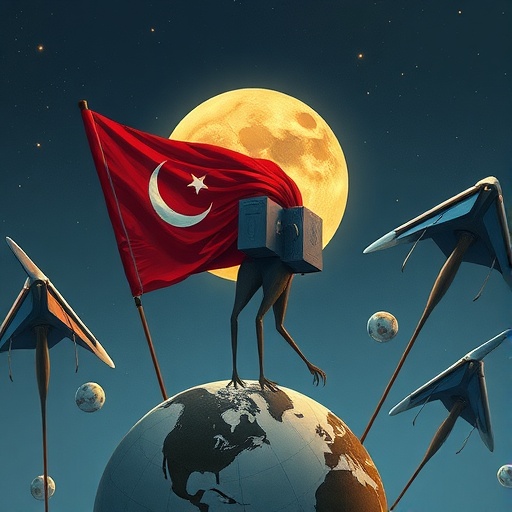
In the vibrant landscape of contemporary discourse, the term “woke” has emerged as a linguistic and cultural phenomenon that transcends mere definition. Derived from African American Vernacular English, “woke” signifies a heightened awareness of social injustices, particularly those pertaining to race, gender, and sexuality. However, its evolution has sparked intense debates around political correctness, cancel culture, and the implications of social media in shaping these conversations. In her groundbreaking work, Shahghasemi explores the ramifications of translating this multifaceted term into Persian, unveiling a new layer of complexity as it interfaces with Iranian cultural paradigms and contemporary digital spaces.
The initial appeal of “woke” lies in its intrinsic connection to activism. It encapsulates an ethos of being alert and responsive to systemic inequalities, urging individuals to seek equity and social justice. However, the problematic dynamics surrounding its usage have elicited a spectrum of interpretations that vary widely across cultural contexts. This is particularly evident when “woke” is translated into Persian. Shahghasemi’s analysis elucidates how Persian speakers assimilate the term, blending it with local concerns about political freedom, social justice, and historical context. A word that may evoke a cohesive movement in the West may fragment into multiple interpretations in Iran, where the socio-political landscape is distinctly different.
Through a meticulous exploration of social media platforms, particularly Platform X, Shahghasemi sheds light on how the term “woke” has permeated discussions among younger Iranians. Iranian youth, often using their online presence to challenge societal norms and advocate for change, find resonance in the “woke” discourse as it aligns with their ambitions for reform. However, the translation of “woke” into Persian is not a straightforward task; it involves nuanced contextualization that requires understanding the subtleties of both language and cultural context. The potential pitfalls of misinterpretation loom large, as historical censorship and modern digital discourse collide, creating a complex backdrop for engagement.
The phenomenon of “woke” is particularly relevant in the age of globalization, where cultural exchanges are rapid and often unmediated. Shahghasemi delves into the paradox of global influence and local context, examining how terms like “woke” can be both liberating and constraining. In Iran, the concept of being socially aware carries significant weight, but it also faces resistance from conservative factions who view it as a threat to traditional values. Thus, the act of translating “woke” can inadvertently transform it into a politically charged term that sparks controversy.
Shahghasemi observes that the reception of “woke” among Persian speakers is fraught with tension. For some, it symbolizes a necessary awakening to realities that demand attention and action. For others, it may represent an unwelcome intrusion of Western ideology that threatens to disrupt the fabric of their own cultural identity. This dichotomy complicates the discourse around social justice in Iran, where deeply rooted traditions intersect with contemporary movements for change. The responsiveness to “woke” thus becomes a litmus test for broader societal attitudes toward change and reform.
As Shahghasemi articulates, social media serves as a double-edged sword in the dissemination and interpretation of “woke” in Persian-speaking communities. On one hand, it empowers voices that have long been marginalized, fostering communities that share, debate, and ultimately recontextualize the term. On the other hand, the fluidity of online discourse can lead to misunderstandings and amplifications of extremism, causing rifts within the very movements that seek to uphold the values synonymous with being “woke.” This reality raises critical questions about ownership and representation in the translation of sociopolitical language across cultural boundaries.
Furthermore, the personal narratives shared by Iranian youth on platforms like X illuminate the transformative power of language in activism. Many express their frustrations and aspirations surrounding issues like discrimination and inequality, indicating a palpable shift in collective consciousness. The term “woke” becomes a rallying point, transcending its original roots to encompass local struggles for human rights and freedom. Each narrative underscores a universal truth: the desire for understanding in the face of oppression is a human experience that transcends geographical boundaries.
In her research, Shahghasemi brilliantly illustrates the significance of digital platforms in shaping the trajectory of social movements in Iran. The echoes of “woke” resonate beyond the confines of linguistic translation; they reflect a larger socio-cultural revolution that is unfolding amongst the youth. Online interaction has fostered a newfound sense of agency that challenges long-standing oppressive narratives and champions a fresh discourse around equality and justice. This evolution is pivotal, highlighting how global terms gain texture and purpose when woven into the fabric of local concerns.
Moreover, “woke” sits atop a broader spectrum of language that reflects societal changes. The interplay of cultural adaptation and resistance manifests through the various interpretations of the term among Iranians. Some embrace “woke” as a badge of honor, embodying a new generation’s commitment to activism, while others dismiss it as a mere trend, reflecting fears of foreign influence. This conflict underscores the inherent complexities within borrowed language and how cultural ownership evolves over time, particularly in the digital era.
Importantly, Shahghasemi’s research encourages readers to reflect on the power dynamics associated with language and translation. The act of translating “woke” is not merely a linguistic exercise; it carries with it the weight of political implication and cultural identity. This interplay underlines the responsibility that comes with cross-cultural communication, urging scholars and activists alike to consider the wider consequences of the words they choose to use. The challenge lies in balancing authenticity with accessibility in localized adaptations of global movements.
As the discussion around “woke” continues to evolve, Shahghasemi calls for a deeper engagement with the fluid nature of language and its capacity to stimulate discourse on pressing social issues. By examining how “woke” is perceived and utilized within Persian-speaking communities, her work shines a light on the transformative potential of language as a conduit for social change. This analysis serves as an invitation to reconsider how we understand terms shaped by activism, acknowledging that their impact varies dramatically across cultural landscapes.
In conclusion, Shahghasemi’s exploration of “woke” through translation not only magnifies the cultural dialogue surrounding the term but also calls for a nuanced understanding of social movements in an ever-connected world. By interrogating the intersections of language, culture, and activism, she provides valuable insights into the dynamics that shape contemporary discussions in Iran and beyond. The implications of her work extend far beyond the confines of academic discourse; they resonate with anyone committed to the pursuit of social justice and equity in the modern age.
As the conversation around social justice continues to resonate globally, understanding the intricacies of terms like “woke” and their translations into different languages is vital. Shahghasemi’s research opens the door to a more profound appreciation of how language not only reflects cultural values but also shapes the trajectory of social movements. In this rapidly changing world, cultivating awareness and understanding across diverse linguistic landscapes remains imperative for meaningful dialogue and genuine progress.
Cite Scienmag News
Courtney Benton. (December 11, 2025). Persian Views on ‘Woke’ in Platform X. Scienmag. https://scienmag.com/persian-views-on-woke-in-platform-x/
Courtney Benton. "Persian Views on ‘Woke’ in Platform X." Scienmag, 11 December 2025, https://scienmag.com/persian-views-on-woke-in-platform-x/. Accessed 4 September 2026.
Courtney Benton. "Persian Views on ‘Woke’ in Platform X." Scienmag. December 11, 2025. https://scienmag.com/persian-views-on-woke-in-platform-x/


