


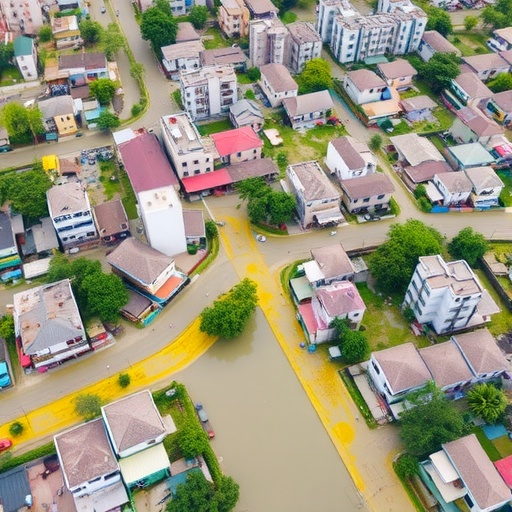
In recent years, urban flooding has emerged as a critical issue in metropolises around the globe, with the city of Hyderabad, India, experiencing significant challenges in managing this phenomenon. As climate change intensifies, cities are becoming more vulnerable to extreme weather events, accentuating the need for comprehensive assessments of urban flood vulnerability. A recent study by Samal, Nayak, and Prakash endeavors to tackle this pressing issue by focusing specifically on Hyderabad. This research represents a significant step towards understanding the multifaceted nature of urban flooding in a rapidly developing city, where population growth, infrastructure limitations, and climatic shifts converge to amplify risks.
Hyderabad, with its sprawling population and booming infrastructure, is not immune to the ramifications of climate change. The city is faced with increasingly erratic monsoon patterns, razor-sharp rainfall spikes, and prolonged dry spells, leading to a dual challenge for urban planners and policymakers. The authors highlight that urban flood vulnerability is not merely about the sheer volume of water but is intricately linked to socio-economic factors, land use conditions, and the preparedness of local governance. As the research reveals, understanding these complexities is crucial to effectively mitigating the adverse effects of flooding.
The study employs a rigorous methodology to assess various dimensions of flood vulnerability across Hyderabad. Using a combination of geographical information systems (GIS), remote sensing, and socio-economic data, the authors meticulously analyze the urban landscape. They categorize different districts within the city based on their vulnerability levels. This granular approach reveals stark disparities in flood resilience among different socio-economic groups, emphasizing the need for targeted interventions. By identifying the most vulnerable areas, stakeholders can make informed decisions for resource allocation and risk management.
A particularly alarming finding from the research indicates that marginalized communities are disproportionately affected by urban flooding. In neighborhoods where low-income residents reside, the lack of adequate infrastructure exacerbates vulnerability. Poor drainage systems, irregular settlements, and limited access to emergency services create a perfect storm, leaving residents exposed to the perilous effects of floods. The study calls for a concerted effort to empower these communities through better urban planning and improved infrastructure investments.
Moreover, the research underscores the vital role of public awareness and education in enhancing urban flood resilience. When communities are informed about flood risks and equipped with the knowledge to respond proactively, they can better navigate the challenges posed by such natural disasters. Engaging citizens through awareness campaigns, training sessions, and preparedness workshops can foster a culture of resilience and self-protection. The authors posit that community engagement is not just beneficial but essential for creating lasting solutions.
Additionally, the study advocates for the integration of climate adaptation strategies into urban planning in Hyderabad. As cities become more congested, it is critical to adopt a holistic approach that harmonizes urban development with environmental sustainability. This entails designing green infrastructure, promoting permeable surfaces, and implementing effective waste management practices to reduce runoff and bolster water drainage. The authors argue that such proactive measures can significantly mitigate flood risks while simultaneously enhancing the overall quality of urban life.
Despite these challenges, the research also highlights opportunities for leveraging technology and data-driven solutions in flood management. Innovations such as early warning systems, real-time monitoring, and data analytics can transform how cities prepare for and respond to flooding events. By harnessing the power of technology, urban planners and disaster management agencies can make more informed decisions, coordinate responses effectively, and ensure that resources are deployed where they are needed most.
However, the authors caution that while technological advancements can enhance flood resilience, they should not replace the fundamental need for community-driven approaches. The interconnection of social networks and community bonds plays a pivotal role in disaster recovery. Therefore, any technological initiatives must be accompanied by grassroots efforts that foster solidarity and collective action among residents.
The study’s findings resonate beyond Hyderabad, as urban flood vulnerability is a global concern that requires cohesive action. As cities worldwide grapple with the realities of climate change, the lessons gleaned from this research can provide valuable insights for urban planners and policymakers in similar contexts. Cooperation among governments, private entities, and civil society is paramount to address the systemic nature of urban flooding and create resilient communities.
Furthermore, the authors emphasize that climate justice must be a guiding principle in all flood management strategies. The current socio-political landscape often marginalizes vulnerable populations, forcing them to bear the brunt of climate-related disasters. A commitment to equity and justice in urban planning ensures that all voices are heard and that solutions are crafted with the input of those most affected by flooding.
As we look to the future, the integration of research, community engagement, technology, and policy reform will be essential in confronting the challenges posed by urban flooding. The call to action for cities like Hyderabad is resonant: it is no longer sufficient to treat flooding as a mere natural disaster; it must be addressed as a complex socio-environmental issue that demands a comprehensive and collaborative response.
In summary, the work by Samal, Nayak, and Prakash marks an important contribution to our understanding of urban flood vulnerability in Hyderabad. By dissecting the intricacies of this issue, the study opens avenues for proactive responses that prioritize resilience, equity, and sustainability. Through a profound understanding of the interplay between environmental processes and urban dynamics, stakeholders can develop innovative strategies to mitigate the risks associated with urban flooding, ultimately safeguarding communities and enhancing quality of life.
The study not only charts a roadmap for Hyderabad but also serves as a clarion call to cities around the globe facing similar challenges. In an era where climate change repercussions intensify, the research provides a pivotal framework that highlights the urgent need for integrated urban planning and proactive community engagement. By fostering collaboration and foresight, urban areas can adapt to changing climates and build a resilient future.
Samal, D.R., Nayak, B.P. & Prakash, A. Urban flood vulnerability assessment for Hyderabad city, India.
Discov Cities 2, 120 (2025). https://doi.org/10.1007/s44327-025-00161-4
Cite Scienmag News
Violet Maxwell. (December 10, 2025). Assessing Urban Flood Vulnerability in Hyderabad, India. Scienmag. https://scienmag.com/assessing-urban-flood-vulnerability-in-hyderabad-india/
Violet Maxwell. "Assessing Urban Flood Vulnerability in Hyderabad, India." Scienmag, 10 December 2025, https://scienmag.com/assessing-urban-flood-vulnerability-in-hyderabad-india/. Accessed 3 September 2026.
Violet Maxwell. "Assessing Urban Flood Vulnerability in Hyderabad, India." Scienmag. December 10, 2025. https://scienmag.com/assessing-urban-flood-vulnerability-in-hyderabad-india/


