


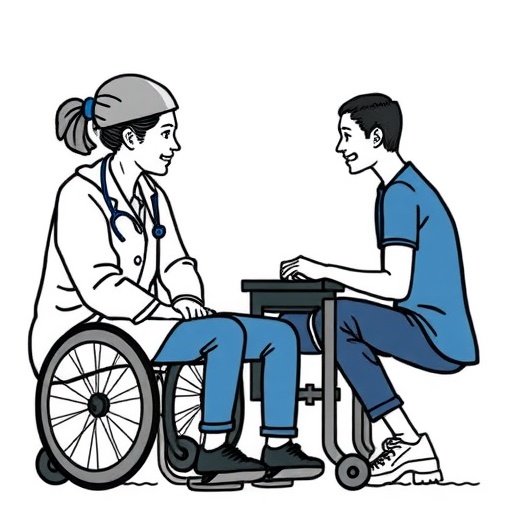
In a groundbreaking study published in School Mental Health, researchers Sinclair, Kong, and Bromley, along with colleagues, delve into the critical and often-overlooked area of mental health screening for students with disabilities. Their correction regarding the intersectional examination of universal screening data provides significant insights into the complexities of mental health within educational settings. The research emphasizes an urgent need for a comprehensive understanding of how various factors intersect to shape the mental well-being of students in this demographic, shedding light on disparities that require immediate attention.
These researchers gathered and analyzed a vast array of screening data to evaluate the effectiveness of current mental health interventions for students with disabilities. The study’s underlying premise is that students with disabilities face unique challenges that can exacerbate mental health conditions if not properly addressed. The findings demonstrate not only the necessity of tailored mental health screening processes but also the importance of adopting an intersectional lens to address the varied experiences influenced by socioeconomic status, race, and other identity factors.
As we explore the data the researchers examined, it becomes increasingly clear that the traditional metrics used in mental health screenings often fail to capture the full scope of challenges faced by disabled students. These conventional methods typically overlook the complexities of individual experiences, potentially leading to missed opportunities for timely intervention and support. The researchers argue that universal screening practices must evolve to integrate a more nuanced understanding of the intersections between disability and mental health.
By focusing specifically on an intersectional approach, the study highlights the intricate ways in which multiple identities may compound mental health challenges for students. For example, a student with a physical disability who is also from an underrepresented racial background may encounter a distinct set of stressors that could affect their mental well-being. The research raises essential questions about how educational institutions can implement more inclusive screening procedures that accurately reflect these diverse experiences.
Moreover, this study posits that systemic biases within educational frameworks contribute significantly to the mental health struggles of students with disabilities. The researchers provide evidence that illustrates how existing screening practices may inadvertently reinforce these biases, isolating students rather than fostering an inclusive environment. By recalibrating how we approach mental health screenings, there lies a potential for educational systems to create a more equitable landscape for all learners.
As the researchers continued to analyze the results, they emphasized that the stigma associated with mental health, particularly among students with disabilities, still prevails. To combat this issue, the study promotes the need for dedicated resources aimed at destigmatizing mental health conversations in schools. Implementing programs that promote mental wellness and open dialogue can significantly impact student engagement and well-being.
In addressing the implications of their findings, the researchers advocate for educational policymakers to prioritize intersectional mental health considerations. They stress that any proposed interventions should be grounded in empirical data that reflect the actual needs of students. By doing so, schools can leverage their resources to create individualized support plans that empower students rather than treat them as mere statistics.
The call for action extends beyond mere awareness; the researchers urge for a significant overhaul in how stakeholders approach mental health education within schools. They envision a future where mental health support is not just an add-on but is seamlessly integrated into the fabric of educational policy. With comprehensive training for educators and staff, the potential for profound change in the climate of mental health in schools can become a reality.
As the academic discourse around mental health screening evolves, this study stands as a bold reminder of the importance of intersectionality in research. The lessons drawn from analyzing universal screening data are critical in developing best practices for mental health interventions tailored to the unique needs of students with disabilities. This research calls for a collective re-thinking of how we conceptualize, implement, and evaluate mental health strategies in educational spheres.
In the concluding sections of their study, the researchers reaffirm the necessity for collaborative efforts among mental health professionals, educators, and policymakers. They assert that the journey toward a more inclusive sector for students with disabilities begins with an unwavering commitment to understanding the complex interplay of various identity factors.
This research does not simply signal the need for change; it formulates a strategic roadmap for how educational institutions can act on these findings. By prioritizing mental health initiatives that consider intersectional dimensions, schools can cultivate environments that support the holistic development of every student, ensuring no child is left behind.
Ultimately, this intersectional examination of mental health screening data for students with disabilities has the potential to impact thousands of lives positively and create paradigms that redefine education itself. It is a step forward in acknowledging and addressing the often-ignored complexities of disability and mental health and a clarion call to action, urging stakeholders in the education sector to heed the implications of these critical findings for the sake of the students they serve.
Sinclair, J., Kong, E., Bromley, K.W. et al. Correction: Mental Health Screening for Students with Disabilities: An Intersectional Examination of Universal Screening Data.
School Mental Health (2025). https://doi.org/10.1007/s12310-025-09827-1
Cite Scienmag News
Glenn Wilkins. (December 10, 2025). Examining Universal Mental Health Screening for Disabled Students. Scienmag. https://scienmag.com/examining-universal-mental-health-screening-for-disabled-students/
Glenn Wilkins. "Examining Universal Mental Health Screening for Disabled Students." Scienmag, 10 December 2025, https://scienmag.com/examining-universal-mental-health-screening-for-disabled-students/. Accessed 3 September 2026.
Glenn Wilkins. "Examining Universal Mental Health Screening for Disabled Students." Scienmag. December 10, 2025. https://scienmag.com/examining-universal-mental-health-screening-for-disabled-students/


