


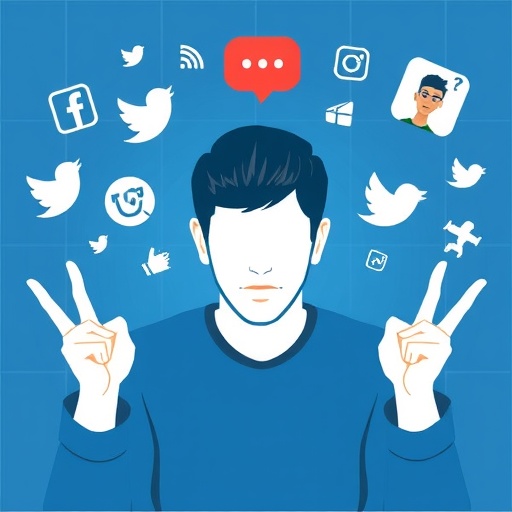
In a groundbreaking study published in the journal Discover Psychology, researchers explored the intricate relationship between problematic social media use and the mental health challenges of depression and anxiety. The study, co-authored by V.G. Shanthi, J.R. Williams, and J.D. Elhai, aimed to uncover not only the direct correlations but also the underlying mechanisms, particularly focusing on the role of distress tolerance as a mediating factor. Understanding these elements is crucial as social media platforms become ever more embedded in the fabric of daily life.
The researchers set out with a hypothesis that identified the increasing severity of problematic social media usage as a predictor of heightened levels of anxiety and depression. This marks an essential area of inquiry, particularly as studies have shown a dramatic rise in mental health issues among individuals with substantial social media engagement. By delving into this hypothesis, the research team sought to frame a compelling narrative about the potential dangers linked to social media and emotional well-being.
A pivotal component of this study was the definition of “problematic social media use.” The authors characterized it as engaging with social media to an extent that it begins to negatively impact daily functioning. This deviation from typical usage patterns poses significant questions about the nature of human interaction in digital spaces. The study addressed concerns ranging from emotional dysregulation to social comparison, which are frequently exacerbated by the curated lives presented on social platforms.
Central to the research was the concept of distress tolerance—a psychological construct that pertains to an individual’s capacity to endure aversive emotional states without resorting to avoidance or maladaptive coping strategies. The authors posited that lower distress tolerance may not only contribute to the severity of social media use but also amplify the feelings of anxiety and depression that accompany it. This relationship is particularly concerning in today’s context, where the immediacy of social media can act as a double-edged sword, providing both connections to others and a relentless source of stress.
To investigate these dynamics, the authors employed a combination of quantitative measures and self-reported surveys. Participants were asked to reflect on their social media habits while also completing assessments for anxiety, depression, and their own levels of distress tolerance. This multifaceted approach aimed to paint a comprehensive picture of the phenomenon under study. The results revealed striking correlations, with those reporting higher levels of social media engagement also indicating more severe symptoms of anxiety and depression.
The findings further underscored how individuals with low distress tolerance were more vulnerable to the adverse effects of social media. In essence, the study demonstrated that the ability or inability to manage emotional discomfort significantly influenced one’s interaction with social media platforms. For the first time, this research highlighted that distress tolerance could serve as a protective barrier, potentially buffering individuals from the mental health pitfalls frequently associated with excessive social media use.
As the results began to emerge, the implications of this research extended beyond academic circles. There was a clear call for greater awareness and education regarding the effects of social media consumption on mental health. For stakeholders—such as mental health professionals, educators, and policymakers—the insights gathered from this research could facilitate the development of interventions designed to enhance distress tolerance among vulnerable populations, thereby mitigating the negative effects linked with problematic social media use.
The discourse surrounding mental health in the context of digital technology is crucial. As society continues to adapt to a rapidly evolving digital landscape, understanding how these changes impact psychological well-being is essential. The researchers emphasized that mental health literacy must evolve in parallel with technology. Building skills to navigate and moderate social media use could become integral to fostering mental resilience in younger generations.
In closing, this study serves as both a warning and a guidance system in an increasingly digital world. As problematic social media use persists as a dynamic factor in mental health discourse, it compels further inquiry and action. By improving our understanding of emotional processes and their interplay with technological engagement, society can strive towards cultivating healthier digital environments that support positive mental health outcomes.
Ultimately, the research by Shanthi, Williams, and Elhai opens new avenues for exploration into how to promote well-being in an age dominated by digital engagement. This investigation highlights the critical interplay between our emotional landscapes and the virtual interactions that permeate our lives. Future studies will undoubtedly continue to unravel the complexities of these relationships, helping us to navigate the potential risks of social media while harnessing its benefits.
Cite Scienmag News
Glenn Wilkins. (December 10, 2025). Social Media’s Impact on Depression and Anxiety. Scienmag. https://scienmag.com/social-medias-impact-on-depression-and-anxiety/
Glenn Wilkins. "Social Media’s Impact on Depression and Anxiety." Scienmag, 10 December 2025, https://scienmag.com/social-medias-impact-on-depression-and-anxiety/. Accessed 4 September 2026.
Glenn Wilkins. "Social Media’s Impact on Depression and Anxiety." Scienmag. December 10, 2025. https://scienmag.com/social-medias-impact-on-depression-and-anxiety/


