


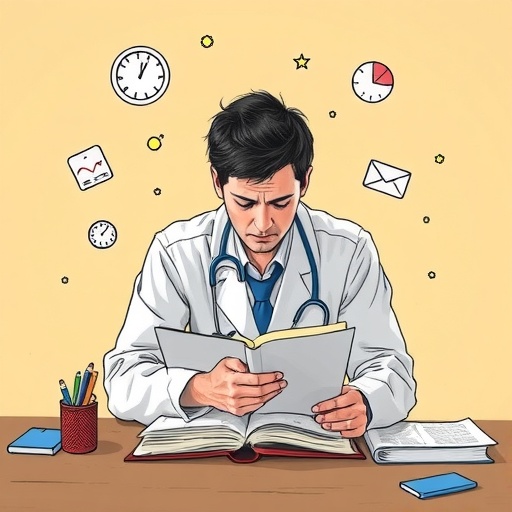
In an insightful study set to be published in 2025, researchers Mosalanejad, Jahromi, and Abiri, among others, delve into the psychological dynamics of procrastination and anhedonia as they pertain to medical students at Jahrom University. This timely research not only sheds light on the mental health challenges faced by today’s medical students but also explores the implications for academic and professional achievement in an increasingly demanding field.
Procrastination, conceptualized as the intentional delay of important tasks, is a widespread phenomenon that affects students across various disciplines. However, when considering the rigorous nature of medical education, the consequences of procrastination can be particularly dire. The study reveals how such delays are not merely a matter of poor time management; they often intertwine with deeper emotional and psychological struggles. By adopting a qualitative content analysis, the researchers were able to capture rich experiences and perspectives from students, painting a comprehensive picture of the issue.
Anhedonia, the inability to feel pleasure, is another significant factor explored in this research. For students immersed in intense studying and medical training, the experience of losing joy in activities that once brought satisfaction can have profound implications for their overall well-being. The study’s qualitative nature allows for a nuanced exploration of how anhedonia manifests in the lives of medical students, often leading to a cycle of disengagement that exacerbates procrastination.
The researchers employed a mixed methods approach to gather data, utilizing interviews and student reflections to substantiate their findings. This method enables them to triangulate data from multiple sources, thereby enhancing the reliability of their results. The students’ testimonies highlight that procrastination may stem from feelings of overwhelm, anxiety, and depression, all of which are unfortunately common within the medical school environment.
Interestingly, the research uncovers a myriad of coping mechanisms that students employ in response to procrastination and anhedonia. While some students resort to unhealthy habits such as excessive screen time or substance use, others actively seek support through peer networks or mental health services. This dichotomy illustrates the crucial need for targeted interventions and support systems that can help students effectively manage their mental health while navigating the challenges of medical education.
The implications of this study are profound, not only for the individual students but also for medical education programs as a whole. Institutions must acknowledge the emotional and psychological burdens placed on their students and adapt their curricula and support services accordingly. By fostering environments that prioritize mental health, educational institutions can help mitigate the impacts of procrastination and anhedonia on academic success.
As pressures mount within the field of medicine, understanding the interplay between procrastination and mental health becomes increasingly essential. The study by Mosalanejad et al. serves as a critical reminder that addressing psychological issues in students is vital for their success and well-being. By creating a culture that emphasizes mental health wellness as much as academic achievement, medical institutions can cultivate more resilient and successful future healthcare professionals.
The narrative surrounding procrastination often overlooks its deeper psychological connections, framing it merely as a productivity issue. However, this research underscores the importance of recognizing the role of anhedonia and other emotional states in this complex behavior. Understanding the psychological underpinnings of procrastination can lead to more effective approaches in helping students manage their time and commitments.
In conclusion, the qualitative content analysis performed by Mosalanejad and colleagues not only highlights the struggles of medical students but also advocates for a more nuanced understanding of procrastination and its ties to mental health. As future healthcare providers, it is crucial that these students receive the support they need to ensure they can thrive academically, emotionally, and professionally.
Overall, the study provides valuable insights that could inspire similar research across different educational contexts, shedding light on how procrastination and emotional difficulties can thwart student success. This research ultimately champions the need for systemic changes in medical education, urging stakeholders to prioritize student mental health as integral to academic and professional excellence.
The mental health discourse within education is gradually changing, and studies like this one are at the forefront of urging institutions to evolve. By promoting conversations around procrastination and anhedonia, educators can begin fostering environments that encourage vulnerability and open dialogue regarding mental health, paving the way for a healthier, more supportive academic culture.
In the coming years, it will be vital for educators and administrators to harness the insights from this research study as they attempt to ameliorate mental health challenges. Increased awareness, accessibility to mental health resources, and a culture of understanding could significantly reduce prevalence rates of procrastination and anhedonia among medical students, ultimately leading to improved student outcomes.
As this research gains visibility, it is not just a contribution to academic literature but an essential step toward transforming the landscape of medical education. The insights provided by Mosalanejad et al. will hopefully catalyze change that resonates beyond the walls of medical schools, fostering broader dialogues around mental health within educational settings.
While this study will undoubtedly provoke thought and discussion, it also possesses the potential to enact real change within medical education practices. Looking forward, it remains imperative that we listen to the voices of students, learn from their experiences, and strive to build a more supportive educational framework that prioritizes their mental health alongside their academic requirements.
Cite Scienmag News
Courtney Benton. (December 10, 2025). Procrastination and Anhedonia in Jahrom Medical Students. Scienmag. https://scienmag.com/procrastination-and-anhedonia-in-jahrom-medical-students/
Courtney Benton. "Procrastination and Anhedonia in Jahrom Medical Students." Scienmag, 10 December 2025, https://scienmag.com/procrastination-and-anhedonia-in-jahrom-medical-students/. Accessed 4 September 2026.
Courtney Benton. "Procrastination and Anhedonia in Jahrom Medical Students." Scienmag. December 10, 2025. https://scienmag.com/procrastination-and-anhedonia-in-jahrom-medical-students/


