


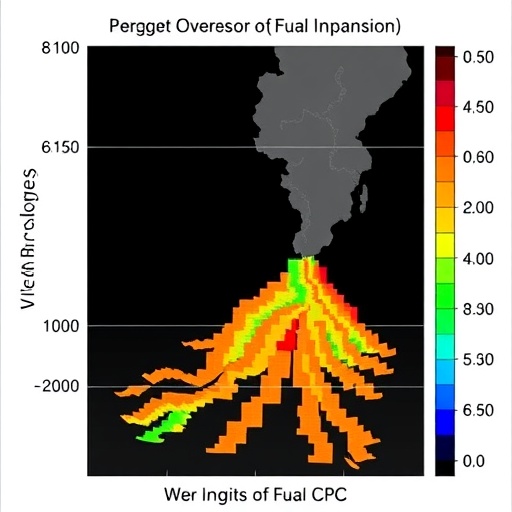
Recent advancements in the realm of energy extraction have brought forward critical insights into the dynamics of gas expansion energy in coal-and-gas outbursts. In a groundbreaking study published in Nature Resources Research, researchers Wang, Gao, and Jiang have introduced a novel analytical framework they term the Fractal–Desorption Synergy Framework. This innovative approach stands to reshape our understanding of gas behavior in coal seams, particularly in the context of outbursts which can pose significant hazards in mining operations.
The motivation behind this research is rooted in the challenging nature of predicting outbursts, which are sudden releases of gas and coal that can result in catastrophic accidents in underground mines. Traditional methods have struggled to quantify the energy associated with gas expansion during such events. Therefore, the introduction of the Fractal–Desorption Synergy Framework seeks to address this predicament by utilizing a sophisticated mathematical representation of gas behavior that incorporates fractal geometry principles.
The significance of this study cannot be overstated; understanding the mechanics of gas expansion energy during coal-and-gas outbursts is critical for enhancing safety protocols in mining operations worldwide. By applying fractal analysis, the researchers were able to explore the non-linear characteristics of gas desorption in coal seams, isolating variables that were previously obscured by conventional analytic methods. This level of analysis could potentially lead to improved predictive models that can foresee outburst events with greater accuracy.
In this research, the authors meticulously detail their methodology, which is grounded in quantitative analysis and simulative approaches. They integrated laboratory experiments with theoretical modeling to draw a comprehensive picture of how gas behaves under varying conditions. The results were compelling, revealing new correlations between gas pressure, temperature variations, and the fractal characteristics of the coal matrix. Such findings contribute vastly to our existing body of knowledge and practical applications in the field.
One of the highlights of the study is the revelation that modeling gas expansion energy through the lens of fractal theory allows researchers to account for complexities that traditional methods overlook. Fractal dimensions play a key role in depicting the porous structures of coal, offering insights into how gases accumulate and later expand during destabilizing outbursts. This approach extends beyond mere theoretical exercises; it has practical implications in how mining operations can be optimized to minimize risks.
Wang and his colleagues further elaborate on the implications their findings have for future mining practices, suggesting that the integration of their framework into current monitoring technologies could facilitate real-time assessment of gas hazard potential. By transforming how we analyze and forecast gas behavior, this framework could stand to revolutionize safety protocols in a field often marred by unpredictability.
The researchers also emphasize the necessity for continuous improvements in safety practices leveraging their study’s findings. They advocate for the development of robust monitoring systems that can dynamically assess fractal dimensions in real-time, thereby providing miners with actionable insights. These systems could serve as vital safeguards against the unpredictable nature of outbursts.
Given the global significance of coal as an energy source, this research holds promise not only for enhancing miner safety but also for addressing environmental concerns associated with coal extraction. Improved predictive capabilities could lead to more efficient extraction methods, reducing waste and potentially lowering the carbon footprint of coal mining operations.
Another critical angle explored in this research is the synergy between gas desorption and fractal characteristics in determining energy expansion dynamics. The interplay of these two factors is fundamental in understanding outbursts, as distinct coal types exhibit varied gas expansion behaviors. As such, the framework proposed by the authors could serve as a standard reference for evaluating different coal seams across diverse geologies.
The potential ripple effects of implementing this research are vast, suggesting a future where coal mining can be conducted with greater foresight and safety. As the industry continues to grapple with challenges such as climate change and regulatory hurdles, innovations such as the Fractal–Desorption Synergy Framework provide a foundation for advancing both safety and sustainability.
Many stakeholders, from policymakers to mining companies, stand to benefit from the insights generated through this rigorous examination of gas expansion energy. The methodology and findings bridge the gap between theoretical research and practical application, fostering an environment where data-driven decision-making can thrive in the mining sector.
In conclusion, the study by Wang, Gao, and Jiang not only pioneers a new way of understanding gas expansion energy in coal-and-gas outbursts but also lays the groundwork for developing enhanced safety measures in coal mining operations. With continued innovation and the integration of comprehensive frameworks such as this, the future of coal extraction could see marked improvements in both safety standards and operational efficiencies.
As we move forward, the implications of such advancements are clear: the spotlight must remain on innovative research that prioritizes both miner safety and environmental stewardship in an industry that is critical to global energy supply.
Cite Scienmag News
Violet Maxwell. (December 10, 2025). New Framework Quantifies Gas Expansion in Coal Outbursts. Scienmag. https://scienmag.com/new-framework-quantifies-gas-expansion-in-coal-outbursts/
Violet Maxwell. "New Framework Quantifies Gas Expansion in Coal Outbursts." Scienmag, 10 December 2025, https://scienmag.com/new-framework-quantifies-gas-expansion-in-coal-outbursts/. Accessed 1 September 2026.
Violet Maxwell. "New Framework Quantifies Gas Expansion in Coal Outbursts." Scienmag. December 10, 2025. https://scienmag.com/new-framework-quantifies-gas-expansion-in-coal-outbursts/


