


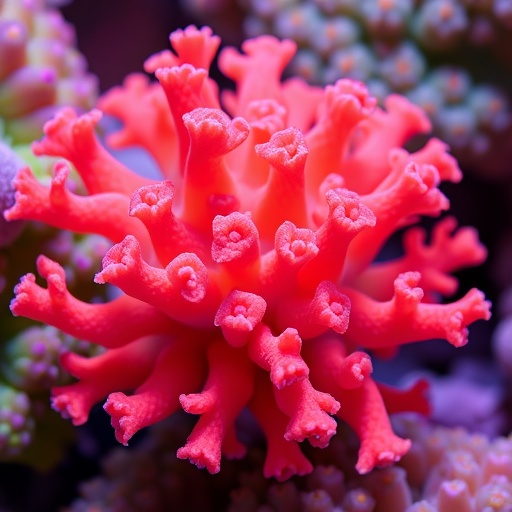
Coral reefs, often termed the “rainforests of the sea,” are pivotal ecosystems that provide habitats for a vast array of marine life. These complex structures, built by coral polyps over millennia, are not only crucial for biodiversity but also serve as protective barriers for coastlines and contribute significantly to local economies through tourism and fishing. However, the health and vibrancy of coral reefs are under severe threat due to climate change, pollution, and overfishing. With these challenges in mind, researchers have sought innovative solutions to monitor and analyze coral health and coloration, essential indicators of overall reef vitality.
Emerging from this research is Coral-CAT (Coral Color Analysis Tool), a semi-automatic tool designed to assess and analyze the coloration of corals efficiently. This innovative technology is powered by advanced imaging techniques and artificial intelligence, offering scientists a new lens through which to study coral ecosystems. Coral-CAT stands as a promising solution to tracking the health of coral reefs in real-time, increasing the ability of researchers to respond to changing conditions in these habitats.
One of the key features of Coral-CAT is its ability to classify coral colors, which serve as critical indicators of coral health. Color can reflect the physiological condition of corals, with bleaching events — often caused by elevated sea temperatures — leading to pale or white corals that signify stress. By providing a reliable and quantitative analysis of coral color, Coral-CAT empowers researchers with the necessary tools to monitor these vital signs more accurately and frequently.
The process of analyzing coral colors manually has traditionally been a time-consuming and subjective endeavor. Fieldwork often involves taking samples and then returning to the lab for analysis, a method that can overlook rapid changes in coral health. Coral-CAT addresses these limitations with a streamlined approach, reducing the need for extensive sample processing by enabling in-situ analysis. This not only saves time but also enhances the accuracy of data collection in various marine environments.
The use of artificial intelligence in Coral-CAT elevates its functionality by improving the precision of color classification. Machine learning algorithms can be trained on vast datasets of coral images, allowing the tool to recognize and categorize various coral species and their associated colors. This capability ensures that researchers can detect subtle shifts in coloration that may indicate early signs of distress or disease, facilitating timely intervention and conservation measures.
Moreover, Coral-CAT does not work in isolation; it can be integrated into broader conservation frameworks that include genetic studies and ecological assessments. This holistic approach allows scientists to paint a more comprehensive picture of coral reef health, as changes in color often correlate with other indicators of reef vitality. By combining data from Coral-CAT with other research methodologies, a more robust understanding of coral ecosystems can emerge.
The advent of tools like Coral-CAT is timely, as global coral populations face unprecedented pressures. According to recent studies, nearly 75% of the world’s coral reefs are currently threatened, primarily due to human-driven factors such as climate change and habitat destruction. This alarming trend highlights the urgent need for effective monitoring strategies to inform conservation efforts and enhance the resilience of these vital ecosystems.
As researchers continue to unveil the capabilities of Coral-CAT, the broader scientific community expresses enthusiasm for its potential applications. Beyond coral assessment, the tool may pave the way for similar technologies in other marine and terrestrial ecosystems. The lessons learned from coral analysis could be adapted to monitor the health of various species and habitats, enhancing global biodiversity protection efforts across the board.
In addition, Coral-CAT serves as an educational tool, raising awareness about the fragility of coral reefs among a wider audience. By democratizing access to advanced coloration analysis, more researchers, educators, and conservationists can engage with the issue of coral health. Public involvement is crucial, as greater awareness can spur action and foster support for initiatives aimed at protecting these complex ecosystems.
As Coral-CAT moves toward practical implementation in various research domains, training and user engagement will be essential. Workshops and online platforms can be developed to ensure that researchers and conservationists feel equipped to utilize the tool effectively. By fostering a community around this revolutionary technology, the responsibility of coral conservation can be shared collectively.
A potential challenge remains in scaling Coral-CAT for broader deployment, especially in remote locations where resources may be limited. Ensuring that the technology can operate in diverse environments, including regions heavily impacted by climate change, is crucial. Continuous refinement of the tool based on user feedback will be paramount to its success in real-world applications.
The journey of Coral-CAT represents a significant leap forward in coral research and conservation technologies. As we stand at a critical juncture in environmental stewardship, the successful implementation of Coral-CAT could mark the beginning of a new era in our efforts to preserve coral reefs. By leveraging cutting-edge technology with our innate drive for ecological preservation, we may finally gain the upper hand in the battle against the degradation of these magnificent underwater ecosystems.
In conclusion, the Coral Color Analysis Tool is more than just a research instrument; it is a beacon of hope amidst the ongoing challenges facing our oceans. By embracing innovation and collaboration, we can strive for a future where coral reefs continue to thrive, enriching marine biodiversity and supporting the livelihoods of countless communities worldwide. As we look to the future, it is clear that protecting these vibrant ecosystems will require both scientific ingenuity and a collective commitment to sustainability.
Cite Scienmag News
William Thompson. (December 8, 2025). Coral-CAT: Revolutionizing Coral Color Analysis. Scienmag. https://scienmag.com/coral-cat-revolutionizing-coral-color-analysis/
William Thompson. "Coral-CAT: Revolutionizing Coral Color Analysis." Scienmag, 8 December 2025, https://scienmag.com/coral-cat-revolutionizing-coral-color-analysis/. Accessed 3 September 2026.
William Thompson. "Coral-CAT: Revolutionizing Coral Color Analysis." Scienmag. December 8, 2025. https://scienmag.com/coral-cat-revolutionizing-coral-color-analysis/


