


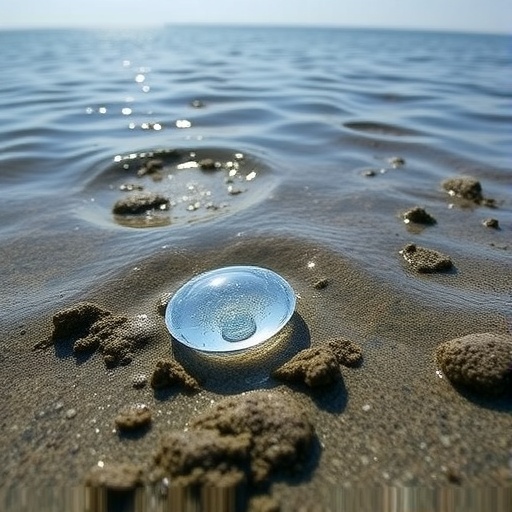
The emergence of oxygen as a dominant force in Earth’s atmosphere, known as the Great Oxidation Event (GOE), represents one of the pivotal moments in our planet’s evolutionary narrative. This transition, which occurred near the boundary between the Archaean and Proterozoic eons, reshaped the chemical and biological makeup of Earth’s surface environment and set the stage for the development of complex life. Despite its transformative impact, pinpointing the precise timing and locale where free oxygen first became prevalent has remained an elusive challenge for geoscientists. Now, an innovative synthesis of cyanobacterial phylogenetics alongside geochemical isotope studies offers compelling evidence that oxygenation may have originated far earlier, specifically in marine shelf sediments during the Neoarchaean era, approximately 200 million years before the widely recognized GOE.
Traditionally, the GOE has been interpreted as a singular event during which oxygen levels in the atmosphere abruptly rose due to photosynthetic activity predominantly from planktonic cyanobacteria. However, this new research suggests a more nuanced prelude to this event, indicating that benthic microbial mats—mats of cyanobacteria dwelling along seafloor muds—could have been responsible for generating localized, micromolar concentrations of dissolved oxygen. These microbial communities, dominant in the geological record, appear to have produced sufficient oxygen to create mildly oxidizing conditions within marine sediments, a discovery that fundamentally challenges the conventional view that Earth’s early oceans were largely anoxic.
This revelation is supported by converging data from nitrogen and thallium isotope geochemistry, which act as proxies to reconstruct redox conditions in ancient marine environments. Stable nitrogen isotopes suggest the presence of nitrate, a chemical species only stabilized under oxygenated conditions, while thallium isotope signatures indicate the formation of manganese oxides in sedimentary deposits. These biogeochemical indicators collectively point to the existence of a redox gradient on Neoarchaean continental shelves that was surprisingly oxidizing at the sediment-water interface, despite an overarching anoxic ocean.
By integrating phylogenetic analyses of cyanobacteria with these geochemical signatures, the study paints a comprehensive picture of the interplay between biological innovation and environmental change. The benthic cyanobacterial mats, with their capacity for oxygenic photosynthesis in shallow marine settings, appear to have been at the frontline of Earth’s earliest oxygenation efforts. The localized oxygen production by these mats suggests that free oxygen began accumulating in sediment pore waters before it was able to diffuse into the overlying water column and atmosphere, creating microhabitats where oxidative processes could flourish.
To better understand these early redox dynamics, the researchers employed box modeling techniques that simulate the chemical exchanges within these ancient marine muds. The models demonstrated that micromolar oxygen concentrations were not only plausible but sustainable under Archaean environmental parameters. This oxygen presence would have been sufficient to alter sediment chemistry, facilitating the early creation of nitrate and manganese oxide minerals, both essential players in the nascent oxygen cycle.
One of the most provocative aspects of this work lies in its support for the so-called “upside-down” Archaean biosphere hypothesis. Traditionally, it has been assumed that oxygen levels would increase progressively moving upward through the water column. However, these findings suggest the opposite: oxygen production was more intense at the substrate level within marine muds than in the overlying waters nearer the surface. This inversion has profound implications for how we understand nutrient cycling, microbial ecology, and the evolution of early life, as it paints a world in which oxidative niches were confined to sediment layers, only gradually permeating upwards over tens of millions of years.
The timing of these changes is also crucial. The Neoarchaean shelves, circa 2.8 to 2.5 billion years ago, were ecologically productive and chemically dynamic environments that likely hosted a variety of microbial communities capable of exploiting early oxygen gradients. The research underscores the idea that these environments were hotspots for biogeochemical transformations that preceded and perhaps catalyzed the atmospheric oxygenation event hailed as the Great Oxidation Event, radically shifting the paradigm for Earth’s oxygen history.
Furthermore, these findings offer insights into the feedback mechanisms that may have governed the pace and nature of Earth’s oxygenation. The stabilization of nitrate and manganese oxides in sediments effectively created reservoirs and sinks for oxygen and related oxidants, which could have modulated the rise of free oxygen through complex redox interactions. The microbial mats themselves, by creating oxygen microenvironments, could also have fostered diversification and adaptation among early aerobic microbes, potentiating evolutionary trajectories that culminated in more widespread oxygenation.
This research exemplifies the power of integrating molecular biology with geochemical proxies to reconstruct Earth’s earliest environments. The phylogenetic record of cyanobacteria provides a temporal scaffold that aligns well with isotope evidence, bridging biological evolution and inorganic chemistry to tell a cohesive story of biogeochemical innovation. It challenges scientists to reconsider when and where the conditions necessary for the eventual oxygenation of Earth’s atmosphere first arose, shifting the focus from open oceans and atmospheric measurements to near-shore sediments and microbial mats.
The implications extend beyond Earth’s history—this study also enriches our search for life on other planets. If oxygenation can begin in localized benthic environments where photosynthetic microbes thrive, then habitable niches on exoplanets with shallow marine sediments could represent prime targets in the search for biosignatures. The interplay between biology and geochemistry captured in the fossil and isotope records provides a vital analog for interpreting extraterrestrial data.
As our understanding of early Earth oxygen dynamics evolves, so too does our appreciation for the complexity and resilience of early life. Oxygen production on Neoarchaean marine muds offers a glimpse into a world undergoing transformation, where microbial innovation and environmental conditions combined to set the stage for ecosystems that would flourish billions of years later. These benthic mats, often overlooked in previous models, emerge as central players in Earth’s great oxygen story, illuminating a chapter that may rewrite how we understand the very air we breathe.
Finally, this study emphasizes the importance of interdisciplinary approaches in Earth sciences. The fusion of biological phylogenetics, geochemical isotope studies, and computational modeling creates a robust framework for interpreting ancient environments. Such integrative research continues to push the boundaries of what we know about the early Earth system and provides a foundation for future inquiries into the complex co-evolution of life and planet.
In summary, the discovery that free oxygen rose initially in marine muds through the activity of benthic cyanobacterial mats challenges long-held views and opens new avenues for understanding Earth’s oxygenation. It places the sediments of Neoarchaean shelves at the forefront of a crucial biological and geochemical transition, heralding the dawn of oxygenic photosynthesis and the complex ecosystems that depend on it. This paradigm shift not only redefines a cornerstone event in Earth history but also offers a vital model for exploring planetary habitability beyond our world.
Cite Scienmag News
Violet Maxwell. (December 8, 2025). Free Oxygen Emerged First in Marine Mud. Scienmag. https://scienmag.com/free-oxygen-emerged-first-in-marine-mud/
Violet Maxwell. "Free Oxygen Emerged First in Marine Mud." Scienmag, 8 December 2025, https://scienmag.com/free-oxygen-emerged-first-in-marine-mud/. Accessed 4 September 2026.
Violet Maxwell. "Free Oxygen Emerged First in Marine Mud." Scienmag. December 8, 2025. https://scienmag.com/free-oxygen-emerged-first-in-marine-mud/


