


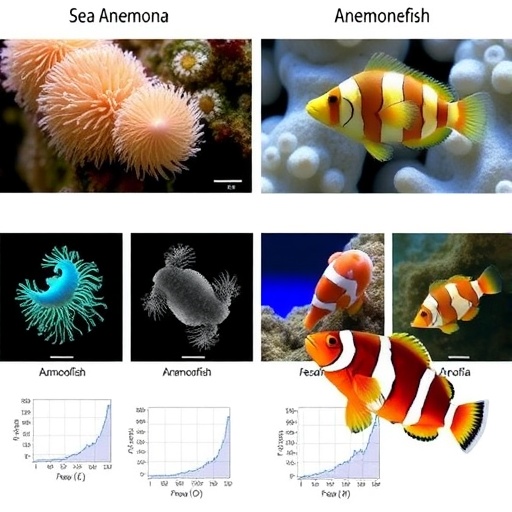
In a groundbreaking exploration of the complex dynamics between marine organisms, a recent study has revealed fascinating insights into the microbiota associated with sea anemones and their companion anemonefish, particularly in the context of a bleaching event. Conducted by a consortium of researchers led by Clerissi and colleagues, this research provides a window into how these critical species respond to stressors in their environment, specifically, the widespread phenomenon of coral bleaching which has severely impacted marine ecosystems globally.
Coral bleaching is typically instigated by environmental stressors such as elevated ocean temperatures, leading to the expulsion of symbiotic algae from coral tissues. This phenomenon not only affects the corals themselves, but also has cascading effects on the diverse assemblages of marine life that rely on them, including the sea anemones and their associated fish species. The researchers aimed to dissect the microbiological shifts that occur in this context, thoroughly investigating how both the anemones and anemonefish adapt to the stress caused by thermal anomalies.
In their comprehensive study, the team collected samples from various species of sea anemones and their resident anemonefish across different environmental conditions, including sites experiencing bleaching. By employing advanced molecular techniques, including metagenomic and transcriptomic analyses, they were able to characterize the microbial communities present and evaluate their functional potential. This approach allowed for a detailed understanding of both resident and transient microorganisms that could play significant roles in the health and resilience of these marine organisms under duress.
One of the more significant findings highlighted by the team was the stark difference in the responses of the microbiota associated with sea anemones compared to those associated with their fish companions. Anemones displayed a pronounced shift in their microbial composition in response to elevated temperatures, exhibiting a decline in diversity and richness, which could worryingly foreshadow declines in their overall health and viability. This aligns with previous knowledge that suggests that a stable microbiota is essential for the immune health of sea anemones, offering insights into why their resilience against bleaching is compromised.
Interestingly, the microbiota of the anemonefish, although also affected, demonstrated a comparatively more stable composition amid similar stress conditions. The resilience observed in the fish could be attributed to their more adaptive lifestyles or differing dependencies on their microbial associates, as they often engage in behaviors that promote the maintenance of beneficial microbes. This juxtaposition raises critical evolutionary questions concerning the interactions between these two groups and their unique survival strategies in the face of climate change.
In light of these findings, the implications for marine ecosystem management are profound. The researchers advocate for an increased understanding of microbe-ecology interactions, positing that preserving the health of sea anemones could have far-reaching effects on connected marine communities. As the oceans continue to warm and anthropogenic stressors mount, adopting strategies that support coral and anemone conservation could mitigate the adverse impacts of bleaching events.
Moreover, the study hints at the potential for leveraging these microbial communities in conservation efforts, suggesting that interventions aimed at enhancing the resilience of anemones through manipulation of their microbiota could prove beneficial. By fostering a balanced microbial community, it might be possible to strengthen the defenses of these organisms against future environmental changes, ultimately aiding in the preservation of marine biodiversity.
The research also underlines the importance of engaging a broader discourse on sustainable practices, emphasizing the need for collaborative efforts between scientists, policymakers, and the public to foster environments conducive to marine life. With this study as a jumping-off point, the conversation around the microbiota of marine animals is set to expand, inviting further exploration into the symbiotic relationships that underpin ocean health.
As climate dynamics reshuffle species interaction and ecosystem balance, understanding the intricate layers of such relationships becomes more than a scientific pursuit—it evolves into a collective imperative. The task ahead is to consolidate these findings into actionable conservation strategies that not only protect sea anemones and their companions but also ensure a robust future for the diverse marine ecosystems they inhabit.
Ultimately, by enhancing our understanding of these biological responses to environmental stress, we initiate a critical dialogue about the future of marine conservation in an ever-changing world. The researchers are optimistic that continued studies will yield even deeper insights into microbial ecology and its pivotal role in marine environments, particularly amidst the ongoing threats posed by climate change.
The breadth of this research contributes to an increasingly urgent narrative: that of the need for interconnectedness in our approach to ecological and climate challenges. This work stands as a compelling reminder of the richness of marine life and the interconnected networks that sustain it, adding a vital chapter to the ongoing story of survival in our oceans.
As we move forward, the hope is that such integrated studies will not only inform academic discourse but also inspire actionable change at both community and global levels, reinforcing our responsibility to safeguard our oceans for future generations.
Clerissi, C., Beldade, R., Mejait, A. et al. Microbiota of host sea anemones and their associated anemonefish show contrasting responses to a bleaching event.
Coral Reefs (2025). https://doi.org/10.1007/s00338-025-02799-3
Cite Scienmag News
Morgan Morrow. (December 8, 2025). Contrasting Microbiota Responses in Sea Anemones and Anemonefish. Scienmag. https://scienmag.com/contrasting-microbiota-responses-in-sea-anemones-and-anemonefish/
Morgan Morrow. "Contrasting Microbiota Responses in Sea Anemones and Anemonefish." Scienmag, 8 December 2025, https://scienmag.com/contrasting-microbiota-responses-in-sea-anemones-and-anemonefish/. Accessed 4 September 2026.
Morgan Morrow. "Contrasting Microbiota Responses in Sea Anemones and Anemonefish." Scienmag. December 8, 2025. https://scienmag.com/contrasting-microbiota-responses-in-sea-anemones-and-anemonefish/


