


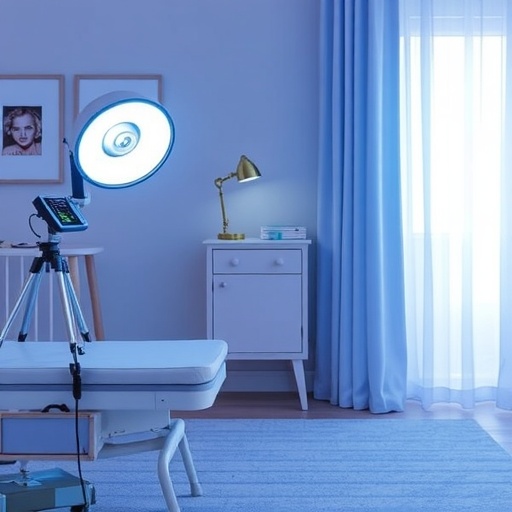
In a landmark exploration set to reshape neonatal care, recent research published in Pediatric Research delves deep into the cost-effectiveness of home-based phototherapy for treating neonatal jaundice. Traditionally confined to hospital settings, phototherapy has long been the standard treatment for this common condition affecting newborns worldwide. The study, led by Pettersson, M., Ryen, L., and Eriksson, M., alongside their colleagues, meticulously evaluates not only the medical efficacy but also the economic implications and broader healthcare impacts of shifting phototherapy treatments from hospital wards into the comfort of infants’ own homes.
Neonatal jaundice, characterized by elevated bilirubin levels leading to yellowing of the skin and eyes, poses significant risks if left inadequately treated. Standard phototherapy uses specific wavelengths of blue light to breakdown bilirubin molecules, facilitating their removal from the infant’s system. Historically, this therapy requires prolonged hospitalization, imposing not only financial strain on families and healthcare systems but also psychological and logistical burdens on parents. The advent of portable phototherapy devices has prompted healthcare professionals to reconsider home treatment protocols, aiming to maintain therapeutic outcomes while mitigating hospital dependency.
The study’s comprehensive methodology incorporated data from extensive clinical trials and economic analyses, providing evidence-based insights into the comparative advantages of home phototherapy. One of the critical findings highlights that home phototherapy can achieve similar clinical efficacy in reducing bilirubin levels when administered with proper guidance and monitoring. This equates to decreased hospital admissions and shorter inpatient durations, effectively lowering healthcare costs without compromising treatment quality. Importantly, the underlying technology involves light-emitting diode (LED) devices optimized for home use, which pose minimal risks and ensure sufficient irradiance to attain therapeutic goals.
Healthcare economists participating in this study provided detailed cost-benefit analyses, accounting for direct medical expenses, parental work absence, and long-term implications of hospital stays including risk of nosocomial infections. The researchers emphasize that home phototherapy, by facilitating treatments in familiar environments, significantly reduces indirect costs associated with hospital care. Additionally, the psychological comfort gained by both infants and parents during home treatment cannot be overstated. The findings suggest a paradigm shift, where healthcare policy might prioritize integrating home-based interventions into standard neonatal care pathways.
Technological advancements in phototherapy units serve as a cornerstone for this transition. Devices designed for home use are equipped with sensors ensuring appropriate light intensity and timers controlling exposure duration, thereby enhancing treatment adherence and safety. These innovations, combined with telemedicine platforms for remote monitoring, allow clinicians to oversee patient progress without physical visits. Such integration represents a growing trend toward digital transformation in healthcare, blending device engineering with data analytics to optimize patient outcomes while preserving clinical oversight.
Despite these promising developments, the study acknowledges challenges that warrant further investigation. Ensuring equitable access to home phototherapy devices and training for diverse socioeconomic groups is paramount to prevent healthcare disparities. The researchers call for standardized protocols and regulatory frameworks facilitating the safe distribution and use of home units. Moreover, the role of health insurance coverage in subsidizing these devices plays a critical role in widespread adoption, underscoring the intersection of medical innovations with healthcare policy and economics.
Parental education emerged as a vital component in the success of home phototherapy. The study details structured training programs that caregivers undergo, designed to ensure proper device application, recognition of complications, and adherence to treatment schedules. This education not only enhances the safety and effectiveness of therapy but also empowers parents, fostering a collaborative healthcare environment. In the context of patient-centered care, such empowerment is closely linked with improved health outcomes and satisfaction.
The implications extend beyond individual families to the broader healthcare system. The study presents predictive modeling indicating the potential relief on neonatal intensive care units (NICUs) by adopting home phototherapy protocols. With hospital infrastructures often strained by increasing admissions, a decentralized model of care for conditions like neonatal jaundice could redistribute resources toward more acute cases. This strategic resource allocation could optimize hospital workflows and reduce systemic bottlenecks, ultimately translating into better healthcare service delivery at scale.
Concurrently, the psychosocial ramifications for families coping with hospitalization and neonatal illness receive focused attention. The researchers discuss how home phototherapy alleviates stress associated with hospital separation and exposure to clinical environments. This reduction in anxiety enhances parental mental health during a critical period, potentially influencing bonding and breastfeeding success, both pivotal for neonatal development. The ripple effects of these psychosocial benefits contribute to holistic improvements in neonatal care paradigms.
From a global health perspective, the study underscores the adaptability of home phototherapy in low-resource settings. Considering the scarcity of hospital beds and the high costs of extended inpatient care in many developing regions, portable phototherapy offers a scalable solution. The affordability and logistical feasibility of home treatment resonate with global public health goals aimed at reducing neonatal morbidity and mortality. Yet, the authors underscore the necessity of context-specific adaptations, such as power supply reliability and community healthcare support, to ensure efficacy across diverse environments.
Importantly, the publication also touches on the environmental benefits of home-based care. Hospitals, with their intensive energy consumption and waste generation, contribute significantly to healthcare-related carbon footprints. Home phototherapy reduces hospital stays, lowering demand for energy-intensive infrastructure usage. Coupled with the energy-efficient designs of modern phototherapy devices, this shift illustrates a convergence between clinical innovation and sustainability efforts, an increasingly essential consideration in healthcare advancements.
Clinicians expressed cautious optimism about integrating home phototherapy, balancing enthusiasm with the need for rigorous clinical governance. The study highlights ongoing research into optimizing patient selection criteria to identify neonates most suitable for home treatment, ensuring uncompromised safety profiles. Adverse event monitoring remains pivotal, demanding robust communication channels between families and healthcare providers to swiftly address complications. The authors advocate for continued clinical trials and longitudinal studies to refine protocols and validate long-term outcomes.
Furthermore, the ethical dimensions of delegating complex treatments to non-professional caregivers receive thoughtful discussion. While home phototherapy demonstrates promise as a safe and effective alternative, it changes traditional dynamics of medical responsibility. The study encourages establishing clear guidelines delineating healthcare provider accountability while empowering parents, safeguarding both patient welfare and caregiver well-being. This delicate balance epitomizes the evolving interface between medical science and societal norms.
In conclusion, this comprehensive study charts a visionary path toward optimizing neonatal jaundice management through home phototherapy. By harnessing technological innovation, economic evaluation, and patient-centered care principles, the findings articulate a compelling case for reimagining treatment delivery paradigms. As healthcare systems worldwide grapple with increasing demands and cost pressures, this research signals an auspicious future where accessible, efficient, and compassionate care converges in the home environment, heralding transformative impacts on neonatal health outcomes globally.
Cite Scienmag News
Harold Sullivan. (December 3, 2025). Cost-Effectiveness of Home Phototherapy Reviewed. Scienmag. https://scienmag.com/cost-effectiveness-of-home-phototherapy-reviewed/
Harold Sullivan. "Cost-Effectiveness of Home Phototherapy Reviewed." Scienmag, 3 December 2025, https://scienmag.com/cost-effectiveness-of-home-phototherapy-reviewed/. Accessed 4 September 2026.
Harold Sullivan. "Cost-Effectiveness of Home Phototherapy Reviewed." Scienmag. December 3, 2025. https://scienmag.com/cost-effectiveness-of-home-phototherapy-reviewed/


