


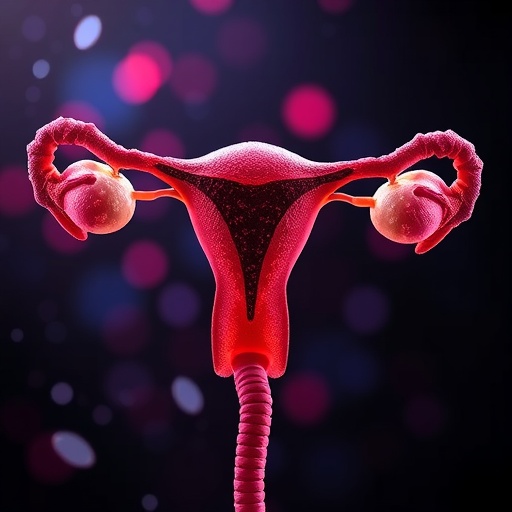
Recent advancements in regenerative medicine have provided new hope for addressing conditions that compromise female reproductive health. A groundbreaking study published in the Journal of Ovarian Research reveals how human umbilical cord mesenchymal stem cells (hUCMSCs) may offer a promising avenue for restoring ovarian function, especially in cases of primary ovarian insufficiency (POI). This condition often leads to infertility and other hormonal imbalances, creating an urgent need for effective therapeutic strategies.
The research team, led by Luo, Q., along with Liu, C. and Su, Y., embarked on a comprehensive examination of the mechanisms underlying ovarian dysfunction in rat models of POI. Their experiments focused on the potential capacity of hUCMSCs to restore damaged ovarian tissues and re-establish hormonal balance, thus addressing the multi-faceted nature of the health challenge. As POI often results from various factors, including genetic predispositions, autoimmune diseases, or even environmental influences, the application of hUCMSCs stands out for its innovative approach.
One of the pivotal components of their findings is the role of angiopoietins—specifically, angiopoietin 1 and 2 (Ang1 and Ang2). This study highlights how a delicate balance between these two factors is essential for maintaining ovarian health. Ang1 is typically associated with the promotion of angiogenesis, the process that forms new blood vessels, while Ang2 acts as a modulator that can either support or inhibit this process, depending on the context. The dysregulation of these factors is commonly observed in POI, leading to reduced blood supply and subsequent ovarian dysfunction.
The researchers employed a robust experimental design, utilizing a rat model to simulate POI and to assess the therapeutic effects of hUCMSCs. Upon administration, significant improvements were observed not only in ovarian function but also in hormone levels associated with fertility. This included the recovery of estrous cycles, enhanced levels of reproductive hormones, and even an increase in the count of growing follicles, signifying a return towards normal ovarian function.
Another exciting aspect of this research is the safety profile associated with the application of hUCMSCs. The team closely monitored potential adverse effects throughout the study, ensuring that the introduction of stem cells did not lead to any immune rejection or tumor formation, which often raises concerns in regenerative medicine. The positive outcomes reported in this study indicate that hUCMSCs could potentially be a safe and effective treatment option for women suffering from POI.
At the cellular level, the team elucidated how hUCMSCs contribute to tissue regeneration and hormonal restoration. Mechanistically, hUCMSCs appear to modulate the ovarian microenvironment through the secretion of various growth factors and cytokines, which can enhance angiogenesis and promote cellular proliferation. This highlights a dual mechanism whereby hUCMSCs not only provide the necessary stem cell population for repair but also secrete paracrine factors that facilitate the healing process.
Furthermore, the implications of this research extend beyond just POI. The findings suggest that the modulation of the angiopoietin balance through stem cell therapy could have applications in other reproductive disorders and conditions related to ovarian dysfunction. The flexibility of this treatment approach raises fascinating questions about its capacity to address a range of female reproductive health issues, from premature menopause to other forms of ovarian insufficiency.
While the results from this study are promising, there are still critical hurdles to overcome before translating these findings into clinical practice. Future research is essential to understand the long-term effects of hUCMSCs in human subjects and to elucidate the optimal protocols for administration. These studies will be crucial in determining how best to integrate this innovative therapy into existing healthcare frameworks, ensuring that it complements, rather than replaces, current treatment options.
The scientists involved in this study have also emphasized the importance of collaborative efforts in furthering this research. By pooling expertise across various disciplines—including molecular biology, reproductive medicine, and stem cell research—they aim to refine the therapeutic protocols associated with hUCMSCs and to comprehensively investigate their mechanisms of action.
In sum, the research led by Luo, Q., Liu, C., and Su, Y. not only sheds light on an exciting new therapeutic application for hUCMSCs but also opens up numerous avenues for future investigations. These findings underscore the need for ongoing exploration into the intricacies of female reproductive health and the potential of regenerative medicine to offer innovative solutions.
As we navigate the complexities of reproductive health, it is essential to remain cautious yet optimistic about the developments in stem cell therapies. The expertise demonstrated in this research provides a hopeful glimpse into the future, suggesting that with rigorous investigation and cross-disciplinary collaboration, hUCMSCs could play a pivotal role in the restoration of female fertility and the overall quality of life for those affected by ovarian dysfunction.
Cite Scienmag News
Ophelia Keating. (December 3, 2025). hUCMSCs Boost Ovarian Function by Angiopoietin Rebalancing. Scienmag. https://scienmag.com/hucmscs-boost-ovarian-function-by-angiopoietin-rebalancing/
Ophelia Keating. "hUCMSCs Boost Ovarian Function by Angiopoietin Rebalancing." Scienmag, 3 December 2025, https://scienmag.com/hucmscs-boost-ovarian-function-by-angiopoietin-rebalancing/. Accessed 4 September 2026.
Ophelia Keating. "hUCMSCs Boost Ovarian Function by Angiopoietin Rebalancing." Scienmag. December 3, 2025. https://scienmag.com/hucmscs-boost-ovarian-function-by-angiopoietin-rebalancing/


