


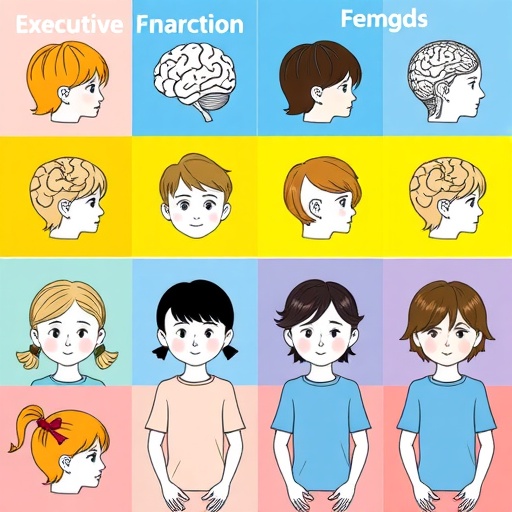
In recent years, the field of developmental psychology has seen increased interest in the cognitive abilities of young children, especially those related to executive function. A groundbreaking study by Wang and Blasco, titled “A Tale of Two Countries: International Studies on Executive Function in Young Children with and Without Developmental Delay,” has shed new light on how different environments impact the development of these essential skills. With a focus on children both with and without developmental delays, the research dives deep into cultural and contextual factors that may influence cognitive outcomes.
Executive function encompasses a variety of cognitive processes, including working memory, flexible thinking, and self-control. These cognitive skills are critical for academic success and day-to-day functioning, making them a focal point for educators and psychologists alike. Wang and Blasco’s comparative approach across different nations provides valuable insights not only into the development of executive function but also into how cultural nuances shape these skills in children.
For instance, the study emphasizes how environmental factors such as socioeconomic status and educational practices can either bolster or hinder the development of executive function in children. In high-income countries, access to educational resources, technology, and expert guidance can enrich children’s cognitive experiences, while in low-income settings, systemic barriers often dampen these development efforts. This disparity reveals a pressing need for comprehensive educational strategies that account for these varied contexts.
Moreover, the interactions between children and their caregivers play a fundamental role in the cultivation of executive function. The research suggests that consistent engagement and structured activities can significantly enhance cognitive abilities. For children with developmental delays, the effects of these interactions can be even more pronounced, highlighting the necessity for tailored interventions. Wang and Blasco propose that implementing culturally relevant programs could effectively promote executive function in these vulnerable populations.
The findings of this study resonate loudly with educators and policymakers. In light of the current global challenges facing early childhood education, understanding the intricacies of executive function development has never been more vital. As early learning environments transition to more inclusive practices, the emphasis on recognizing and addressing the diverse needs of all children is paramount. The study advocates for training teachers to foster executive function skills in classrooms, providing tools not only for cognitive growth but also for social and emotional development.
Moreover, the ability to self-regulate is increasingly recognized as a foundational component of academic readiness. Children with robust executive function skills are better equipped to tackle the rigors of formal schooling, enhancing their learning trajectories and emotional resilience. Wang and Blasco underscore the importance of integrating executive function training within the early education curriculum to provide children with a strong foundation for academic and life success.
In examining children without developmental delays, the researchers also reveal the effects of exposure to a variety of cognitive challenges. Engaging with diverse peer groups, experiencing enriched learning environments, and receiving positive reinforcement can all contribute to superior executive function skills. This finding suggests that fostering environments that prioritize cognitive challenges may be beneficial in preparing all children for the demands of school and life.
To further elaborate, the study utilized an extensive data set that encompassed children from various cultural backgrounds. This comprehensive approach allowed the researchers to observe not only the cognitive outcomes but also the emotional and social ramifications of executive function development. The results reveal that children who exhibit strong executive function skills tend to perform better academically and adapt more successfully to social situations, indicating the far-reaching impacts of these cognitive capabilities.
The global implications of Wang and Blasco’s study are noteworthy, especially as nations grapple with the challenges of educational inequities. The findings advocate for an international dialogue on developing preventive strategies aimed at nurturing executive function abilities from early childhood. Policymakers are urged to invest in early childhood programs that provide equitable access to quality education and resources, reinforcing the idea that every child, irrespective of background, deserves the opportunity to thrive.
In analyzing the trends emerging from this research, it becomes evident that executive function may serve as a barometer for overall child development. By prioritizing these cognitive functions, stakeholders can potentially uplift entire communities. Educators and healthcare professionals are encouraged to work collaboratively to identify children in need of additional support and to implement holistic strategies that promote cognitive development.
Not only does this research contribute to our understanding of cognitive development, but it also addresses the pressing need for cultural sensitivity in educational practices. Educators must be equipped to recognize the ways in which cultural differences influence learning styles and cognitive processes. Wang and Blasco advocate for frameworks that embrace cultural responsiveness in teaching methodologies, paving the way for more effective and inclusive educational systems.
As the study unfolds, it becomes increasingly clear that caring for the mental and emotional well-being of young children is intertwined with their cognitive development. Programs that support a child’s executive function skills also nurture their overall psychological health. This dual focus could help to mitigate the risks associated with developmental delays while promoting cognitive resilience among children from all background.
Wang and Blasco’s research serves as a call to action for communities around the globe. With the rapid pace of globalization and the shifting paradigms of education, understanding and enhancing executive function in children has emerged as a critical priority. Whether through government initiatives, community-based programs, or family engagement strategies, the collective responsibility lies in promoting the cognitive development of the next generation.
In conclusion, this landmark study underscores the importance of executive function in early childhood development. By advocating for relevant interventions and providing support in diverse cultural contexts, we can ensure that all children have the opportunity to flourish intellectually, socially, and emotionally. Wang and Blasco’s compelling findings set the stage for a future where every child, regardless of their circumstances, has the tools they need to succeed.
Wang, PJ., Blasco, P.M. A Tale of Two Countries: International Studies on Executive Function in Young Children with and Without Developmental Delay.
Early Childhood Educ J (2025). https://doi.org/10.1007/s10643-025-02064-w
Cite Scienmag News
Courtney Benton. (December 3, 2025). Comparative Study of Executive Function in Young Children. Scienmag. https://scienmag.com/comparative-study-of-executive-function-in-young-children/
Courtney Benton. "Comparative Study of Executive Function in Young Children." Scienmag, 3 December 2025, https://scienmag.com/comparative-study-of-executive-function-in-young-children/. Accessed 5 September 2026.
Courtney Benton. "Comparative Study of Executive Function in Young Children." Scienmag. December 3, 2025. https://scienmag.com/comparative-study-of-executive-function-in-young-children/


