


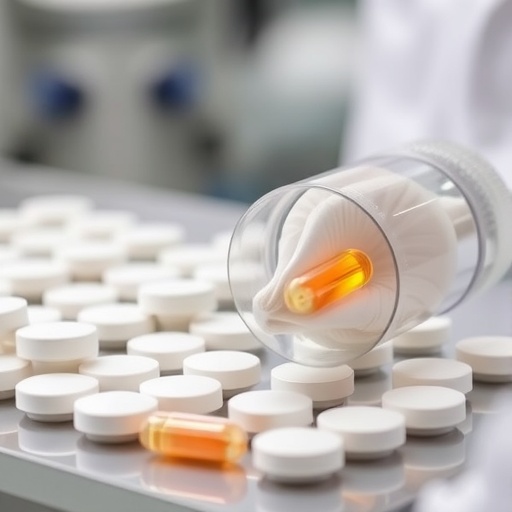
In a groundbreaking study set to reshape the pharmaceutical manufacturing landscape, researchers are pioneering an integrated control strategy that merges deep learning with process analytical technology to revolutionize the production of triple fixed-dose combination tablets. This innovation holds significant implications for enhancing the efficiency and accuracy of drug manufacturing processes, a necessity in an era where the demand for multi-drug formulations continues to burgeon. The integration of advanced technologies into this domain signals a remarkable leap forward in pharmaceutical engineering.
The importance of fixed-dose combination therapies cannot be overstated. These therapies provide an answer to the complexities of polypharmacy, which is prevalent among patients suffering from chronic conditions. By combining multiple active ingredients into a single tablet, pharmaceutical companies can simplify treatment regimens, ensure better patient compliance, and ultimately improve health outcomes. However, the manufacturing of these complex formulations introduces several challenges, particularly in terms of maintaining consistent dosage accuracy and uniformity across batches.
One of the notable innovations discussed in this study involves the utilization of deep learning algorithms that can analyze vast datasets in real time. This capability enables the identification of optimal production parameters and allows for the better prediction of product quality outcomes based on previous manufacturing runs. Consequently, pharmaceutical manufacturers can significantly reduce reliance on time-consuming and costly trial-and-error approaches, leading to faster and more cost-effective production cycles.
Furthermore, the integration of process analytical technology (PAT) with deep learning methods serves as a critical toolkit for achieving real-time monitoring and control within manufacturing environments. The EXPLORER, an innovative software platform that facilitates the connection between data inputs from different points in the manufacturing process, is essential. This platform not only collates significant data streams but also allows for the live analysis and visualization of critical quality attributes, bringing about a paradigm shift in how pharmaceutical manufacturing operations are executed.
The researchers conducted extensive experiments to validate their newly proposed control strategy, focusing on its application to the manufacture of triple fixed-dose combination tablets. During trials, they employed machine learning techniques to optimize mixing times and other critical parameters, discovering significant improvements in both product uniformity and process efficiency. These results underscore the profound impact of artificial intelligence in the field of pharmaceutical manufacturing
This study also emphasizes the importance of regulatory compliance. In an industry that is heavily scrutinized by regulatory bodies, the adoption of an integrated control strategy ensures that all manufacturing practices meet stringent quality standards. As a result, drug developers can expedite the time it takes to bring essential medications to the market, ultimately benefiting patients who rely on these therapeutics for their health and wellbeing.
Additionally, the research team’s commitment to sustainability in pharmaceutical production is noteworthy. By leveraging deep learning and PAT, they not only enhance manufacturing precision but also minimize waste generated during the production process. The potential reduction in raw material use and energy consumption is crucial for the long-term viability of pharmaceutical manufacturing as it shifts towards more environmentally friendly practices.
The implications of this integrated control strategy extend beyond just enhancing current production capabilities. It opens the door to a future where adaptive manufacturing processes can be implemented, allowing for the customization of medications based on individual patient needs. Such an agile approach to drug manufacturing could drastically change the landscape of personalized medicine, ushering in a new era of tailored therapeutics.
The researchers, led by Kim and his team, have made a compelling case for the rapid adoption of these advanced technologies within the pharmaceutical manufacturing sector. As industries increasingly turn towards Industry 4.0 principles, integrating machine learning into traditional processes will be key for fostering innovation and maintaining competitiveness in a marketplace driven by efficiency and precision.
As this study gains traction, it is expected to inspire further research into the applications of artificial intelligence beyond pharmaceutical manufacturing, including areas like biotechnology and quality assurance in drug development. The importance of interdisciplinary approaches cannot be understated, as collaboration between data scientists, engineers, and pharmaceutical professionals is pivotal for navigating the complexities of modern drug production.
In conclusion, the advancements presented by Kim and his colleagues provide a significant insight into the future of pharmaceutical manufacturing. Their work showcases the promise of deep learning and process analytical technology in refining production practices, enhancing drug quality, and ultimately meeting the ever-growing demand for effective healthcare solutions. As the industry continues to confront new challenges, embracing such innovative strategies will be vital for maintaining the integrity and efficacy of pharmaceutical products.
The integration of technology into pharmaceutical manufacturing is more than just an enhancement; it represents a fundamental transformation in how drugs are developed and delivered. This study serves as a beacon of hope for improved patient care and streamlined pharmaceutical operations, setting a new standard for what is possible in the convergence of healthcare and technology.
Kim, J.Y., Yeo, S., Yoo, JH. et al. Integrated control strategy based on deep learning and process analytical technology for the manufacture of a triple fixed-dose combination tablet. J. Pharm. Investig. (2025). https://doi.org/10.1007/s40005-025-00784-0
Cite Scienmag News
Blake Davidson. (December 2, 2025). Deep Learning-Driven Strategy for Triple Drug Tablet Production. Scienmag. https://scienmag.com/deep-learning-driven-strategy-for-triple-drug-tablet-production/
Blake Davidson. "Deep Learning-Driven Strategy for Triple Drug Tablet Production." Scienmag, 2 December 2025, https://scienmag.com/deep-learning-driven-strategy-for-triple-drug-tablet-production/. Accessed 4 September 2026.
Blake Davidson. "Deep Learning-Driven Strategy for Triple Drug Tablet Production." Scienmag. December 2, 2025. https://scienmag.com/deep-learning-driven-strategy-for-triple-drug-tablet-production/


