


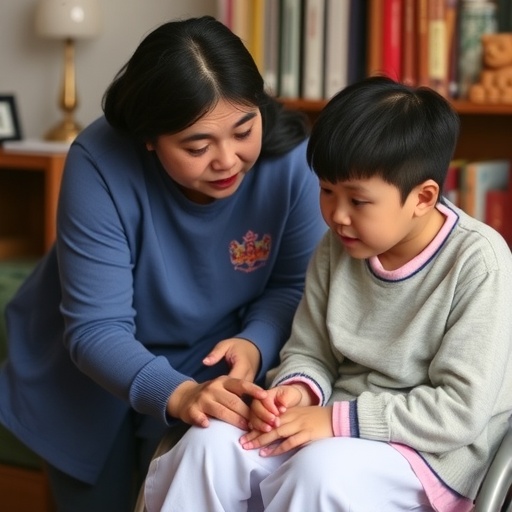
Parental burnout is a critical issue that has increasingly surfaced in psychological discourse, particularly among parents of children with developmental disabilities. As highlighted in a recent study conducted by Yan, Hou, and Deng, this phenomenon takes on unique dimensions within the Chinese cultural context. The researchers utilized a generalized additive model to explore various factors contributing to parental burnout, providing insights that resonate deeply with families navigating the complexities of caregiving.
The study’s authors delve into the emotional and psychological strain that accompanies parenting a child with developmental disabilities. In their findings, they reveal that this type of parental burnout is not merely a transient phase but a persistent state characterized by emotional exhaustion, detachment, and a diminished sense of accomplishment. Such stress can lead to detrimental outcomes not only for parents but also for their children and the family dynamics as a whole. This nuanced understanding signifies the need for broader awareness and interventions centered around parental mental health.
Cultural expectations in Chinese society play a significant role in how parents perceive their responsibilities and the impact of their child’s developmental challenges. The authors argue that traditional values, including filial piety and a strong emphasis on academic success, amplify pressures faced by parents. This cultural lens facilitates a deeper understanding of how societal expectations intersect with personal feelings of inadequacy and frustration, ultimately contributing to heightened levels of burnout among parents.
The methodology employed by Yan and colleagues is notably innovative. By utilizing a generalized additive model, the researchers can examine the relationship between various predictors and parental burnout levels in a flexible manner. This approach contrasts with traditional linear models, allowing for a more nuanced interpretation of the data. Such statistical rigor enhances the credibility of their findings, making a compelling case for the need to address parental burnout as a complex, multi-faceted issue.
As the study progresses, it emphasizes the importance of identifying risk factors that exacerbate burnout. For instance, the presence of multiple stressors—such as financial strain, lack of social support, and pre-existing mental health issues—can significantly elevate the burnout risk for parents. Acknowledge that the demands placed on parents often extend beyond caregiving, encompassing societal pressures and personal expectations. This multifaceted nature of burnout underscores the urgency of developing holistic support systems for families affected by developmental disabilities.
Moreover, the implications of this research extend beyond academia. Policymakers, mental health professionals, and social support organizations must collaborate to foster an environment where parental well-being is prioritized. This includes creating accessible mental health resources tailored specifically for parents of children with disabilities. Educational programs that focus on coping strategies and resilience-building can empower parents, helping them to navigate their experiences more effectively.
In the realm of social support, the importance of building strong community networks cannot be overstated. Peer support groups, counseling services, and community engagement initiatives can alleviate feelings of isolation that many parents face. The authors suggest that fostering these connections can provide invaluable emotional backing, enabling parents to share experiences and coping mechanisms openly.
Furthermore, the research highlights the role of parental self-care in mitigating burnout. Encouraging parents to prioritize their mental and physical health through regular self-care practices can yield significant benefits. Activities such as mindfulness, exercise, and pursuing personal interests can offer parents the relief they desperately need. By normalizing the need for self-care, families can cultivate a more balanced approach to navigating the challenges of parenting.
As this study gains traction, it serves as a wake-up call for society at large. The need for a paradigm shift in understanding parental roles, especially in contexts where cultural expectations are deeply ingrained, is evident. By approaching parental burnout as a shared societal responsibility rather than solely an individual issue, communities can create safer spaces for parents to seek help without stigma. This progressive view can pave the way for improved societal norms regarding support for families with developmental disabilities.
In conclusion, as Yan, Hou, and Deng’s research illustrates, the struggle against parental burnout among Chinese parents of children with developmental disabilities is a pressing issue that demands immediate attention. The findings are a clarion call for collective action—one that implores society to acknowledge and address the unique challenges faced by these parents. With thoughtful interventions and a commitment to elevating parental well-being, we can foster stronger families capable of flourishing despite the challenges they encounter. The insights gleaned from this study undoubtedly contribute a vital perspective to the growing discourse on parental mental health and the intricate dynamics of family life.
As society moves forward, it is crucial to continue exploring the intersection of cultural understanding, emotional support, and practical resources required to combat parental burnout. The road ahead may be fraught with challenges, but with appropriate emphasis and supportive measures, the well-being of parents and children alike can be safeguarded, ensuring a more hopeful future for families navigating the complexities of developmental disabilities.
Yan, T., Hou, Y. & Deng, Y. Parental Burnout in Chinese Parents of Children With Developmental Disabilities: A Generalized Additive Model Perspective.J Autism Dev Disord (2025). https://doi.org/10.1007/s10803-025-07151-w
Cite Scienmag News
Ophelia Keating. (December 2, 2025). Chinese Parents’ Burnout in Raising Disabled Children. Scienmag. https://scienmag.com/chinese-parents-burnout-in-raising-disabled-children/
Ophelia Keating. "Chinese Parents’ Burnout in Raising Disabled Children." Scienmag, 2 December 2025, https://scienmag.com/chinese-parents-burnout-in-raising-disabled-children/. Accessed 3 September 2026.
Ophelia Keating. "Chinese Parents’ Burnout in Raising Disabled Children." Scienmag. December 2, 2025. https://scienmag.com/chinese-parents-burnout-in-raising-disabled-children/


