


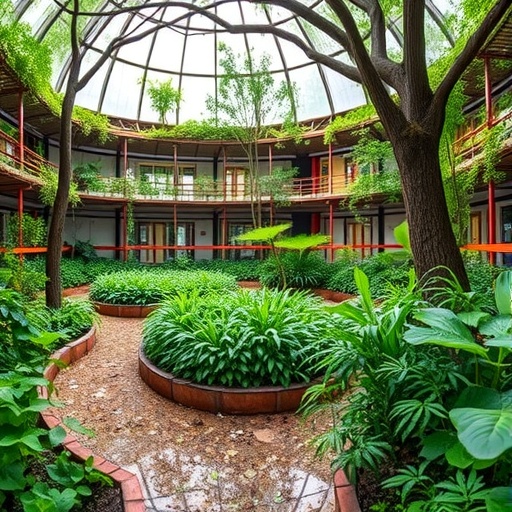
Urban environments are often viewed as spaces of concrete and steel, detached from nature’s rhythms and resources. However, a groundbreaking new study published in Nature Cities reveals a contrasting reality: vast populations in Indian cities are actively engaging in foraging within urban blue spaces—those areas associated with water bodies such as rivers, lakes, and ponds—demonstrating a profound relationship between city dwellers and their natural environment. This comprehensive investigation not only charts the widespread practice of urban foraging but also sheds light on its critical role in fostering sustainability, food security, and cultural preservation in rapidly urbanizing regions.
The research carried out by Basu, Zoderer, Nagendra, and their colleagues involves an extensive survey across multiple urban centers in India, capturing the voices and experiences of thousands of individuals who harvest edible plants, fish, and other resources from urban aquatic ecosystems. The study underscores that these practices are far from marginal or anecdotal; instead, they form a substantial part of everyday life for numerous communities who rely on these blue spaces not just for sustenance but also for livelihood and well-being.
A key revelation of the study is the significant diversity of species harvested from urban blue spaces, ranging from wild leafy greens to fish and crustaceans. These species often grow spontaneously or are traditionally cultivated in the margins of urban water bodies, offering nutritionally rich and locally adapted food resources. Importantly, this biological diversity is closely linked to complex ecological interactions and contributes to urban biodiversity resilience, reinforcing the crucial ecosystem services that these often-overlooked habitats provide.
Practices of foraging also intersect deeply with socio-economic dimensions, as the researchers highlight people from various age groups, gender identities, and cultural backgrounds who depend on this activity. Urban foraging emerges not only as an act of food acquisition but also as a strategy for economic survival and cultural continuity. For marginalized communities, these sustainable harvesting practices can help offset the stress of expensive urban markets and precarious employment by providing reliable access to fresh and affordable nutrition.
The sustainability benefits that flow from widespread urban foraging are manifold. By encouraging local food production and consumption cycles, foraging in blue spaces can reduce dependence on industrial agriculture, curb food miles, and mitigate waste through the utilization of available natural resources. The study’s data strongly suggest that encouraging such indigenous and community-based practices could help urban planners and policymakers reimagine cities as intertwined with nature rather than opposed to it, fostering sustainable urban futures.
Moreover, the research draws attention to the role urban foraging plays in maintaining water quality and ecological balance. By actively managing and harvesting vegetation, foragers prevent excessive overgrowth which could otherwise degrade water quality and habitat structure. These biodegradable materials, when managed properly, contribute to nutrient cycling and serve as habitat for aquatic organisms. Thus, foraging indirectly supports ecosystem functioning and water purification processes essential for urban health.
Nevertheless, the study does not neglect the challenges that foraging in urban blue spaces entails. Pollution, habitat fragmentation, and competing land use pressures threaten the sustainability of these resources. Chemical pollutants and debris in many urban water bodies pose health risks associated with bioaccumulation in edible species, emphasizing the need for integrated water management policies to safeguard both human and ecological health.
In addition, there exists a tension between informal community uses of blue spaces and formal urban development agendas. Many foragers face regulatory and social obstacles that undermine their rights and access to these vital resources. The study advocates for inclusive governance approaches that recognize the legitimacy of traditional foraging knowledge and practices, encouraging co-management frameworks that empower local communities while protecting ecosystems.
One of the most compelling findings is how foraging also engenders a deeper ecological awareness and connection to place among urban residents. Engaging directly with the natural environment fosters environmental stewardship behaviors and reinforces the cultural and spiritual meanings embedded in these practices. In the face of climate change and rapid urban transformation, such connections can galvanize collective action toward more resilient cities.
The methodological approach of the study is notable for its interdisciplinarity, combining ethnographic fieldwork, ecological surveys, and social science analysis to capture the nuanced realities of urban foraging. This comprehensive approach allows for a holistic understanding of both ecological functions and human dimensions surrounding urban blue spaces, offering a model for future research in urban sustainability science.
From a technical standpoint, the researchers employ detailed botanical and fish species identification, water quality assessments, and spatial mapping techniques to elucidate patterns of resource use and ecosystem health. They also integrate socio-economic data to reveal how foraging practices vary across different urban contexts and cultural groups, highlighting adaptive strategies in response to shifting environmental and economic conditions.
Implications of this study extend beyond the Indian subcontinent. As many cities worldwide confront challenges of food insecurity, biodiversity loss, and social inequity, the findings suggest that harnessing urban blue spaces as multifunctional landscapes through sustainable foraging could provide robust strategies for enhancing urban resilience and sustainability globally.
The study ultimately calls for a paradigm shift in urban environmental management that moves away from purely engineered and segregated conceptions of blue spaces. Instead, it promotes the integration of ecological knowledge with local practices to co-create spaces that nourish both human and non-human life. Embracing urban foraging as a legitimate, sustainable, and culturally embedded practice can catalyze a revitalization of urban-nature relationships, contributing to healthier, more equitable, and sustainable cities.
In closing, this pioneering research elevates urban foraging from a peripheral survival tactic to a central pillar of urban ecological and social sustainability. It urges cities, planners, policymakers, and citizens to recognize, protect, and nurture blue spaces as dynamic, living systems where culture, ecology, and economy intersect. By doing so, urban environments can transcend their conventional boundaries and become vibrant arenas of coexistence between humanity and the natural world.
Cite Scienmag News
Denise Maddox. (December 2, 2025). Foraging in India’s Urban Blue Spaces: Benefits. Scienmag. https://scienmag.com/foraging-in-indias-urban-blue-spaces-benefits/
Denise Maddox. "Foraging in India’s Urban Blue Spaces: Benefits." Scienmag, 2 December 2025, https://scienmag.com/foraging-in-indias-urban-blue-spaces-benefits/. Accessed 3 September 2026.
Denise Maddox. "Foraging in India’s Urban Blue Spaces: Benefits." Scienmag. December 2, 2025. https://scienmag.com/foraging-in-indias-urban-blue-spaces-benefits/


