


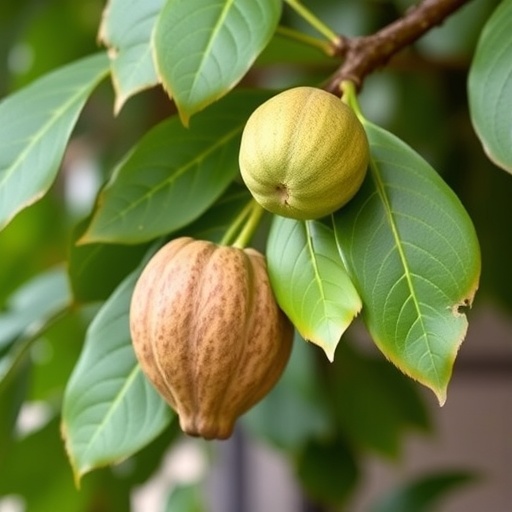
In a significant stride towards revolutionizing the treatment of colon cancer, researchers have delved into the potential of natural compounds derived from the leaves of Annona muricata, commonly known as soursop. This groundbreaking study, conducted by Ali et al., embarks on an innovative journey that combines traditional botanical knowledge with cutting-edge in silico evaluation techniques. The implications of their findings could hold the key to a new era in oncological therapies, particularly for patients battling this formidable disease.
Colon cancer remains one of the leading causes of cancer-related mortality worldwide, which accentuates the urgent need for effective treatment alternatives. Current therapeutic approaches often come with severe side effects, leaving patients in search of more tolerable solutions. Amidst this pressing need, the leaves of Annona muricata, traditionally known for their medicinal properties, have emerged as a promising source of bioactive compounds. The study featured in Scientific Reports merits attention for its meticulous approach to unveiling the cytotoxic potential of these natural products.
The research employed advanced in silico methodologies to screen and identify specific phytochemicals present in soursop leaves. Utilizing molecular docking studies, the authors focused on how these compounds interact with target proteins associated with colon cancer. This computational strategy not only streamlines the identification process but also reduces the time and costs associated with experimental trials in laboratory settings. It reflects a paradigm shift in how we approach drug discovery, particularly in the realm of herbal medicine.
Notably, the study spotlights several key compounds found in Annona muricata leaves, including alkaloids, flavonoids, and tannins. Each of these phytochemicals has been reported to exhibit various anti-cancer properties, including apoptosis induction in cancer cells and the ability to inhibit tumor proliferation. The research delineates how these compounds can modulate critical signaling pathways involved in cancer progression, providing a multifaceted approach toward combating colon cancer.
The in silico evaluation revealed that certain compounds possess high binding affinities to proteins implicated in tumor growth and metastasis. For instance, the analysis showcased how acetogenins from soursop leaves target mitochondrial ATP production, potentially leading to increased cancer cell death. This specificity is crucial, as it also hints at reduced toxicity towards normal cells, a significant downside of conventional chemotherapy agents.
Moreover, Ali et al. have provided a comprehensive comparative analysis of the phytochemical profiles of Annona muricata leaves against other known anti-cancer agents. This contextual approach adds depth to their findings, illustrating that natural compounds can match the efficacy of synthetically produced drugs. The researchers argue that harnessing these natural alternatives could pave the way for integrative and holistic treatment modalities in oncology.
As the authors detail their methods, they emphasize the importance of validating their in silico results through in vivo studies. While computational predictions are promising, experimental validation is essential to ascertain the therapeutic potential and safety of these compounds in real biological systems. This ongoing dialogue between in silico and in vivo approaches emphasizes a future where natural products can elegantly blend with modern therapeutic protocols.
The findings of this research hold profound implications not only for colon cancer treatment but also for the broader field of cancer therapeutics. As the scientific community continues to explore the molecular intricacies of various cancers, the potential for plant-derived compounds to serve as accessible and effective treatments becomes ever more tangible. As global health challenges persist, innovative studies such as these are crucial in expediting the quest for reliable and safe therapeutic options.
It is also noteworthy to mention that advocacy for natural remedies resonates well with an increasing subset of the population seeking alternatives to synthetic pharmaceuticals. This shift in patient preference adds an additional layer to the research’s relevance, positioning Annona muricata as a beacon of hope for those wary of conventional treatments. This alignment with public sentiment could enhance the acceptance and utilization of botanical extracts in standard therapeutic regimens.
In summary, the work presented by Ali et al. signifies a pivotal moment in medicinal plant research, marrying traditional knowledge with contemporary scientific inquiry. Their exploration of Annona muricata leaves not only elucidates the potential of these compounds as anti-cancer agents but also highlights the urgent need for further studies. As we stand on the brink of this new frontier in cancer treatment, the echoes of this pioneering research might resonate well beyond the laboratory, striking a chord with patients and practitioners alike.
The promise held by natural compounds beckons researchers and clinicians alike to embrace a future where plant-based therapies take center stage in the fight against cancer. As more studies begin to affirm these findings, the scientific community must ensure that the pathway from bench to bedside is paved with rigorous validation and adherence to safety standards. The journey ahead is undoubtedly challenging but also filled with unprecedented opportunities for innovation and healing.
In conclusion, the identification and evaluation of natural compounds from Annona muricata is not just about finding a single solution for colon cancer; it represents a broader vision for the integration of nature into modern medicine. As we explore the depths of our planet’s botanical resources, the potential for groundbreaking discoveries in cancer treatment is endless, driving the narrative of hope and resilience.
Ali, M.Y., Asha, A.J., Riti, F.A. et al. Identification and in silico evaluation of natural compounds from Annona muricata (soursop) leaves for colon cancer treatment. Sci Rep (2025). https://doi.org/10.1038/s41598-025-30151-w
Cite Scienmag News
Nathaniel Bowman. (December 2, 2025). Natural Compounds from Soursop Leaves Target Colon Cancer. Scienmag. https://scienmag.com/natural-compounds-from-soursop-leaves-target-colon-cancer/
Nathaniel Bowman. "Natural Compounds from Soursop Leaves Target Colon Cancer." Scienmag, 2 December 2025, https://scienmag.com/natural-compounds-from-soursop-leaves-target-colon-cancer/. Accessed 5 September 2026.
Nathaniel Bowman. "Natural Compounds from Soursop Leaves Target Colon Cancer." Scienmag. December 2, 2025. https://scienmag.com/natural-compounds-from-soursop-leaves-target-colon-cancer/


