


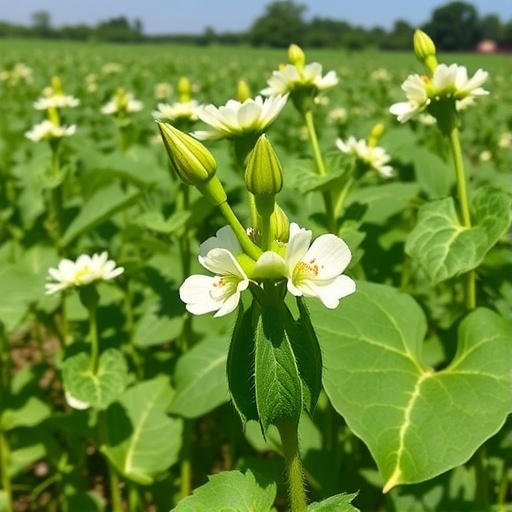
In a groundbreaking study presented in BMC Genomics, researchers have unveiled pivotal genomic regions that significantly influence flowering time and growth habit in cowpea, scientifically recognized as Vigna unguiculata. This extensive genome-wide association study (GWAS) sheds light on the intricate genetic architecture underlying phenotypic traits crucial for the agriculture of cowpea, a staple crop for many regions across the globe. As food security increasingly becomes a pressing global concern, understanding such genetic factors holds immense promise for enhancing crop resilience and productivity in the face of climate change and other agricultural challenges.
Cowpea is highly valued for its nutritional content and adaptability to nutrient-deficient soils, making it an essential legume in many developing countries. The reliance on cowpea as a food source underscores the urgency for scientific exploration aimed at improving its yield and growth characteristics. This study, led by a collaborative team of geneticists, aims to identify specific genomic markers associated with the flowering time and growth characteristics in cowpea, allowing for more targeted breeding strategies that can optimize these traits.
The team employed a comprehensive genomic dataset involving diverse cowpea accessions leveraging advancements in sequencing technologies. They meticulously analyzed the genome sequences, aiming to pinpoint the alleles linked with phenotypic traits, thereby establishing a clear relationship between genetic variations and observable characteristics in cowpea plants. The results indicated not only novel genomic regions but also elucidated existing ones that had previously been unrecognized or mischaracterized.
Central to their findings are several significant genomic loci that were strongly correlated with flowering time. These loci provide vital insights into the plant’s adaptation mechanisms, particularly concerning its response to environmental cues that dictate when flowering should occur. Timing is essential, as early flowering can help cowpea plants avoid drought stress, especially in planting regions prone to arid conditions, making these findings especially relevant to farmers in such ecosystems.
Moreover, the investigation revealed critical genetic markers associated with varying growth habits of cowpea. These markers are essential for breeders looking to develop specific varieties with desired growth forms that are better suited to local agricultural practices. By leveraging these markers, breeders can streamline the process of cultivar development, ensuring that farmers have access to improved varieties that meet both market demands and climatic challenges.
The implications of these findings extend beyond mere academic interest; they have tangible applications in bolstering food security. By harnessing the genetic potential identified through this GWAS, breeders can enhance cowpea production, which in turn could significantly contribute to alleviating hunger and malnutrition in vulnerable populations. As more countries face the daunting challenge of feeding their growing populations, such genomic innovations offer a beacon of hope.
Furthermore, the researchers emphasized the importance of collaboration in such studies, highlighting that integrative approaches combining genomics, phenomics, and agronomy can yield comprehensive insights into crop improvement. The utilization of broad datasets, as demonstrated in this study, exemplifies how modern technology can aid traditional breeding methods, leading to enhanced crop varieties that can thrive in changing climates.
Additionally, the research not only serves current agricultural needs but also sets a precedent for future studies on other leguminous crops. The methodologies and findings could be replicated or adapted to improve genomic research and development in a variety of crops that share similar growth and reproductive traits. This transformative potential lays the groundwork for a broader understanding of legumes and their cultivation.
As the world continues to grapple with the implications of climate change, the continuous development of resilient crops will be paramount. For cowpea, this study provides an essential framework for future research aiming to enhance adaptability to adverse environmental conditions. Identifying and understanding genetic resilience traits can help create varieties that not only survive but thrive in the face of environmental stressors.
Moreover, this work underscores the importance of genetic diversity in cowpea breeding programs. The legacy of traditional agricultural practices, which often emphasize local varieties, complements scientific advances in genomics. Such synergy could be pivotal in achieving sustainable agricultural practices that prioritize both genetic health and productivity.
In summation, the genomic regions identified in this study present an invaluable resource for cowpea breeders and geneticists alike. With ongoing research and development, it is likely that we will see the emergence of new cowpea varieties that are not only high-yielding but also resilient to climate fluctuations. This study, therefore, is not just a step forward in cowpea research but a vital contribution to global food security and agricultural sustainability.
Future efforts will need to focus not only on understanding the mechanisms behind these genomic regions but also on their practical implications in breeding programs. Engaging with farmers and agricultural stakeholders will be crucial in ensuring that the findings translate effectively from the lab to the field.
As we look to the future, the research encapsulated in this GWAS exemplifies the power of science in addressing some of the most pressing challenges in agriculture. By bridging genomic research with practical breeding applications, we can pave the way for innovative solutions that contribute to a more sustainable and food-secure world.
In conclusion, the insights garnered from this study represent a vital advancement in our understanding of cowpea genetics. The implications extend far beyond the individual loci identified; they present a paradigm shift in how we approach legume cultivation in an uncertain climate future. As scientific innovation continues to evolve, we can only anticipate further breakthroughs that will unlock the full potential of crops like cowpea, making strides toward a future where food security is assured for all.
Li, X., Wu, X., Wang, B. et al. Genome-wide association study reveals novel genomic regions for flowering time and growth habit in cowpea (Vigna unguiculata [L.] Walp).
BMC Genomics (2025). https://doi.org/10.1186/s12864-025-12044-4
Cite Scienmag News
Juliet Wilcox. (December 2, 2025). New Genetic Insights on Cowpea Flowering and Growth. Scienmag. https://scienmag.com/new-genetic-insights-on-cowpea-flowering-and-growth/
Juliet Wilcox. "New Genetic Insights on Cowpea Flowering and Growth." Scienmag, 2 December 2025, https://scienmag.com/new-genetic-insights-on-cowpea-flowering-and-growth/. Accessed 4 September 2026.
Juliet Wilcox. "New Genetic Insights on Cowpea Flowering and Growth." Scienmag. December 2, 2025. https://scienmag.com/new-genetic-insights-on-cowpea-flowering-and-growth/


