


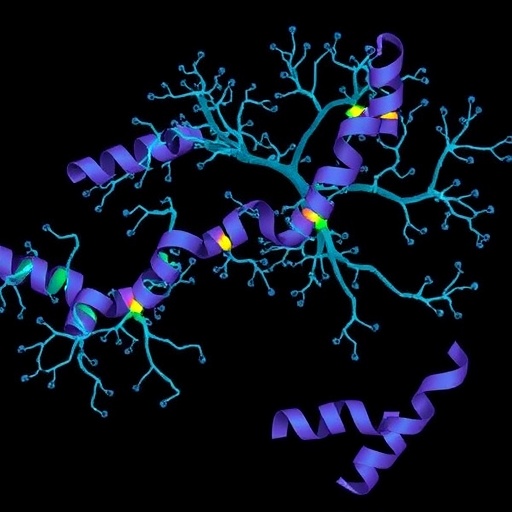
In the ever-evolving landscape of cancer research, recent insights into the regulatory functions of MKP7, also known as DUSP16, are heralding a transformative understanding of tumor biology and therapeutic potential. A groundbreaking study published in Medical Oncology unravels the multifaceted roles that this dual-specificity phosphatase plays within cancerous cells, painting a complex picture of its involvement in signaling cascades and tumor progression. This revelation could signal a paradigm shift in how we approach targeted therapies, especially in cancers traditionally resistant to conventional treatments.
MKP7/DUSP16 belongs to the family of mitogen-activated protein kinase phosphatases (MKPs), which are pivotal in modulating the activity of MAP kinases, critical conduits in cellular proliferation, differentiation, and apoptosis. Unlike other phosphatases, MKP7 selectively deactivates specific MAP kinases such as JNK and p38, profoundly impacting cellular stress responses. Its nuanced regulation of these pathways makes it a critical molecular switch, capable of tipping the balance between cell survival and death—a balance that cancer cells manipulate to their advantage.
The investigation led by Chen et al. meticulously delineates the dualistic nature of MKP7 in oncogenesis. On one hand, MKP7 exerts tumor-suppressive functions by attenuating aberrant MAP kinase signaling, thereby stifling unwarranted cellular proliferation and inducing apoptotic pathways. Contrarily, in certain cancer contexts, MKP7’s activity seems to facilitate tumor growth by tempering immune surveillance and fostering a microenvironment conducive to metastasis. This Janus-faced role underscores the complexity of targeting MKP7 in anti-cancer strategies, demanding a highly contextual and nuanced therapeutic approach.
At the molecular level, MKP7’s regulatory prowess is enacted through its phosphatase domain, which dephosphorylates threonine and tyrosine residues on MAP kinases, inactivating their kinase activity. This post-translational modification cascades into a broader genomic response, influencing gene expression profiles that govern cell cycle checkpoints, DNA repair mechanisms, and inflammatory mediators. The study presents compelling evidence that aberrations in MKP7 expression or function dissect critical nodes of these signaling networks, fostering oncogenic transformation and resistance to cellular stress.
The researchers employed cutting-edge proteomic and transcriptomic analyses to unravel the downstream effects of MKP7 modulation in diverse cancer cell lines. Their data reveal that upregulation of MKP7 correlates with diminished JNK activity, resulting in decreased apoptotic signaling and enhanced cell survival. Furthermore, MKP7’s suppression in certain leukemia and breast cancer models led to heightened sensitivity to chemotherapeutic agents, suggesting its potential as a biomarker for treatment responsiveness.
One of the most striking aspects of this study is its illumination of the interplay between MKP7 and the tumor microenvironment (TME). MKP7 appears to modulate immune cell infiltration and cytokine profiles within the TME, thereby influencing tumor immunity. The authors propose that MKP7-mediated signaling dampens pro-inflammatory cues that are crucial for effective antitumor immune responses, offering tumors a stealth advantage against immune detection. This insight opens intriguing avenues for combinatorial immunotherapies that could inhibit MKP7 to bolster immune-mediated eradication of tumors.
The clinical implications of these findings are profound. Traditional kinase inhibitors often suffer from lack of specificity and consequent off-target effects. However, targeting a phosphatase like MKP7 offers a unique therapeutic leverage point—an upstream modulator capable of finely tuning MAP kinase cascades rather than bluntly blocking them. The study underscores the therapeutic promise of small molecule inhibitors designed to selectively modulate MKP7 activity, potentially restoring apoptotic pathways and reinstating immune competence within the tumor milieu.
Moreover, this research highlights the necessity for personalized medicine approaches in managing cancers involving MKP7 dysregulation. Given MKP7’s context-dependent roles, patient stratification based on MKP7 expression and activity profiles could optimize therapeutic outcomes. Incorporating MKP7 status into diagnostic workflows might enable oncologists to predict prognosis, tailor treatments, and monitor response dynamics with unprecedented precision.
The team’s work also extends into the realm of drug resistance, a pervasive challenge in oncology. MKP7’s ability to recalibrate stress and survival signals equips cancer cells with adaptive mechanisms to withstand chemotherapy and targeted therapy assaults. Understanding the molecular crosstalk governed by MKP7 paves the way to circumvent resistance pathways and enhance the efficacy of existing treatments, potentially transforming refractory cancer types into manageable conditions.
From a technological standpoint, the deployment of genome editing tools like CRISPR-Cas9 in this study permitted precise perturbation of MKP7 expression, establishing causal relationships between its activity and oncogenic phenotypes. These methodological advances also provide a template for future investigations into phosphatase functions and their systemic biological impacts, fostering a broader comprehension of intracellular regulatory networks in cancer and beyond.
Another intriguing dimension uncovered pertains to MKP7’s role in cellular metabolism within cancer cells. The study suggests that MKP7 influences metabolic pathways by modulating signaling hubs that govern mitochondrial function and glycolytic flux. This metabolic reprogramming facilitates the adaptation to hypoxia and nutrient scarcity typical of the tumor microenvironment, affording cancer cells a survival edge. Such insights integrate oncogenic signaling with metabolic phenotypes, broadening the therapeutic landscape.
While the research elucidates many facets of MKP7’s function, it also ignites questions about the phosphatase’s potential interactions with other signaling pathways and its behavior in vivo. The authors advocate for expanded animal model studies and clinical trials to validate these mechanistic insights and translate them into actionable therapies. They emphasize the importance of an integrated systems biology approach to unravel the full repertoire of MKP7’s influence across cancer types.
Notably, the findings highlight the potential for MKP7 to serve as a prognostic indicator across a spectrum of malignancies. Elevations in MKP7 levels were associated with poorer outcomes in patient cohorts analyzed retrospectively, suggesting its quantification could inform clinical decision-making. Such biomarkers are invaluable in oncology, where treatment algorithms increasingly depend on molecular stratification and risk assessment.
In summation, this seminal study on MKP7/DUSP16 charts an exciting frontier in cancer biology. By delineating its central regulatory roles in MAP kinase signaling, cell survival, immune modulation, and metabolism, the research not only advances scientific understanding but also sets the stage for innovative therapeutic developments. The potential to selectively target MKP7 heralds a promising avenue to outmaneuver cancer’s resilience, offering hope for more effective and tailored interventions in the near future.
As cancer remains a leading cause of mortality worldwide, insights such as these underscore the relentless quest of the scientific community to decode the intricate cellular machinery that fuels malignancy. The nuanced role of MKP7 exemplifies how targeting regulatory nodes rather than singular effectors may hold the key to combating the adaptive and heterogeneous nature of cancer. This study thus represents a milestone, charting pathways from molecular mechanisms to clinical applications that could redefine the future of oncology.
Cite Scienmag News
Nathaniel Bowman. (December 1, 2025). MKP7/DUSP16: Key Cancer Regulatory Roles Uncovered. Scienmag. https://scienmag.com/mkp7-dusp16-key-cancer-regulatory-roles-uncovered/
Nathaniel Bowman. "MKP7/DUSP16: Key Cancer Regulatory Roles Uncovered." Scienmag, 1 December 2025, https://scienmag.com/mkp7-dusp16-key-cancer-regulatory-roles-uncovered/. Accessed 5 September 2026.
Nathaniel Bowman. "MKP7/DUSP16: Key Cancer Regulatory Roles Uncovered." Scienmag. December 1, 2025. https://scienmag.com/mkp7-dusp16-key-cancer-regulatory-roles-uncovered/


