


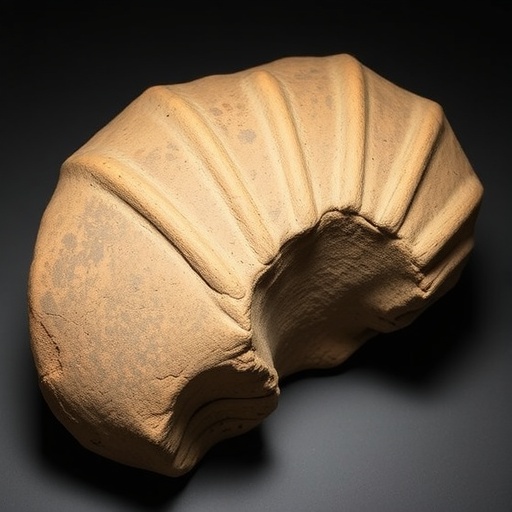
In the ever-evolving field of archaeology, new discoveries constantly reshape our understanding of ancient civilizations and their complex formations. A recent scholarly article by B. Cao, published in the International Journal of Anthropology and Ethnology, provides ground-breaking insights into the early formation of the Chinese nation and civilization, emphasizing significant integrations that contributed to this transformative era. This comprehensive study utilizes advanced archaeological techniques and multidisciplinary approaches, offering a fresh perspective on how the Chinese civilization emerged from diverse cultural and ethnic interactions.
Throughout history, the formation of China as a cohesive nation-state has been a subject of extensive debate among historians and archaeologists alike. Cao’s research delves deeper than conventional narratives, focusing on the archaeological evidence that reveals a mosaic of cultural convergences during critical periods of nation-building. By examining artifacts, settlement patterns, and burial customs from multiple early cultural sites, the study challenges the simplistic models that portray the Chinese civilization as a monolithic entity evolving in isolation.
One of the central themes of Cao’s work is the identification of integration processes between various regional groups in prehistoric China. The research highlights how interregional exchanges, through trade, migration, and cultural diffusion, fostered technological innovations and social complexity. Rather than a linear progression from primitive to advanced stages, Cao suggests that China’s emergence was driven by dynamic interactions between distinct populations, each contributing unique elements to the cultural tapestry.
Archaeological findings such as pottery styles, metallurgical developments, and architectural techniques provide tangible evidence for these integrative processes. For instance, the cross-comparison of ceramic assemblages from the Yangshao and Longshan cultures reveals a hybridization pattern indicative of shared knowledge and cooperative craftsmanship. This blending reflects not only technological transfer but also the formation of new social identities and political alliances that underpin early state formation.
Moreover, Cao employs cutting-edge analytical methods, including geochemical sourcing and isotopic analysis, to trace the movements of people and goods across regions. These scientific techniques enable the reconstruction of ancient migration routes and exchange networks, demonstrating that early Chinese societies were far more interconnected than previously assumed. The study points to a rich web of interactions extending beyond what was traditionally defined as the Yellow River basin, encompassing surrounding areas that played crucial roles in cultural amalgamation.
In a fascinating exploration of burial practices, Cao’s research uncovers evidence of ideological integration that mirrors material exchanges. Differing mortuary customs observed in adjacent cultural groups gradually converged, indicating the emergence of shared religious or cosmological convictions. This symbolic unification likely supported the political centralization processes that laid the foundation for early dynastic rule, bridging diverse groups under a common cultural framework.
Cao’s article also revisits the chronology of key archaeological sites, challenging established timelines through refined radiocarbon dating techniques. By presenting new temporal frameworks, the research reshapes our understanding of when certain cultural fusions occurred, aligning archaeological phases more closely with environmental and climatic shifts. This chronological precision reveals that episodes of intensified integration often correlate with periods of ecological stress, possibly prompting cooperative strategies for survival and expansion.
The implications of these findings are profound for interpretations of ethnic identity and nationalism in ancient China. Rather than a static notion of a single, continuous ethnicity, Cao’s work advocates for recognizing ancient Chinese identity as a fluid, composite phenomenon shaped through ongoing intercultural dialogue and adaptation. This perspective enriches contemporary discussions about the roots of Chinese civilization, offering a nuanced appreciation of its diversity and complexity.
Furthermore, the research underscores the importance of interdisciplinary collaboration. By integrating archaeological data with anthropological theory, linguistic studies, and even genetic research, Cao constructs a holistic narrative that transcends disciplinary boundaries. This approach not only strengthens the validity of the conclusions but also exemplifies a forward-looking model for future archaeological investigations.
Importantly, Cao’s findings resonate beyond academia, as they bear on modern social and political discourses surrounding cultural heritage and identity in China. Understanding the deep-seated processes of integration that shaped the nation encourages a more inclusive view of its past, promoting appreciation for regional diversities and shared historical experiences. This outlook challenges divisive historical interpretations and emphasizes the value of cultural synthesis.
The study also calls for more extensive archaeological excavations in underexplored regions. Many peripheral areas that presumably contributed to early Chinese civilization remain poorly studied, leaving gaps in the comprehensive mapping of cultural interactions. Cao advocates for increased research funding and international collaborative projects to uncover and preserve these vital archaeological resources.
In addition to empirical data, the article delves into theoretical frameworks regarding state formation and cultural integration. It critiques reductionist models that attribute early civilization solely to economic or political factors, proposing that a more intricate interplay involving social ideologies, environmental adaptations, and cultural creativity shaped the trajectory of Chinese civilization.
The evidence provided by Cao challenges widely held assumptions about isolationism in early Chinese history. The article illustrates that early Chinese societies were part of expansive regional networks involving ethnic groups beyond what modern national borders encompass. This broader perspective aligns with emerging global archaeological paradigms that emphasize interconnectedness and hybridity in ancient societies.
Technological advancements revealed in this research also paint a picture of innovation fostered by cultural integration. Metallurgy, agriculture, and urban planning in early China reflect a mosaic of borrowed and adapted techniques that together accelerated societal development. This suggests that cross-cultural engagement was a catalyst for technological evolution rather than a mere consequence of economic necessity.
In conclusion, Cao’s research contributes a vital chapter to the understanding of Chinese civilization’s early formation, underscoring the significance of integrative processes in archaeological contexts. The comprehensive data and analyses challenge prior simplistic models, inviting scholars and the public alike to rethink foundational narratives regarding the origins of the Chinese nation. This groundbreaking work stands to influence future archaeological methodologies and enrich cultural historical discourse for years to come.
Cite Scienmag News
Courtney Benton. (December 1, 2025). Key Archaeological Discoveries Shape Early Chinese Civilization. Scienmag. https://scienmag.com/key-archaeological-discoveries-shape-early-chinese-civilization/
Courtney Benton. "Key Archaeological Discoveries Shape Early Chinese Civilization." Scienmag, 1 December 2025, https://scienmag.com/key-archaeological-discoveries-shape-early-chinese-civilization/. Accessed 3 September 2026.
Courtney Benton. "Key Archaeological Discoveries Shape Early Chinese Civilization." Scienmag. December 1, 2025. https://scienmag.com/key-archaeological-discoveries-shape-early-chinese-civilization/


