


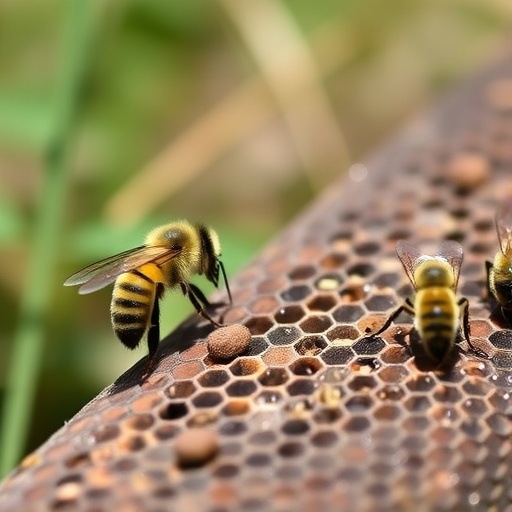
In the realm of environmental science, the intricate relationships between pollution and biodiversity continue to be a focal point of research, shedding light on pressing issues that threaten ecosystems worldwide. A recent study spearheaded by researchers Leuenberger, Rausch, and Jaramillo highlights a poignant case: the pollution of heavy metals stemming from shooting ranges, as revealed through the analysis of honeybee populations. This innovative approach not only underscores the role of these industrious insects as bioindicators but also brings to the forefront the urgent need for monitoring and mitigating anthropogenic impacts on the environment.
The study delves into the alarming presence of heavy metals such as lead, arsenic, and cadmium, which are frequently associated with the ammunition used at shooting ranges. Honeybees, known for their sensitivity to environmental changes and toxic substances, serve as effective indicators of ecological health. The researchers’ exploration highlights how these heavy metals infiltrate the environment, affecting not just the bees, but potentially all organisms within the food web, including humans.
Throughout their investigation, the team methodically collected honeybee samples from various locations, both near shooting ranges and in more pristine settings. The comparative analysis provided a startling perspective on the levels of heavy metal contamination. Results showcased a clear correlation between proximity to shooting ranges and elevated concentrations of toxic metals in honeybee tissues, revealing the direct impact of shooting range activities on local ecosystems.
Furthermore, the implications of heavy metal accumulation in honeybees extend beyond mere ecological observation. The findings raise significant concerns regarding food safety and public health. Honeybees play a crucial role in pollinating crops that humans rely on for sustenance. If these bees are exposed to high levels of pollutants, it could lead to contaminated honey and pollinated plants, posing a serious risk to human health.
The researchers emphasized the importance of utilizing honeybees as bioindicators for environmental monitoring. Their findings reveal not only a snapshot of the immediate effects of pollution but also a broader narrative about the sustainability of agricultural practices and wildlife conservation. By effectively utilizing these insects in environmental assessments, researchers can provide invaluable insights into the health of ecosystems and identify contamination hotspots that require remediation.
In advocating for action, the study highlights the need for regulations surrounding shooting ranges. Implementing strategies to curb lead emissions, such as transitioning to lead-free ammunition or establishing containment areas for spent shells, could significantly mitigate the adverse effects on local wildlife. The urgency of the situation is underscored by the fact that many shooting ranges are situated near residential areas, where the impact of such pollutants can be felt acutely.
The findings from Leuenberger, Rausch, and Jaramillo’s study contribute to a growing body of evidence that calls for a reassessment of land-use practices and pollution control measures. The study advocates for an integrated approach to environmental conservation that considers the interconnectedness of ecosystems, human health, and pollution sources. It’s not merely about regulating one pollutant but understanding the cumulative impact of multiple sources on biodiversity.
As societies seek to balance recreational activities, like shooting sports, with environmental stewardship, the necessity for research like this becomes evident. The study serves as a clarion call for stakeholders, including policymakers, environmentalists, and the shooting community, to engage in constructive dialogues aimed at finding solutions that protect both recreational pursuits and environmental health.
In conclusion, the alarming revelations from this research underscore a critical intersection between human activities and ecological well-being. Honeybees, often overlooked in discussions on pollution, emerge as essential allies in monitoring and mitigating environmental health risks. The findings advocate for a holistic understanding of environmental impacts, urging a collective responsibility toward preserving biodiversity and ensuring the safety of our food systems.
In a world increasingly aware of ecological footprints, the implications of this study extend far beyond the boundaries of shooting ranges. It presents an opportunity for broader environmental awareness and action, encouraging both individuals and institutions to prioritize sustainability in their practices. This synthesis of scientific inquiry and public responsibility promises to ignite discussions on how best to protect our planet, our health, and the interconnected web of life that sustains us all.
As the research gains attention, it is likely to stimulate further studies exploring the relationships between various pollutants, local ecosystems, and agricultural practices. The challenge remains not only to understand these dynamics but to implement viable solutions that foster a harmonious coexistence with nature. As awareness spreads, the aim is to promote practices that ensure a safer, healthier environment for generations to come.
The urgency of addressing heavy metal pollution through the lens of honeybee analysis marks a pivotal step forward in environmental science. This research represents a beacon of hope for those advocating for a cleaner, safer world, driven by informed actions and a commitment to protecting the intricate balances that sustain life on Earth.
Leuenberger, V., Rausch, J., Jaramillo, D. et al. Heavy metal pollution from a shooting range revealed by honeybees. Environ Monit Assess 197, 1384 (2025). https://doi.org/10.1007/s10661-025-14807-8
Cite Scienmag News
Violet Maxwell. (November 29, 2025). Honeybees Expose Heavy Metal Pollution at Shooting Range. Scienmag. https://scienmag.com/honeybees-expose-heavy-metal-pollution-at-shooting-range/
Violet Maxwell. "Honeybees Expose Heavy Metal Pollution at Shooting Range." Scienmag, 29 November 2025, https://scienmag.com/honeybees-expose-heavy-metal-pollution-at-shooting-range/. Accessed 4 September 2026.
Violet Maxwell. "Honeybees Expose Heavy Metal Pollution at Shooting Range." Scienmag. November 29, 2025. https://scienmag.com/honeybees-expose-heavy-metal-pollution-at-shooting-range/


